Essays
Before Fantasy, There Was Myth
Before dragons and other worlds became elements of a genre, myth confronted death, power, memory, and the unknown.
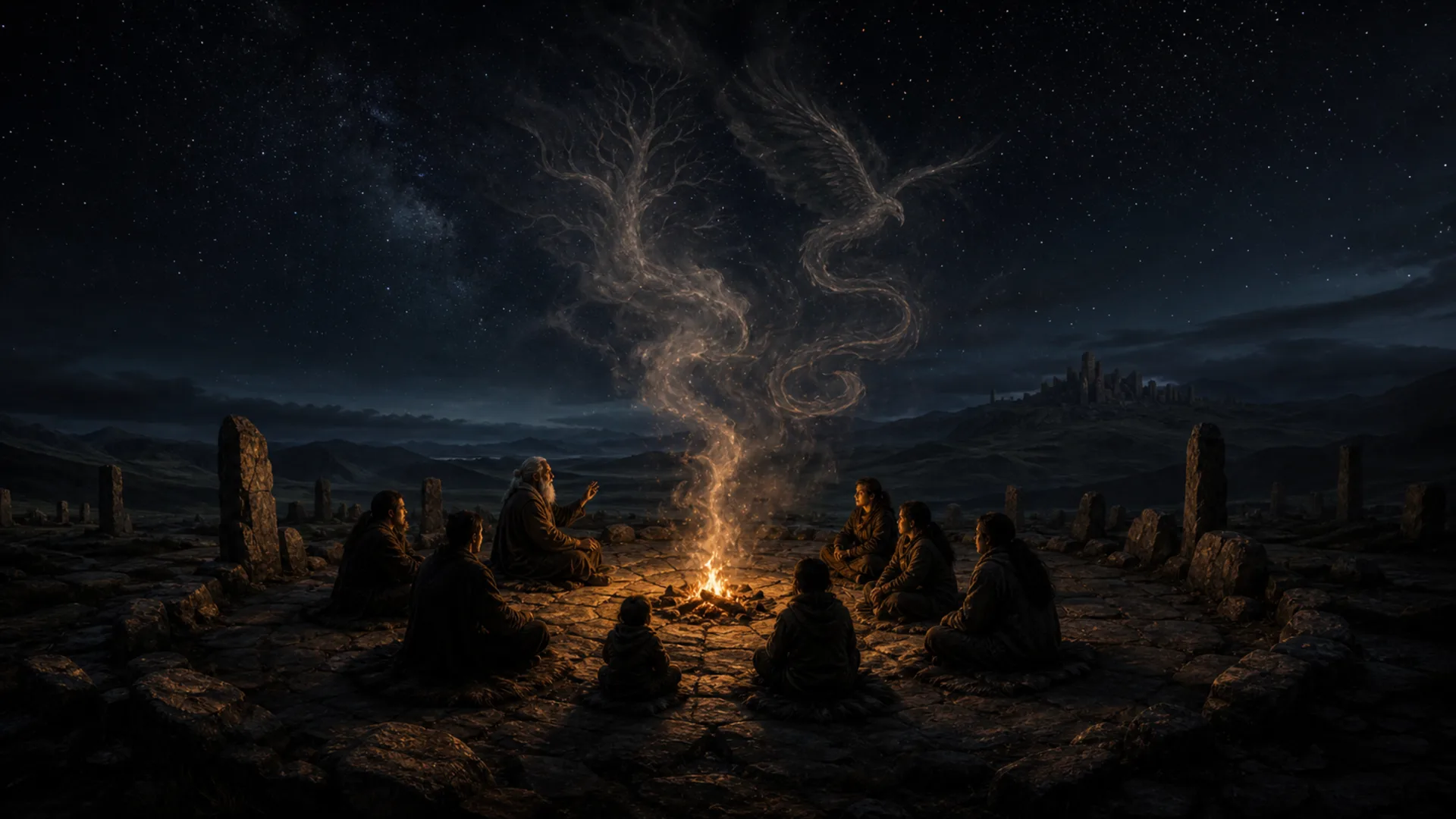
Before fantasy became a genre shelved in bookshops, the impossible carried heavier duties. Beside a fire that had to last until morning, people used stories to ask why winter returned, where the dead went, who gave a ruler the right to command, and why evil sometimes wore the face of someone once loved. Dragons, demons, and underworlds were not yet entertainment elements. They gave fear, memory, law, and hope a visible form.
Modern fantasy was kindled from that fire, but it is not the fire itself. Myth arose within communal life and might be held as history, ritual, or sacred truth; fantasy is usually the deliberate work of an author who invites readers into an invented world while both sides know it is invented. Their kinship runs deeper than a shared bestiary. Fantasy inherited from myth a way of confronting questions that resist a clean answer. It then broke, moved, and remade that method for other people in other times.
Before Genre, the World Needed Story
When someone in an ancient community told of the first human or the theft of fire, they were not necessarily composing a “fantasy story.” A tale could explain a calendar, place a family within the world, give meaning to a rite, or fasten a mountain’s name to collective memory. Story did not stand outside life. It moved through harvest, mourning, war, birth, and rule.
The National Museum of the American Indian’s guide to storytelling and oral traditions notes that in many Indigenous communities, creation stories are sacred parts of oral tradition, joining a people’s past, present, and future. This draws an essential boundary. An old story is not always an ownerless object waiting to be lifted from a shelf. It may belong to a people’s relationship with land, language, kin, and the dead.
Myth, Legend, and Folklore Are Not One Thing
These words do not divide identically in every culture, and no neat chart can settle them forever. A rough distinction still helps. Oxford’s humanities research centre describes myths as commonly involving gods, creation, and fundamental questions, while legends tend to gather around heroes, places, or events imagined to retain a historical trace. Folklore ranges more widely: lullabies, proverbs, local beliefs, rites, ghost stories, and the thing a grandmother always does before putting bread in the oven.
The Smithsonian’s account of what folklore is stresses transmission between generations and the variations produced by time and circumstance. Folklore is therefore no warehouse of fixed narratives. It lives in people’s mouths, is misremembered, changes in the next valley, and sometimes acquires a new face while crossing into another language.
Myth Is Not a Primitive Draft of Fantasy
To call myth “the fantasy of ancient people” flattens our distance from the past. A reader today can close a book about old gods and switch off the bedroom lamp. For many communities carrying those narratives, a god, ancestral hero, or guardian being participated in the world’s liveable order. Even where we cannot know what every person privately believed, the social place of the story was not that of a contemporary novel.
Nor should myth be treated as a scientific report or precise chronicle. A mythic narrative can layer several truths: the memory of migration, an account of ritual, an ethical image of power, and a poetic answer to death. Its language sometimes performs the work explored in When Metaphor Becomes Real: it gives meaning a body, a climate, and a fate.
Gilgamesh: The King Defeated by Death
In the Epic of Gilgamesh, the king of Uruk can no longer regard death as somebody else’s problem after Enkidu dies. His search for undying life does not end in a polished heroic triumph. He discovers a limit. Even the man who built immense walls, killed monsters, and fixed his name to a city cannot cancel humanity’s agreement with time.
The Metropolitan Museum of Art explains that different Gilgamesh narratives were copied and adapted across centuries, languages, and lands. The same hero answered local concerns in the hands of different scribes and poets. Tablet XI, the famous Flood Tablet held by the British Museum, likewise shows how a single narrative can concern divine anger, the destruction of a world, and a survivor who returns from catastrophe carrying knowledge that brings no peace.
Calling Gilgamesh “the first fantasy novel” forces the past into one of our modern drawers. It is better to say the epic exposes a root from which fantasy still drinks: a monster may be slain, but death is not a problem the sword can solve. What Fantasy Does with Death approached the same wound from another side.
The Shahnameh: A Past That Refuses to Die
For Persian readers, the road from myth to fantasy does not begin in a distant and foreign country. In the Shahnameh, primordial kings, demons, dragons, magic, and heroes stand within the same narrative order as the history of dynasties. Encyclopaedia Iranica describes the work as Iran’s national epic, following the collective story of a people and land from their earliest age to the Arab conquest. That continuity keeps the past from becoming a sealed, dead period.
Zahhak makes the point vividly. The serpents upon his shoulders are terrible creatures, but the story does not stop at skin and teeth. Their hunger becomes the machinery of a power that requires young people’s brains every day merely to continue existing. Before Kaveh raises a banner, he is a blacksmith who has lost his children. Epic survives when it leaves a road open between palace and forge.
Rostam and Sohrab: When Knowledge Arrives Too Late
Rostam and Sohrab have not endured because of physical strength alone. Their tragedy is built from ignorance, concealment, war, and the instant when recognition can no longer undo the wound. The father learns his son’s name when knowledge itself has become punishment. Epic grandeur does not cancel grief. The greater the blow appears, the more room it leaves for remorse.
Iranica’s survey of classical Persian literature shows Persian epic drawing history, legend, and myth onto the same canvas. This mixture is not a failure to classify. It is a way of seeing the past as more than a list of kings. History records who won. Epic asks what that victory silenced inside a home.
Myth Does Not Remain in One Mouth
Before print, a story depended on human memory for survival. A teller fell ill, migrated, forgot a name, or changed a detail for new listeners. A child kept the scene adults considered incidental and, many years later, began the story there. Change was not always betrayal. It was sometimes the price of the tale continuing to breathe.
Iranica’s study of popular narratives derived from the Shahnameh records a large body of variants surrounding Rostam, Sohrab, Siyavash, and other figures. Such plurality reminds us that tradition is not a frozen text. Every performance is a negotiation between what was received and the people who must hear it tonight.
What Changes When a Story Is Written Down?
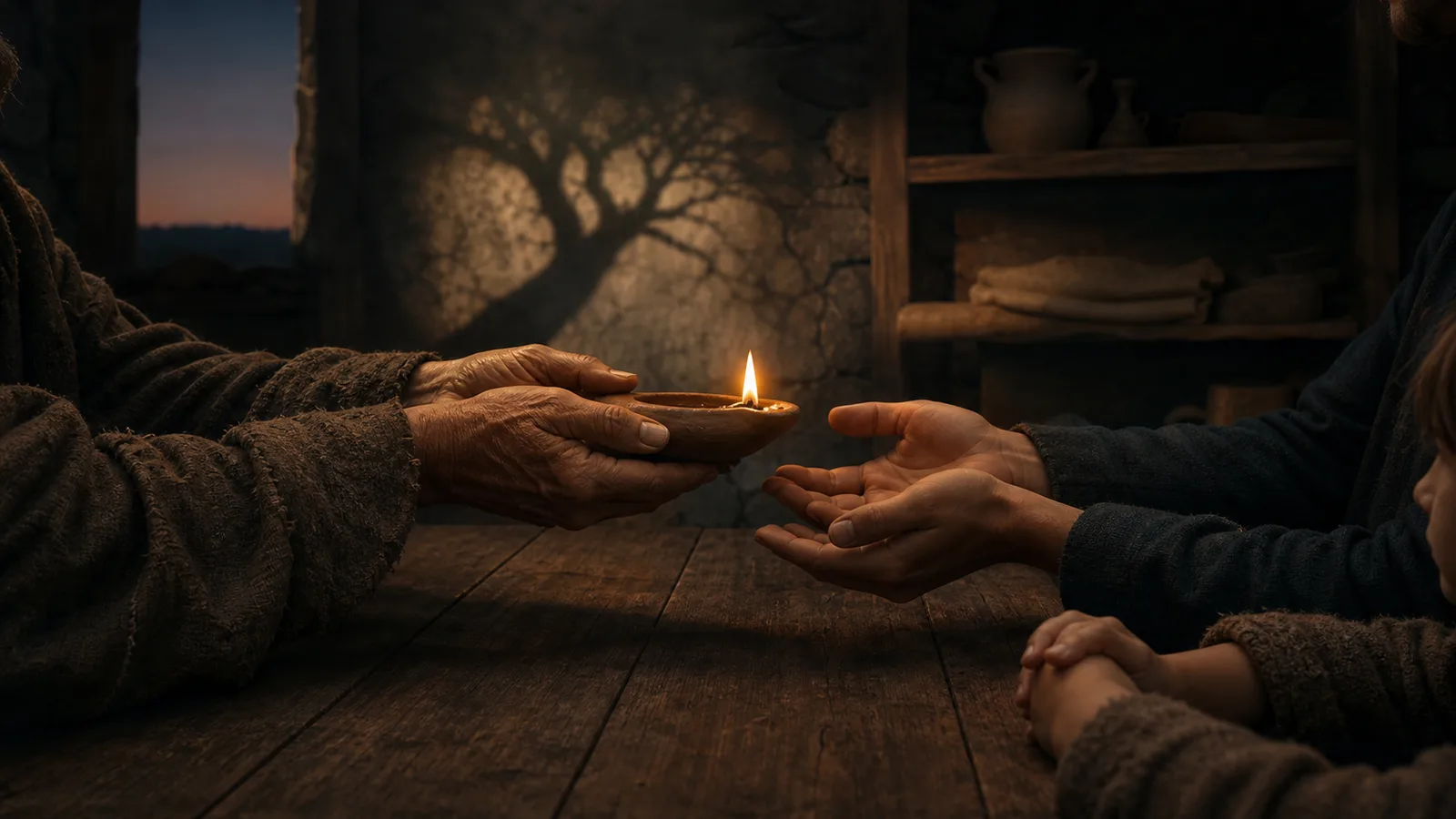
Writing grants narrative another kind of life. A scribe can carry a dead voice into our room centuries later. In return, one version gradually gains authority, and changes once considered ordinary begin to look like errors. The page preserves a story while taking some of its movement away.
This exchange is not merely loss. Without tablets, manuscripts, and books, much of the past would never reach us. The Metropolitan Museum’s account of Mesopotamian creation myths shows that even within one cultural sphere, creation was not contained in a single uniform narrative. Writing made differences visible—differences that trouble the dream of one pure and original version.
Fantasy Enters under a New Agreement
A fantasy reader usually knows the land on the map will not appear in an atlas. The author does not conceal having made its mountains, languages, and history. This knowledge does not make the magic powerless. The new agreement is simple: we know this world has no geographical existence, yet while we are inside it, we accept the seriousness of its consequences.
What Is Fantasy? considered this part of humanity’s hidden language. Fantasy does not demand compulsory belief. It creates a temporary space where one possibility can be followed all the way down. What if death could bargain? What if a true name carried power? If a forest possessed a will, would cutting a tree remain the same act?
Tolkien and the Making of a World with a Past
Tolkien did not lift ancient beings from a book and release them unchanged into Middle-earth. His knowledge of languages, epics, and northern European legends passed through a long transformation into the history, speech, and grief of a new world. Oxford research on Old Norse myth in English poetry shows that such remaking long preceded Tolkien: poets in different periods altered mythic material to meet the needs of their own age.
In Verlyn Flieger’s discussion of “On Fairy-stories”, “sub-creation” is tied to language’s power to produce a coherent Secondary World. A secondary world is not a weak imitation of myth. Its maker becomes responsible for the relations among its parts. Sacred tree, ring, returning king, and last ship must take root in that world’s own history or remain a cabinet of familiar objects.
That rootedness is what we feel in Middle-earth’s deep time. The ruin was built before the hero arrived. The song began before his birth. The enemy did not emerge from darkness merely because the first chapter needed to start.
What Did Fantasy Inherit from Myth?
The deepest inheritance is neither dragon nor enchanted sword. Myth gave fantasy the scale of its questions. A family quarrel can break the order of a kingdom. Crossing a river may divide living from dead. A ruler’s error can withhold rain from everyone. The outer world responds to moral choice.
That response makes visible a desire explored in Why Humans Still Dream of Magic: that deeds should possess weight and suffering should not remain nameless. Modern fantasy can accept this logic or rebel against it. One land may be healed by a king; Why Is Fantasy Still Waiting for a King? asks why the health of a people should ever depend upon one body.
Creatures Travel; Meaning Changes
A dragon is not the same being in every culture. Its body, relation to water or fire, moral position, and connection to rule all change. When those differences are flattened beneath one global image, we gain something easy to consume and lose much of what gave the creature meaning.
For that reason, Dragons in Fantasy is best read through their different roles rather than through an imaginary biological profile. A mythic being may change when it enters contemporary fantasy. Good transformation remembers the trace it alters. The writer knows what has been moved and why; familiar wings and horns are not enough.
True Names and the Desire for Language to Touch the World
In many traditions, a name is not neutral information. Knowing it may establish relation, responsibility, or power. Fantasy has repeatedly remade this logic: a word opens a door, summons a being, or forces someone to confront a denied part of the self.
In The Language of the Night, Ursula K. Le Guin writes about myth, archetype, shadow, and fantasy’s literary power. In Earthsea, the true name cannot be reduced to a deed of ownership; using power touches the world’s balance. Earthsea: True Names, Balance, and the Mercy of Power likewise showed that naming without understanding and responsibility merely gives domination a more exact form.
Myth Is Not a Free Warehouse of Monsters
A writer can find the name of a being from a distant culture, read a few lines about its appearance, and install it as the enemy in level three. The law may present no obstacle. Imagination should. The being has been removed from a web of land, language, rite, fear, and memory; what remains is a saleable shell.
The point is not to forbid cultural exchange. Stories have always travelled. The question is how they travel. Have we listened to the people who carry the narrative? Have we distinguished among versions? Did we turn something sacred into frightening décor? Did we erase living people so that their monster could work freely in our world? Respect begins with research, but it does not end with a bibliography.
Some Stories Have the Right to Remain Distant
Digital culture has trained us to imagine everything as accessible. A search reveals an image of a rite or a summary of a tale, making distance seem like a technical inconvenience. Yet some stories belong to a season, place, group, or occasion. Lack of access is not always missing information. Sometimes it is an ethical boundary.
The Smithsonian guide stresses that oral narrative travels through language, family, and social bonds. If fantasy has truly learned anything from myth, it should know that limitless power is no proof of maturity. As a wise magician does not open every door merely because it can be opened, a writer need not claim every story that can be found.
Can Fantasy Make New Myth?
Modern worlds sometimes enter ordinary language so fully that people use their names to describe real experience. “Mordor” becomes shorthand for a wounded landscape. A ring, gate, or winter becomes a shared image for a generation. It is tempting, then, to call fantasy the mythology of the modern age.
There is some truth in that claim. The Cambridge chapter on fantasy’s root formations traces how contemporary works remake myth, legend, epic, romance, fairy tale, and religion. Fantasy creates common symbols and communities of readers. Yet popularity is not sacredness, and cultural consumption is not communal ritual. Not every famous metaphor becomes myth.
An Imaginary World Lives Only After Digesting Its Past
Some worlds possess the names of twenty gods, three historical ages, and a list of ancient wars, yet none of them has changed how people live today. The baker alters no loaf for a feast. A soldier whispers no name before crossing the bridge. A parent has no local story with which to keep a child away from the well. The past remains in an encyclopedia and never enters habit.
What Makes a Fantasy World Believable? argued that history must leak out through walls and behaviour. Myth matters to worldbuilding when somebody lives by it, exploits it, doubts it, or remembers it incorrectly. A world does not need a complete legendary cycle. It needs the cycle’s footprints in kitchens, graveyards, and market squares.
Retelling Means Continuing, Not Repeating
Faithfulness to myth does not require an unchanged recital. Every retelling passes through a new language and time. The question is what the change reveals. Can a monster that once guarded the community’s boundary now expose our fear of outsiders? Can a silenced goddess speak from the margin of her own tale? Will the conquering hero listen to the city he claims to have saved?
A good retelling wrestles with the past. It may love that past, condemn it, and often carry both feelings at once. The result need not be a cleaner version without contradiction. Old myths live through contradiction. Fantasy loses their force when it arranges every wound into a tidy moral lesson.
What Remained Beside the Fire
Imagine that the storyteller has finished. The fire is low, a child has fallen asleep, and someone must gather the ash before the wind rises. Nobody that night used the term “worldbuilding.” Even so, the mountain is no longer the mountain it was. It has a name, holds a memory, and may cause someone tomorrow to choose differently while crossing its slope.
That was part of myth’s work: placing the world inside story so that life outside story shifted a little. Fantasy inherited this power and acquired responsibility for its own choices. It may turn an old narrative into a decorative corpse, or enter a difficult conversation with it. It may repeat the dragon, or ask why we still need a creature whose body carries the hunger of power.
The Ancient Fire, the New Lamp
Morning has arrived. The storyteller beside the fire has been dead for centuries, the tablet is broken, and many listeners’ names were never written. The questions remain. Where does power gain legitimacy? Why does a friend’s death throw the world out of order? What do we owe for the crimes of our ancestors? Can anyone return home and remain the person who left?
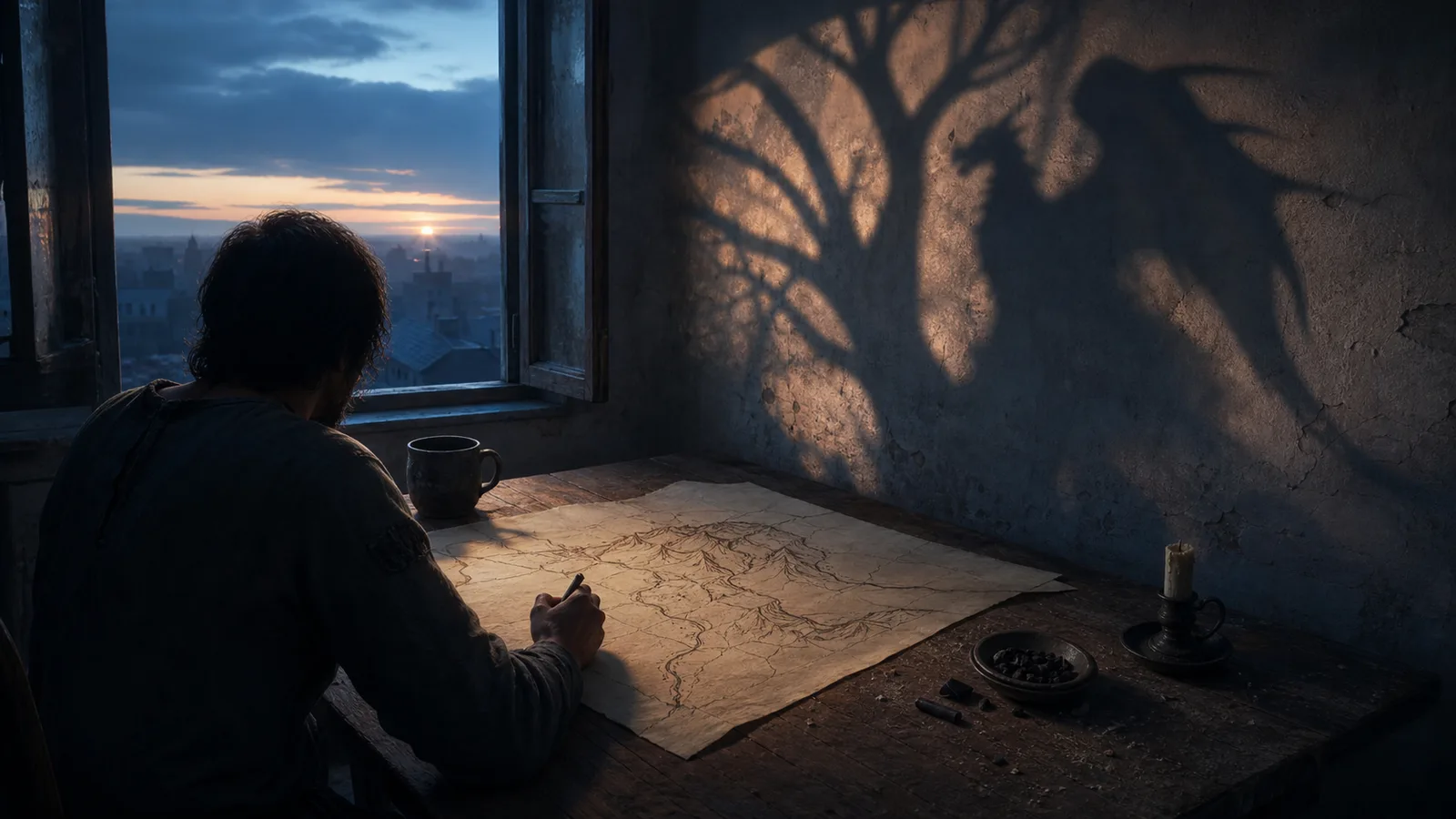
Fantasy is not the final answer to those questions. It is a new lamp carrying a far older fire. We made its glass, handle, and road; the flame existed before us and will pass into other hands after us. The work’s value does not lie in claiming ownership. It lies in keeping the light alive without burning somebody else’s home—and in remembering, when we pass it on, to say where it came from.
Sources and Further Reading
- Cambridge University Press: Root Formations in An Introduction to Fantasy
- Oxford TORCH: Where Do Myths, Legends and Folktales Come From?
- Smithsonian Folklife Festival: What Is Folklore?
- National Museum of the American Indian: Storytelling and Oral Traditions
- Encyclopaedia Iranica: Šāh-nāma
- Encyclopaedia Iranica: Classical Persian Literature and the Persian Epic
- Encyclopaedia Iranica: The Šāh-nāma as a Source for Popular Narratives
- Encyclopaedia Iranica: Epics
- The Metropolitan Museum of Art: Gilgamesh
- The British Museum: The Flood Tablet
- The Metropolitan Museum of Art: Mesopotamian Creation Myths
- The Tolkien Estate: Verlyn Flieger on On Fairy-stories
- University of Oxford: English Poetry and Old Norse Myth
- Ursula K. Le Guin: The Language of the Night
- Lady Margaret Hall, Oxford: Oxford and the Rise of Fantasy Literature