Essays
When Fantasy Takes the Place of the Real World
Some imaginary worlds are not merely entertainment; they slowly become a kind of home, until the real world feels farther away.
Sometimes fantasy is not something we read, play or watch. Sometimes it becomes a place where we live. Not with the body, not with an address, not with walls and streets, but with a more hidden part of ourselves. It becomes a place we leave with difficulty. The lamp is still the same lamp, the desk is the same desk, the phone is the same phone, and yet the real world seems to arrive late. It can take minutes, hours, sometimes days, to return completely.
That is the moment when we understand that fantasy is not the same as ordinary entertainment. Entertainment fills time and then ends. Certain fantasies do not end. They remain in the mind. They grow corridors. Their names, landscapes and sounds stay with us. One day, in the middle of ordinary life, we miss a place that never existed. That homesickness is one of the secrets of fantasy.
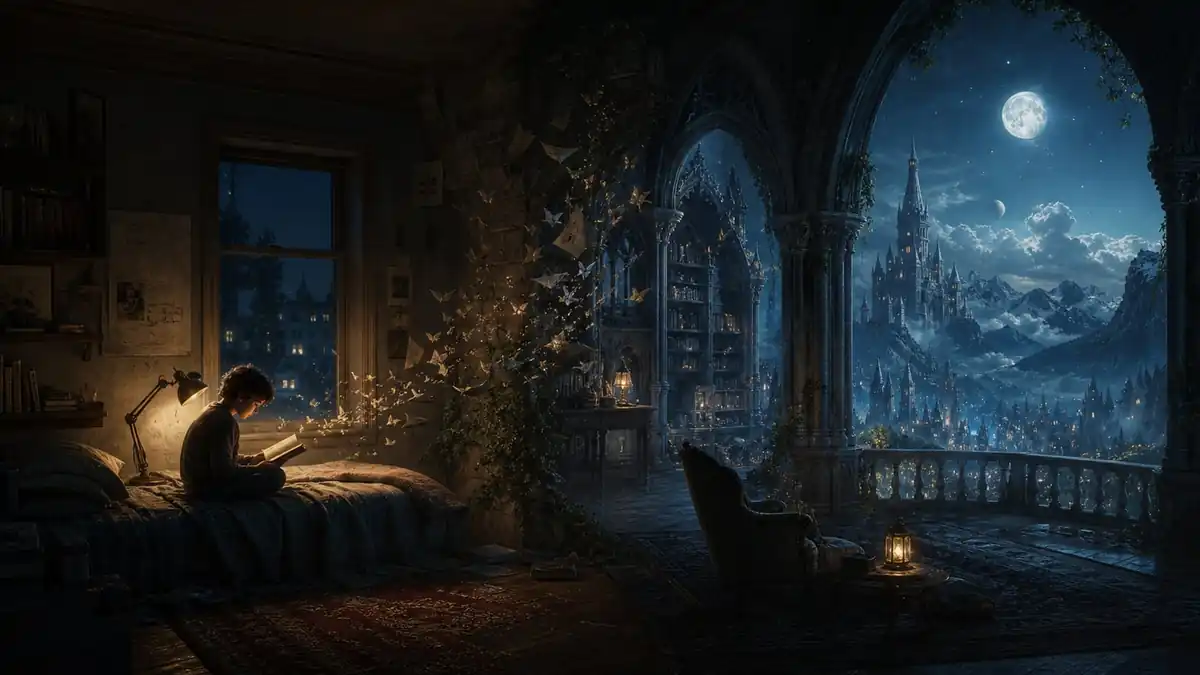
This does not mean the real world is worthless. The real world is where the body hurts, where we love someone, lose something, work, age and wake again in the morning. But the real world can become heavy, repetitive or speechless. In such moments, fantasy is not only a window. Sometimes it is an entire room. A room where we can sit, look at a wound, touch a desire without shame, and breathe at a distance from the pressure of life.
How an Imaginary World Becomes Home
Home is not only where we sleep. Home is where the mind finds a familiar shape. Some imaginary worlds do that. They are no longer only maps, castles, spells or adventures. They become memory. We know which path leads where, which music breaks the heart, which city feels wounded, which gate stirs something in the chest. Then we are no longer facing a story. We are facing a place inside ourselves.
That place is not physically real, but its effect is real. It cannot be found on a map, but we remember it in difficult days. No one else can touch it, but when we think of it, we become calmer, sadder or more alive. An imaginary world becomes home when we stop being only spectators and leave part of our loneliness, hope, fear and memory inside it.
When Reality Is Not Enough
Reality is not always cruel. Sometimes it is simply not enough. Many of us know that feeling. Nothing dramatic has happened, yet life feels thin. Conversations repeat themselves. Work is necessary. People are tired. The day has no clear wound, but the color has drained out of it.
In such days fantasy does not act like a sweet lie. It acts more like a reminder. The world can be more than this. Not necessarily by having spells and distant kingdoms, but by carrying meaning, danger, secrecy, hope and choice. Fantasy reminds us that living is not only completing tasks. Life can be a journey. A wound can have a name. Darkness can have a shape.
Fantasy Can Replace the Real World
We should say this honestly: fantasy sometimes really does take the place of the real world. Not forever, not for everyone, not always in a healthy way, but it happens. A person enters an imaginary world and, for a while, feels it more strongly than daily life. The grief of a fictional character cuts deeper than distant news. A light in a made-up city feels warmer than the lamps of one's own street. The music of a game or the image of a book stays more vivid than hours of ordinary life.
This does not happen because we are foolish. It happens because fantasy often shows with clarity what reality has hidden. In reality, fear is scattered. In fantasy, it may become a shadow with a body. In reality, desire may be embarrassing or unnamed. In fantasy, it can become magic. In reality, suffering can feel meaningless. In fantasy, it can become a path.
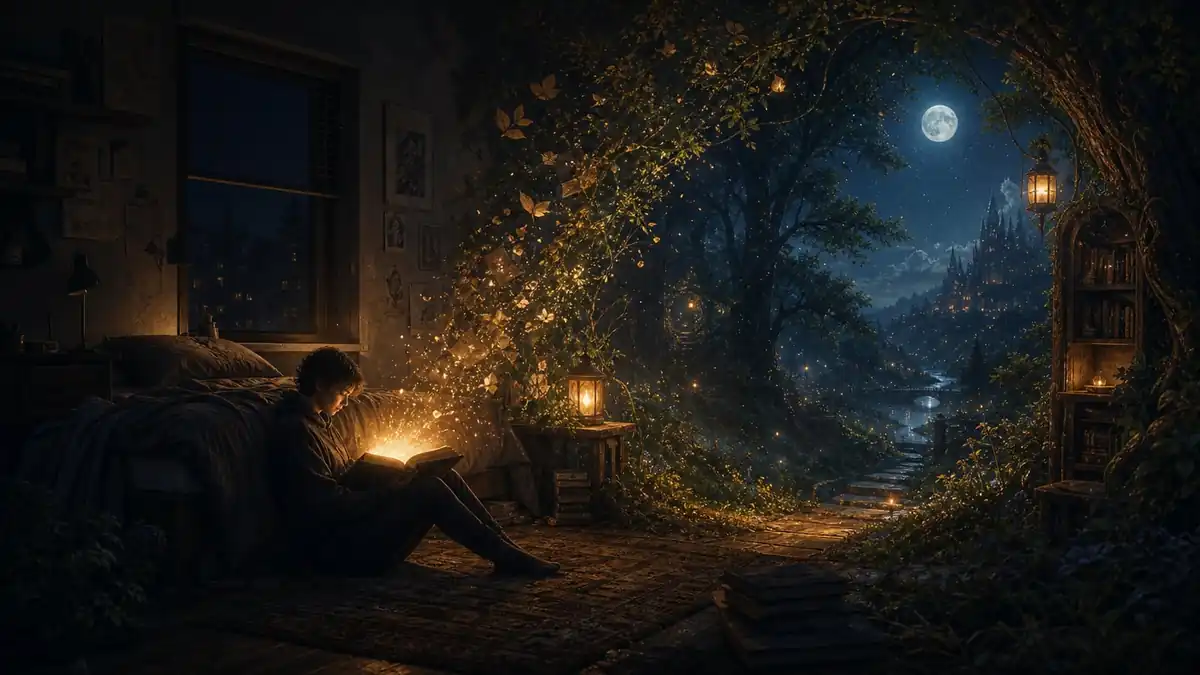
Refuge Is Not Always Escape
It is easy to say that anyone who sinks into fantasy is running away. Sometimes that is true. But not always. Sometimes we step back from reality because we can no longer see it from so close. Distance is not always denial. Sometimes it is the only way to see.
Fantasy is a strange refuge. It does not merely hide us. When it is strong, it shows us something. It lets us meet fear without being crushed by its real weight. It lets us experience failure in the shape of a story. It lets us touch death, power, loneliness, love and being lost at a distance we can survive.
Why Reality Feels Dimmer Afterwards
After a deep fantasy, returning can hurt. Not only because the story is over, but because the real world suddenly seems less formed. There, everything had a place. Even darkness belonged to the world. Here, many things feel unfinished, unnamed and scattered. There were music, light, path and danger. Here there may be only a notification, an unwashed cup and a tiredness that has no clear explanation.
That is why some people feel loss after finishing a book or a game. It is as if they returned from a place no one else believes they visited. It is hard to explain why a fictional castle, a dark forest, a lost city or a made-up character mattered so much. But perhaps there is no need to be ashamed. If something touched a part of the soul, it is not nothing simply because it was imaginary.
Fantasy Gives Names to Nameless Things
One of fantasy's powers is this: it gives names and bodies to things that remain unnamed in real life. We may be sad and not know why. We may fear the future without knowing the shape of that fear. We may feel that something in the world is wrong and still lack a sentence for it. Fantasy turns these things into images so we can look at them.
In What Is Fantasy?, we said fantasy is not only the presence of magic or strange beings. Here the same idea becomes more intimate. Fantasy is a language for things that become too dry or too painful when named directly. It gives the wound a story, hope a lantern, fear a voice, loneliness a place.
The Danger Is Real Too
If fantasy is special, its danger is special too. What can be refuge can become prison. If the imaginary world becomes the only place where we feel alive, we should pause. Not to condemn ourselves, but to ask why the real world has become so breathless. Maybe the problem is not that we love fantasy too much. Maybe the problem is that our actual life has grown too colorless, too silent, too poor in possibility or tenderness.
Fantasy should not keep us forever. If we only enter and never return, even the most beautiful imaginary world becomes a shadow. Its value is not in erasing the real world, but in separating us from it long enough to understand what is missing.
Returning from the Imaginary World
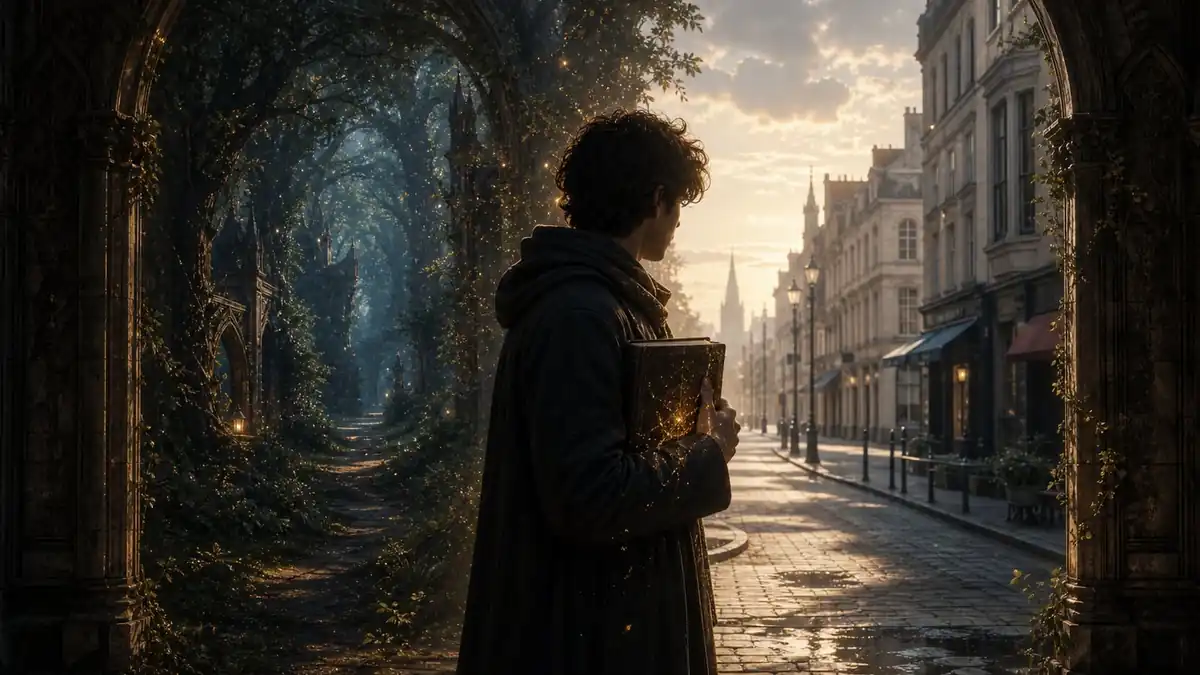
Returning is not always easy. After closing a book or leaving a game, a person may feel briefly empty, as if stepping from warm light into cold air. But that moment matters. It means fantasy has done something to us. If nothing had moved inside us, returning would not ache.
Perhaps returning is part of fantasy itself. Fantasy is not only entry. It is not only immersion. Good fantasy sends us back with something: an image, a sentence, a homesickness, a question, or a vague feeling that the real world should not remain so lifeless.
Why We Should Not Make This Small
Many people make fantasy small because it is not physically real. But human life is not built only from physical facts. Memory, fear, hope, regret, love and meaning cannot always be touched, yet they shape us. Fantasy works in that region between what is and what is missing, between the outer world and the inner one.
That is why fantasy is special. Not because it is more important than reality, but because it preserves things reality often forgets: wonder, possibility, the sense that darkness is not the whole of existence, the feeling that even an imaginary door can open inside us.
If Why Our Own World Is Fantasy speaks about the strangeness of the world itself, this essay speaks about the strangeness of our need for other worlds. We live in a strange world, and still we build another, because human beings do not only want to exist. We want meaning.
Conclusion
When fantasy takes the place of the real world, we are not always looking at weakness or childish habit. Sometimes we are looking at one of the deepest human needs: the need for a world where pain has shape, hope has light, and life feels larger than repetition.
Fantasy can become dangerous if it separates us forever from reality. But it can also save something in us if it helps us understand what reality has lost. Perhaps fantasy lasts because we do not enter it only to forget the world. Sometimes we enter because the world has become too raw, too cold or too speechless, and fantasy holds its place for a while so we can remember how to live it.
For a quieter meditation on fragile hope, continue with We Are Flickers of Light Afraid of Storms.
Further Reading
- Britannica: Fantasy for a general definition of fantasy and imaginary worlds.
- Green & Brock: The Role of Transportation in the Persuasiveness of Public Narratives for narrative transportation and immersion.
- Bal & Veltkamp: How Does Fiction Reading Influence Empathy? for emotional involvement in fiction.
- Tolkien Estate: On Fairy-Stories for secondary worlds, escape, recovery and consolation.