Essays
We Are Flickers of Light Afraid of Storms
A quiet, sorrowful essay about fragile hope: the kind that trembles before a larger world, yet keeps a small room from going dark.
There are moments when a person does not recognize himself in the mirror. The glass is too calm, too accurate, too certain of what it gives back. It returns the outline of a face, the line of a shoulder, the pale fatigue around the eyes, but it cannot show the small weather moving underneath. Sometimes we understand ourselves better in a weaker light: in the reflection of a lamp on a wall, in a narrow brightness that gathers and loosens whenever the air changes, as if it has not yet decided whether to stay.
This essay is about a kind of hope that has not won, yet has not gone out either. It is the hope of a hallway light left on at night: it conquers nothing, announces nothing, but it keeps the house from becoming entirely without signs.
Perhaps we are like that. Brief, warm, anxious. Something between brightness and disappearance. Too small to push the night away, still alive enough to have a name. There is something in us that fears the storm, and that fear may be one of the most human things we carry. Stone does not fear wind. Ash no longer has anything to protect. Fear belongs to what still contains a little heat.
To say that we are flickers of light afraid of storms is to admit, quietly, that the world is larger than we are. It is to admit that our shoulders were never built for every weight. It is to admit that on some nights even hope lowers its voice.
A Flame With No Speech
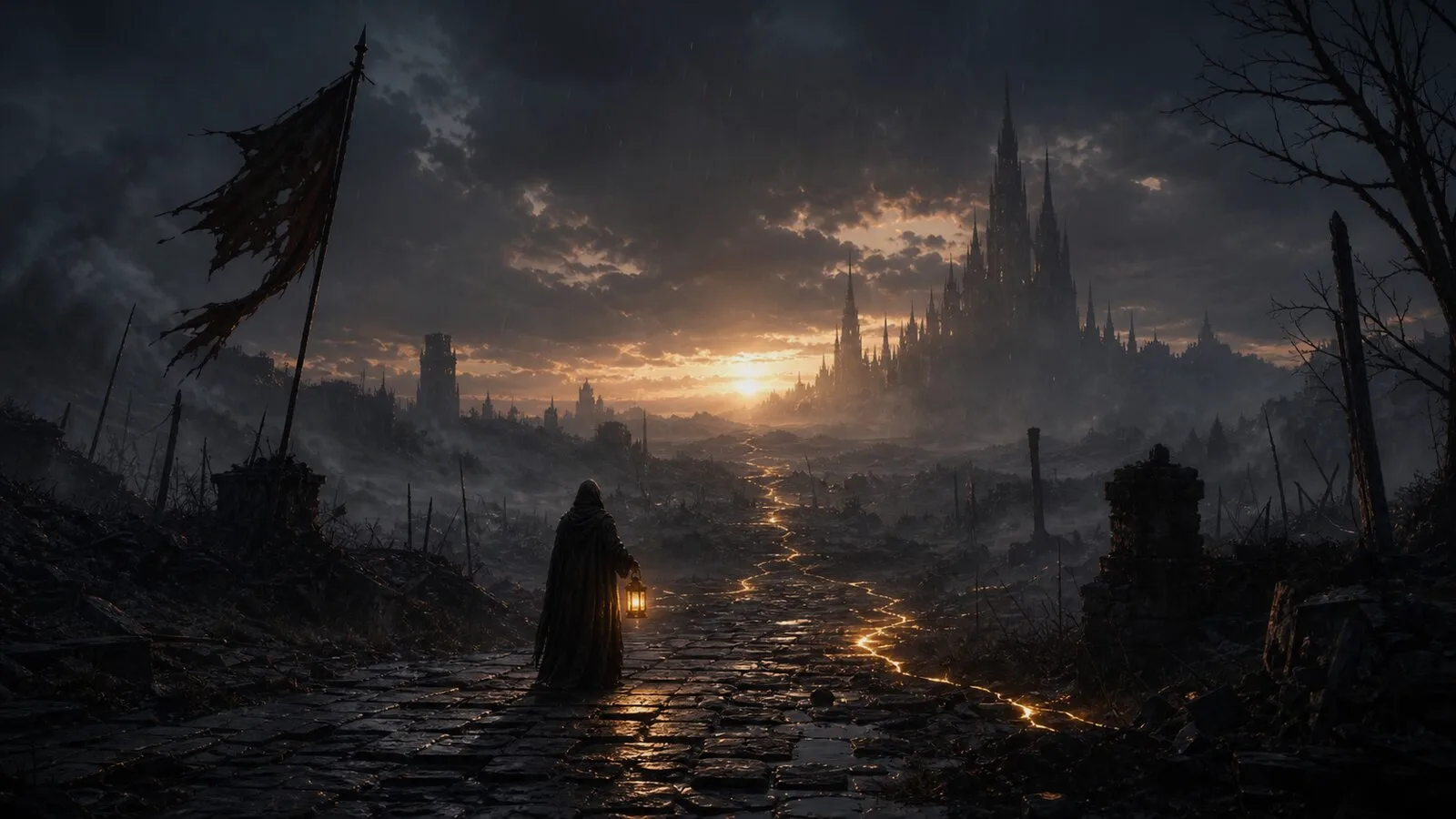
Some lights are loud. City lights. Morning falling suddenly across a room. A fire that gathers people around itself and becomes a story before it becomes warmth. The light in this sentence is quieter. It has the manners of something almost embarrassed by its own insufficiency. It knows it cannot illuminate the whole road, and still it remains.
That small light does not promise rescue. It does not take a hand and say that everything will be well. It makes a little of the surrounding dark visible: a stone, the edge of a step, a tired face, a hand that has not yet let go. Sometimes that amount of light is enough for one night. Enough for a person to avoid becoming lost inside himself.
When we are young, we often mistake hope for victory. We think brightness means arrival, the end of the road, a final morning placed at the far edge of every darkness. Later, with less pride and more tenderness, we learn that some lights have no destination. They breathe beside us. Thin, wavering, faithful.
The Storm Has Ordinary Names
A storm does not always arrive as weather. It may arrive as a sentence. As a late phone call. As a door closing with a sound that is too ordinary for what it ends. As an empty room that still seems to remember a voice. Sometimes it remains after a short conversation: in the silence of the corridor, in a glass no one drinks from anymore, in the refrigerator humming while the kitchen suddenly feels too large.
Sometimes the storm is called loss. Sometimes shame. Sometimes the work that slipped away. Sometimes a love that remained inside one person but found no place in the world between two people. At times the storm has no great event at its center. It is only a morning like other mornings, except that the body refuses to rise with yesterday's ease.
We fear the storm because it discovers our edges. It shakes the places we believed were strong. It carries away what we leaned on, or at least shows us how light those supports had become. The damage outside hurts, but the sudden knowledge of our hidden helplessness often burns more deeply.
The Quiet Weight of Sorrow
Deep sorrow usually does not shout. Shouting is one stage of pain, but many pains never reach it. Some settle quietly into the body: in the shoulders, in the eyes, in the small pause before answering a simple question. A person laughs, works, replies to messages, pays the bill, but somewhere inside him a little lamp is being shielded from the wind.
The heaviest griefs often dress themselves as daily life. Dishes are washed. Groceries are brought home. Keys are taken from the table and returned to the same place. Appointments are kept. Yet within the person there is a room with a cracked window, and the cold comes through that crack. No one may notice. Even the person himself may understand late why he feels cold.
There is a severe beauty in the fact that people go on under such conditions. There is no stage, no trumpet, no witness waiting to name it bravery. Only a low form of courage remains: sometimes unseen, sometimes unnamed, sometimes confused by its own persistence. The courage of someone who does not know why he still covers the flame with his palm, but does it anyway.
Fear of the Extinguished Self
Perhaps our deepest fear is not the storm itself. Perhaps we fear what may remain after it passes: the possibility that the light will be gone. The possibility of looking inward one day and finding that nothing answers anymore. Joy, grief, longing, expectation: all distant, all muffled, as if life has stepped back from its own body.
Extinction is not always dramatic darkness. Sometimes it is numbness. Sometimes it is a calm indifference that calls itself maturity. A person says it no longer matters, and perhaps breathing becomes easier for a while. But some part of him knows that ease is not the same as peace. It is closer to the thinning of life.
That is why fear itself can sometimes be a sign of survival. Whoever fears losing something still loves something. Whoever fears the future has not entirely abandoned the future. Whoever fears the storm still wants to carry a light to the other side of the night.
What We Carry in Our Hands
Each person carries his flame differently. One keeps it in a memory others would call small. One in an old photograph. One in the smell of a house that is gone. One in a name that still closes the throat. One in unfinished work. One in a page of a book that was never read to the end, or in the trace of perfume on a coat no one wears now. One in a faith no longer splendid, yet not entirely lost.
People do not always survive by banners and declarations. Often they endure through smaller things: tea in silence, a message answered with care, a hand resting on a shoulder, a line of light under a door, a street after rain, a song that returns a person to a room he thought he had forgotten. These things do not save the world. At times they keep one human being from sinking completely.
In hard days, meaning stops resembling a large answer. It becomes whatever prevents tonight from going dark. Tomorrow may require everything to be protected again. But tonight, the fact that the flame is still present is already a kind of news.
The World Does Not Ask Permission
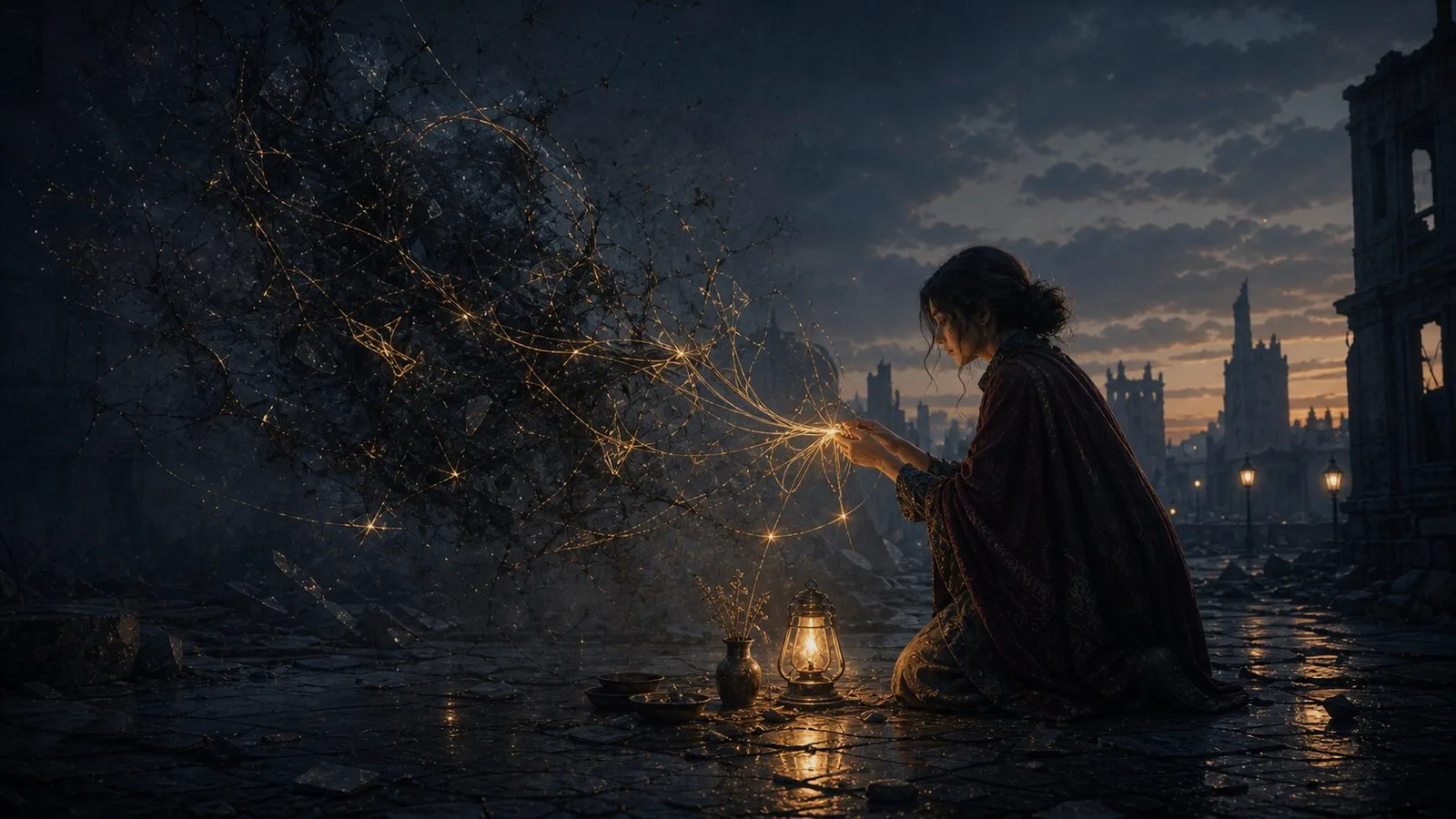
One of the most painful discoveries of life is that the world does not ask permission before changing. A person is not ready, and yet something ends. Words remain unsaid, and yet someone leaves. The heart still wants to be young, but time escorts it into more serious rooms. Quietly or brutally, the world continues its work.
This indifference can hurt more than the event itself. A person wants his suffering to be seen, at least by the day that contains it. But buses arrive. Shops open. People speak about ordinary things. Inside you, something has broken, and outside, nothing has paused.
In such moments our little light trembles more fiercely. The storm is large; that is one pain. The fact that the world may not notice the trembling is another, softer and deeper one. And still it is strange, and almost merciful, that a human being keeps searching for someone who will see. Someone who can say: I know. It is cold.
When Someone Sits Near the Light
No light lessens loneliness as much as light shared with another person. Someone may not be able to stop the storm. Most of the time, no one can. But a person can sit near the flame. Can cup a hand around it. Can reduce the wind for a few minutes.
Some people in our lives do not become walls or roofs. Their presence is quieter than protection. They are like someone who sits beside the lamp at night and, by breathing there, reminds us that we are still seen. Being seen can rescue a part of a person he no longer had the strength to hold alone.
Grief, when left entirely alone, changes the shape of the world. It makes everything appear more merciless. Yet the calm presence of one person, even without answers, can alter the size of the dark. By staying. By not leaving. By refusing the questions that would only exhaust the wounded further.
Trembling Is Still a Form of Staying
We often mistake endurance for stillness. We imagine that what remains should not tremble. But a flame that survives in wind is alive precisely through its movement. The trembling comes from its struggle with the world, from a small refusal to disappear.
There are days when a person can do nothing more than tremble. No great decision, no clean wisdom, no noble sentence. Only waking, washing the face, answering one necessary call, standing by the window for a minute longer than planned. From the outside it may look like very little. From within, it may be the whole battle.
To tremble is to reveal contact. It means the world has touched us and we have not become stone. It means sorrow has reached us and something in us still responds. A completely unmoved life may seem strong from a distance, but it has paid for that strength with a terrible silence.
Morning Does Not Explain the Night
False lights promise too much. They speak as if no night is serious, no wound can change a life, no absence can remain in the furniture of the soul. A small honest light promises less. For that reason, it can be trusted. It says: I do not know everything. I am only enough to keep you from being alone in the dark for now.
Often, that is the light we need. It does not close every question. It does not hand us a final meaning. It allows us to pass through tonight without losing ourselves entirely.
Real mornings do not always feel like liberation. Some arrive after crying and leave the eyes burning. Some are only a little grayer than the night. Some solve nothing, but they show us that time keeps moving, even when it is not kind.
Still, there is something in morning that steadies us. The world gathers shape again. Objects return from the dark. Walls can be seen. Hands can be seen. Pain may remain, but it is no longer without edges.
Perhaps hope is that: the ability to see the edges of things after a long night. That small amount may be enough for a person to open his hand and find the flame still alive.
Hands Around the Flame
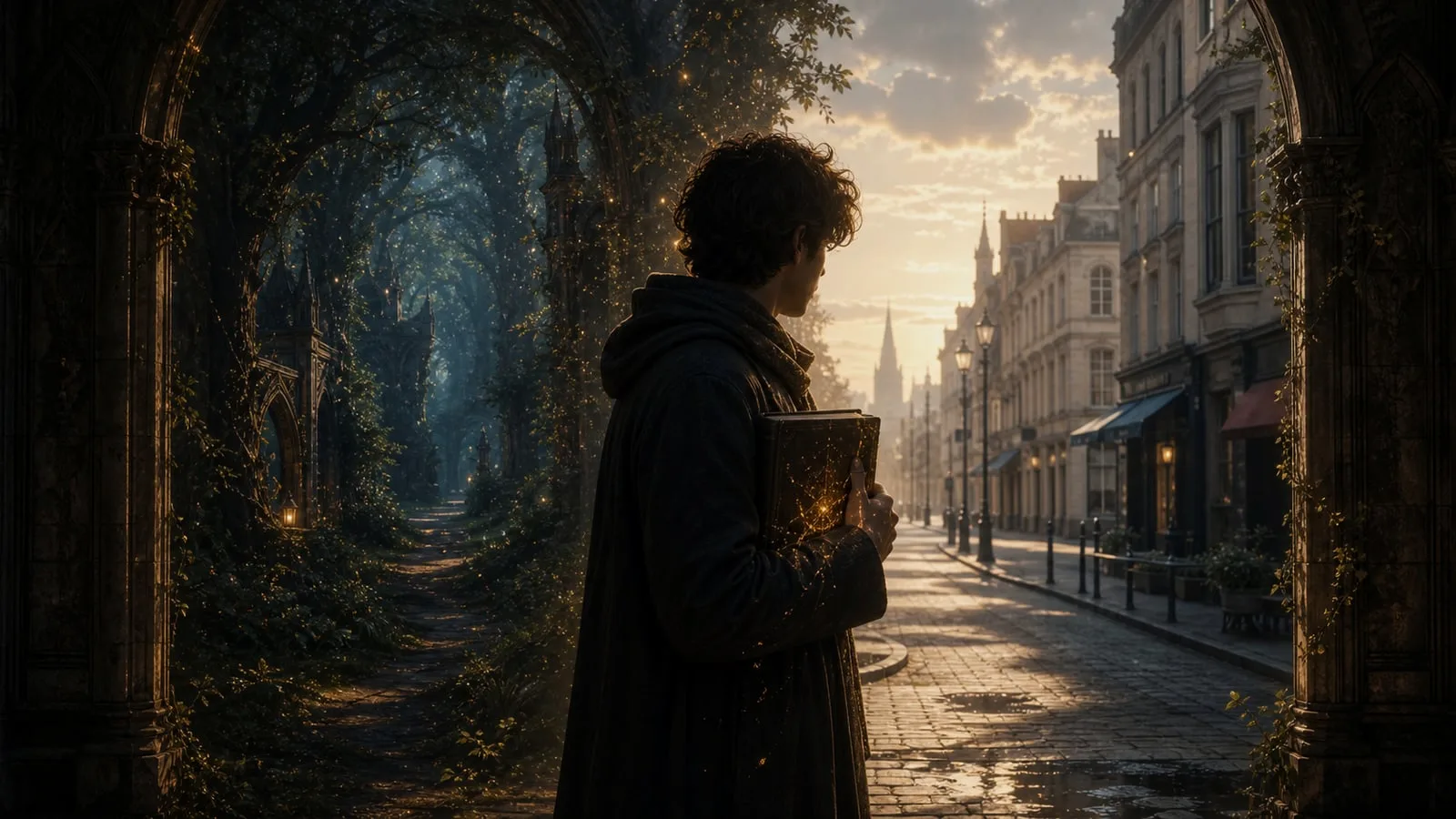
In the end, the most important image may be the hands. Hands gathered around the flame. Hands that tremble themselves, yet still try to protect something. Hands that know they may fail, and do not withdraw.
To be human may be this: knowing that the world is vast and we are small, yet caring for something whose absence would make the dark more complete. The thing does not need a grand name. It may be love, memory, kindness, a tired hope, or the plain desire to see tomorrow.
We are flickers of light afraid of storms. The sentence is sorrowful because it does not make us stronger than we are. It is beautiful because it does not abandon weakness to meaninglessness. In it, the human being is not the conqueror of night, nor fully surrendered to it. Something remains between: trembling, wounded, brief, still warm.
And perhaps that warmth, in a world that repeatedly grows cold, is no small thing.
The threshold of this question opens again in The First Gate.