Essays
Does Forgetting Make Us Innocent?
Magic can erase the memory of a crime from one mind while the wound remains in another. If the culprit cannot remember the past, what do they still owe the world?
Spoiler warning: This essay reveals major elements of Planescape: Torment, The Buried Giant, and Harry Potter and the Chamber of Secrets.
The man wakes in an inn. Rain taps the glass; water and torn bread sit on the table. The innkeeper notices his ring and stops pouring tea. A woman by the window covers an old scar. No one draws a sword, yet the room falls silent. The man knows none of their faces, not even his own name. He does not know why they fear him.
His memory has been erased. The world's has not.
That fracture is this essay's subject. If someone knowingly commits a terrible act and later forgets it entirely, does forgetting make them innocent? Others remain wounded, yet a person severed psychologically from the act may no longer understand remorse or punishment as the former self did.
We must separate the act, guilt at the time, personal identity, the feeling of guilt, the right to restitution, and deserved punishment. Magic can silence memory with a word. Morality has no such switch.
The Mind Is Wiped Clean, Not the World
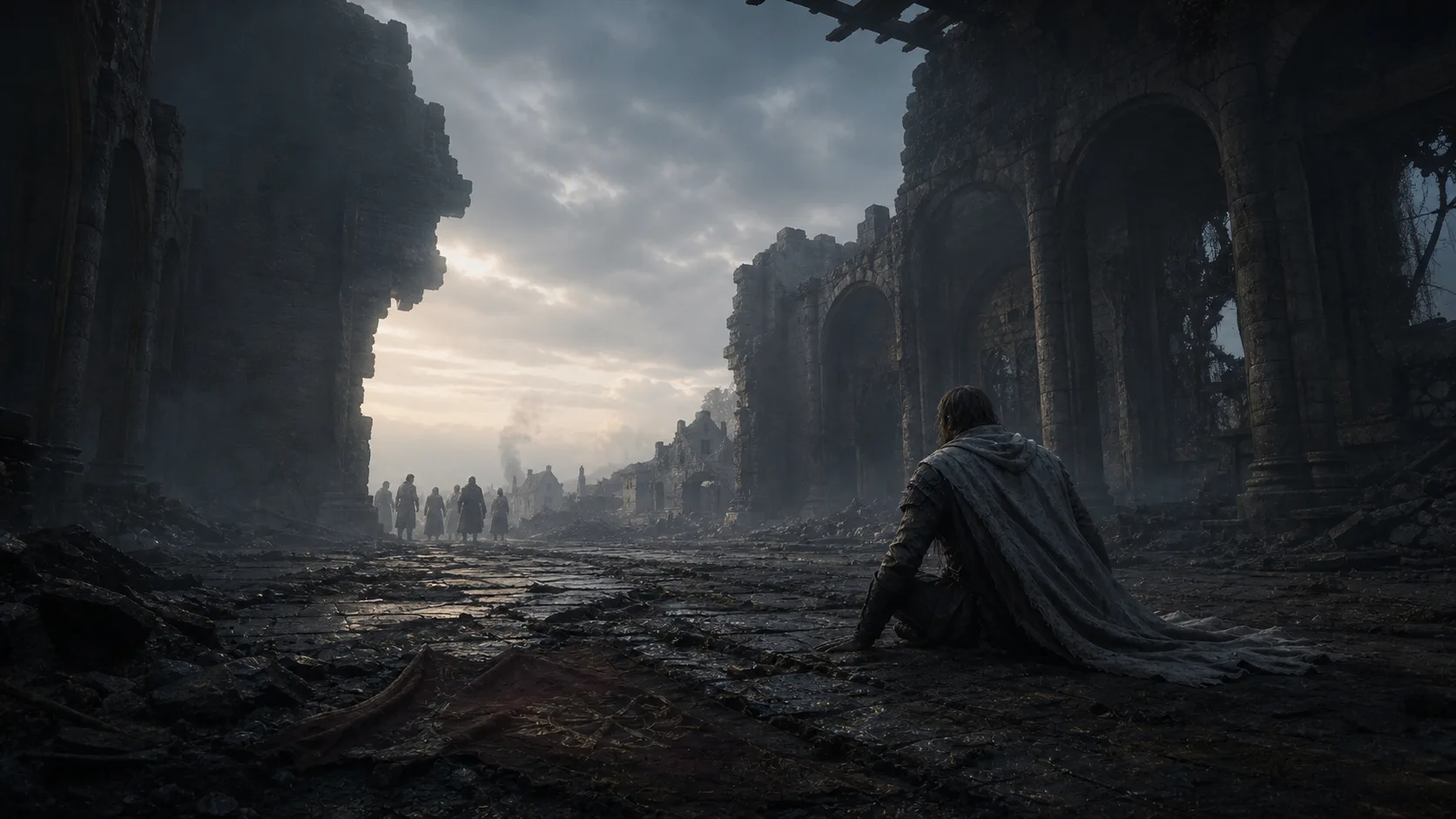
Suppose the man once opened a village gate to raiders. No image of that night remains: the splintering door, smoke, the hand turning the key. But the burned house does not return. The child who lost a father has grown older, and the lives diverted that night have not recovered their former course.
Forgetting changes access to the past; it does not remove the past from the chain of causes. If damage vanished with memory, little would remain to ask. Usually one person forgets and others must remember for them.
In When Escaping the Future Creates It, fear laid a road towards the very future it dreaded. Here the direction is reversed: an act has travelled out of the past and reached someone who cannot see the road behind him, although he is still standing at its end.
Forgetting Is Not the Same as Acting Without Choice
Someone unaware while acting is not in the same position as someone who chose knowingly and lost the memory years later. In the first case, agency at the moment of action is in doubt. In the second, choice has already occurred; later amnesia cannot make it involuntary.
A darker possibility is deliberately erasing the memory to escape it. This is less like burning a painful letter than hiding a witness inside oneself. Removing private anguish leaves the burden of remembrance to those harmed.
Illness, brain injury, and imposed amnesia are not moral flight. A person whose memory was taken is not guilty of the loss. The question is whether every earlier debt goes with it.
Is He Still the Same Person?
John Locke connects personal identity to consciousness extended through time. His claim is subtler than calling a human being a warehouse of memories: through recollection, consciousness can appropriate past actions as its own. That matters to reward, punishment, and responsibility. The Stanford Encyclopedia of Philosophy's account and Locke's original chapter show why this exceeds a neat thought experiment.
Locke considers a drunken person unable to remember his act. A court can prove the act but not a total break in consciousness. Fantasy removes that uncertainty: if magic makes erasure undeniable, suspicion of feigned amnesia cannot answer the moral question.
One missing memory does not create an entirely new human. Body, habits, language, friendships, inherited advantages, and past decisions remain. A Promise Heavier Than Life asked whether yesterday's self may command today's. Here yesterday's self is silent, but those he wounded still live under his consequences.
Does Memory Make Us, or Merely Reveal Us?
Two old objections remain powerful. Joseph Butler argued that memory may reveal identity rather than create it. Thomas Reid imagined an old officer who remembers his youth, while the young officer remembered childhood—but the old man no longer does. Direct recollection would make him both identical and not identical to that child.
Recent approaches look beyond isolated memories to overlapping intentions, beliefs, character, relationships, and recollections. The discussion of personal identity and ethics likewise ties responsibility to these continuities. Identity is not merely on or off.
Events, facts, and skills do not share one memory system. Someone may lose autobiographical years while retaining language or habits of the hands. A clinical review describes these divisions. The mind seldom goes blank; parts of its map disappear.
The Nameless One and a Past Alive in Others
Planescape: Torment carves personal identity into a scarred body. Its protagonist, the Nameless One, rises after death bearing evidence of countless lives he cannot remember. The official description says those lives return to haunt him.
Former incarnations deceived and used others, spreading suffering in their flight from death. The man now awake may be horrified and might never repeat their choices. But to Deionarra and others who paid, “a former incarnation” is no abstraction. The same face and body have returned; a ruined love remains part of their lives.
The game refuses to declare him essentially good or evil. Scars, journals, enemies, and people who speak with love or fear become his external memory, carrying what his mind cannot.
Sometimes the Victim Remembers for the Offender
Arguments about identity can illuminate only the one who forgot: his feelings, persistence, and punishment. Across the room sits someone whose suffering none of those uncertainties lightens.
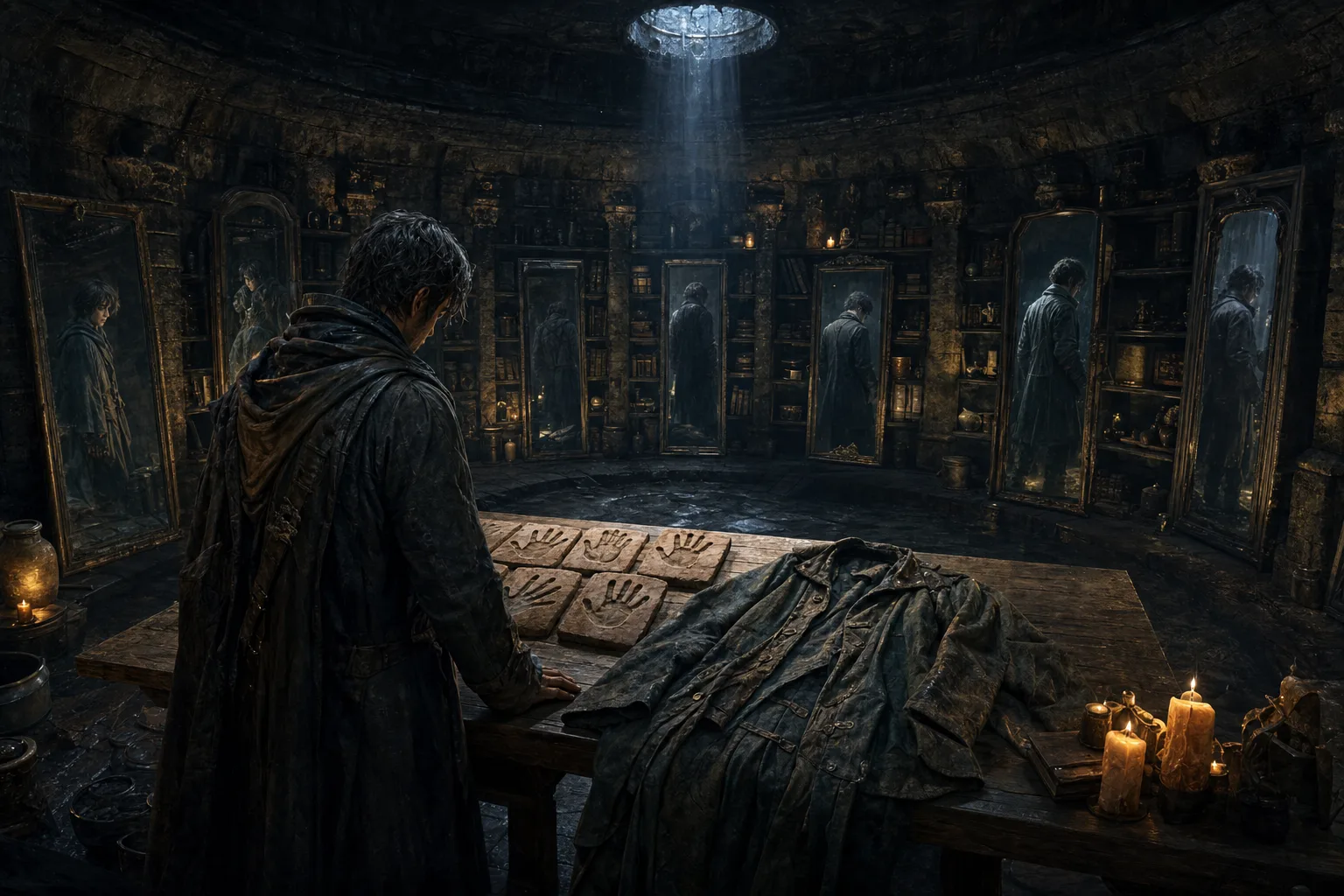
A victim may still check the lock twice, wake at an ordinary sound, or avoid the same face. Her life remembers when the person who harmed her cannot. Her claims to truth and repair cannot depend on someone else's memory.
She is not responsible for rebuilding his identity. The woman need not expose her scar, narrate the event, or forgive him to prove he changed. Listening may be his responsibility; retelling pain is not her debt.
In The Witcher: A World Where Good and Evil Are Not Simple, the outward appearance of monster or human was never enough for judgment. Here, too, the present man's peaceful face cannot overrule the suffering others still carry.
Feeling Guilty Is Not the Same as Being Guilty
The feeling of guilt is inward. One person may suffer for a small failure for years; another may devastate lives and sleep soundly. Its intensity measures moral reality poorly.
Forgetting can silence shame, but private silence does not manufacture innocence. Research found that people connect good actions more closely to their central identity than bad ones. A Duke University record describes the tendency to preserve a past beside which we can live.
Someone may remember nothing yet accept records, testimony, and consequences. Remorse may not burn like a nightly memory, but it can become decisions: surrender unjust benefit, rebuild, tell the truth, and refuse repetition.
We Forget Quite Well Even Without Magic
No spell is required. The mind can soften conduct that threatens our moral self-image. Across nine studies with more than two thousand participants, memories of unethical behaviour grew less vivid and detailed than memories of ethical conduct or other events. Researchers called this “unethical amnesia”; the PNAS paper reports the experiments.
Not every lapse conceals a lie; memory decays for many reasons, and illness is not guilt. The unsettling point is that we are not neutral witnesses in our own case. Sometimes our inner story cleans the stain first.
Fantasy makes that quiet tendency visible as magic. In Why Do We Create Monsters?, fear acquired a body. A forgetting spell does something similar: it turns an invisible mechanism into mist, incantation, or curse, so that we can watch its effects move through rooms and lives.
Lockhart and a Punishment He Cannot Understand
Gilderoy Lockhart steals other people's achievements and edits the witnesses out of their own stories. Then his Memory Charm rebounds from a broken wand. The man who built fame by erasing other people's past loses his own. The official Harry Potter encyclopedia notes that, in severe cases, the charm can destroy even a person's sense of who they are.
As a story, Lockhart's end has perfect symmetry: his weapon returns to him. Morally, the satisfaction is less comfortable. If he no longer knows what he did, what exactly makes his present suffering just? He cannot connect pain to his former choices, repent, or learn the meaning of his punishment. What appears to the reader as deserved consequence is, to him, only bewilderment in a white room.
That unease does not acquit him. It separates responsibility from the desire to witness suffering. Protecting others, restoring stolen credit, and recovering the truth remain necessary even if further pain repairs nothing.
The Mist That Keeps a Country Quiet
Kazuo Ishiguro's The Buried Giant expands the question from one person to a people. In post-Arthurian Britain, a supernatural mist covers the memories of Britons and Saxons. An elderly couple set out in search of a son they can scarcely remember. Slowly it becomes clear that the country's peace rests upon the forgetting of immense violence.
The publisher calls the novel a meditation on forgetting and the power of memory. In his official Nobel Prize interview, Ishiguro describes the question behind it: when should a society leave horror buried to prevent renewed vengeance, and when does burial merely allow the same sickness to survive underground?
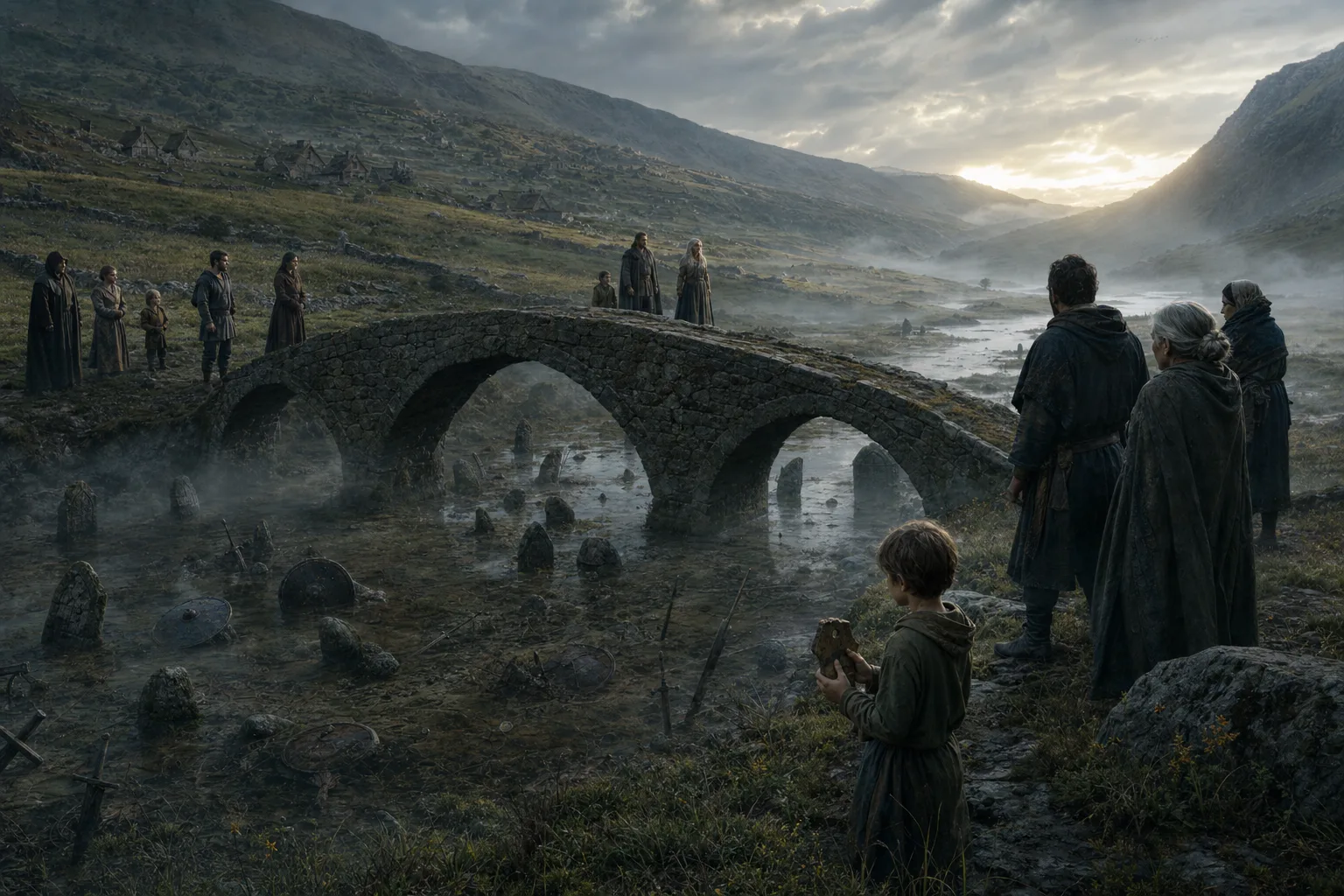
The mist is not only a prison. It has produced a real, if fragile, peace. Neighbours live together without remembering the previous slaughter. Lifting it will free the truth, but it may also wake rage and war. Remembering can no longer be called salvation without qualification.
A Peace That Needs the Dead to Be Silent
Is peace genuine when its survival requires victims to be forgotten? To a child seeing the first day without war, the answer may not matter. That child has a right to live and should not inherit the hatreds of the dead. Yet erasing the names of those killed can allow the beneficiaries of violence to present themselves as people without a past.
Paul Connerton's Seven Types of Forgetting warns that forgetting is not a single act. It may be imposed repression, humiliated silence, natural erosion, or part of creating a new identity. “We must remember” can itself become a weapon unless we ask who remembers what, and to what end.
In A Song of Ice and Fire: A World on the Edge of Winter, houses continue wars whose authors have long been dead. Memory gives that world depth, yet repeatedly conscripts the living into hatreds they never chose. Absolute forgetting is dangerous; worshipping the past can also sacrifice the future.
Guilt Is Not Inherited, but Consequences Are
A commander's child is not guilty by blood. The grandchild of a man who burned a village is not born an accused criminal. If collective memory becomes hereditary guilt, it builds another road towards the violence it claims to remember.
But no one is born into an empty world. One person may inherit a home, title, or security produced by another's dispossession. Elsewhere, a family may still carry a missing name, lost land, or learned fear. The person alive today did not perform the old act, but may have inherited its outcome.
That distinction is narrow and important. Responsibility for present consequences is not a confession to a crime we did not commit. No one need claim an ancestor's guilt as their own; they may still choose not to ignore the benefit and the wound that history has placed before them.
Responsibility Does Not Always Mean Punishment
When we ask whether the memoryless man remains responsible, we tend to imagine prison, exile, or a sword. Responsibility has other forms: acknowledging the truth, returning what was unjustly acquired, protecting others, repairing what can be repaired, and preventing recurrence.
In Madison v. Alabama, the United States Supreme Court distinguished failure to remember a crime from inability to rationally understand why one is being punished. Memory loss alone was not decisive, but an impairment that severed the understood connection between act and punishment mattered. The official opinion does not settle the moral question. It shows only that memory, understanding, and accountability are not identical.
The aims also differ. Protection may remain necessary; restitution may still be owed. But vengeance whose meaning the recipient cannot grasp may only add fresh suffering. What Does Fantasy Do with Death? did not make death harmless, and no theory here erases damage. The question is what can be done with what remains.
Can Remorse Without Memory Be Real?
The man might say, “I am not that kind of person.” He may be telling the truth. Can he also say, “But if I did this, I will not leave its consequences on your shoulders”? This is not an emotional confession. He does not revisit the scene in dreams and may feel none of the shame others expect. He is nevertheless accepting a practical responsibility.
Remorse usually begins in the distance between what we did and who we wish to become. A person without memory knows only one side of that distance from within. The other must be learned through testimony, records, and scars he has no right to touch. Is such remorse weaker, or simply more difficult? There is no clean answer.
Forgiveness is not a prize he earns by changing. A victim may believe today's man differs from yesterday's and still refuse to have him nearby. The right to choose that distance is part of what the original harm took away.
Why This Question Belongs to Fantasy
Real memory is incomplete, reconstructive, and entangled with narrative. We cannot lift one event from the mind like a file and be certain that no habit, fear, skill, or trace remains. Fantasy purifies the impossible condition: a spell is spoken and the memory truly goes, while the broken sword, burned house, and person awaiting an answer remain.
That purification makes philosophy tangible. Identity becomes a cracked mirror; memory becomes mist across a kingdom; responsibility becomes a debt whose bearer does not know its name. Fantasy does not escape complexity. It draws complexity out of the mind and lays it across the road, where we cannot walk around it.
Perhaps that is why the genre so often returns to stolen memory and the recovered past. We fear that one day we may forget ourselves. The greater fear may be that everyone else will still remember us.
The First Stone
Morning has come. The man in the inn remembers nothing. The woman by the window has chosen not to reveal her scar, and she has every right to remain silent. The innkeeper has written the name of a village on a piece of paper and placed a burned key beside it.
The man can leave. Perhaps he truly is someone who would never open that gate again. Or he can stay and, without asking forgiveness, hear a truth inaccessible from within himself. Accepting it will not restore memory. It will only keep the past from becoming ownerless a second time for the sake of his comfort.
Among the village ruins stands a wall that can still be raised. No philosophical judgment tells us who must lift the first stone. The man reaches for it—not because he remembers, and not because anyone has forgiven him, but because the ruin before him is real.
Perhaps forgetting releases a person from the feeling of guilt. Perhaps it can transform him so thoroughly that our manner of judgment must change. But the world does not always forget with the mind. Sometimes what remains of us lives in the memory of those who were never given permission to forget.
Sources and Further Reading
- Stanford Encyclopedia of Philosophy: Locke on Personal Identity for a precise account of consciousness, memory, and identity in Locke.
- Locke's chapter on personal identity for his original discussion of persons, consciousness, reward, and punishment.
- Stanford Encyclopedia of Philosophy: Personal Identity and Ethics for responsibility, psychological continuity, and objections to a simple memory criterion.
- Derek Parfit's Reasons and Persons, Oxford University Press for psychological continuity and what truly matters in personal survival.
- A clinical review of memory systems for episodic, semantic, procedural, and other forms of memory.
- Research on moral judgment in people with episodic amnesia against the assumption that memory loss necessarily destroys moral capacity.
- How memories of unethical acts become less vivid for research on “unethical amnesia” and moral self-image.
- Duke University: moral memories and the construction of identity for differences in how good and bad actions enter our stories about ourselves.
- Avishai Margalit's The Ethics of Memory for obligations of remembrance, human relationships, and collective memory after radical evil.
- Paul Connerton's Seven Types of Forgetting for distinctions among repressive, constitutive, imposed, and ordinary forgetting.
- The official opinion in Madison v. Alabama for the legal distinction between lacking a memory and lacking a rational understanding of punishment.
- The official Planescape: Torment page for the Nameless One, his forgotten lives, and a past that returns to haunt him.
- The Buried Giant at Penguin Random House for the novel's treatment of memory, love, revenge, and war.
- The Nobel Prize interview with Kazuo Ishiguro for his questions about personal and national memory, and whether the past should be buried or reopened.
- The official Harry Potter encyclopedia: the Memory Charm for the limits and consequences of magical memory erasure.