Works
The Witcher: A World Where Good and Evil Refuse to Stay Simple
Why The Witcher still cuts deep: monsters that are not always monsters, humans who do not always remain human, and choices that are necessary without being clean.
The Witcher does not usually begin with clean banners, golden gates, and a world waiting to be saved by pure hands. More often it begins with mud under boots, a half-open window, villagers speaking too quietly, and the sour mix of rain, smoke, poverty, and fear. Someone puts coins on a table and says there is a problem. At first the problem seems to be a monster. In The Witcher, that is rarely the whole truth.
This world matters because it refuses the comfort of fast judgment. In many fantasy stories, choosing the side of light is the main task. In The Witcher, light is often hidden under filth, politics, hunger, superstition, old injury, and the small lies people tell to survive. A choice still has to be made. It simply does not arrive clean.
The Witcher is not only about Geralt or the work of killing monsters. It is about what people become when they are afraid. It is about curses born from human cruelty, and about swords that can cut a body but cannot always reach the root of evil. If dark fantasy brings darkness into ethics, The Witcher drags that darkness down from the sky and lays it on the greasy table of a tavern.
A World With Dirt Under Its Nails
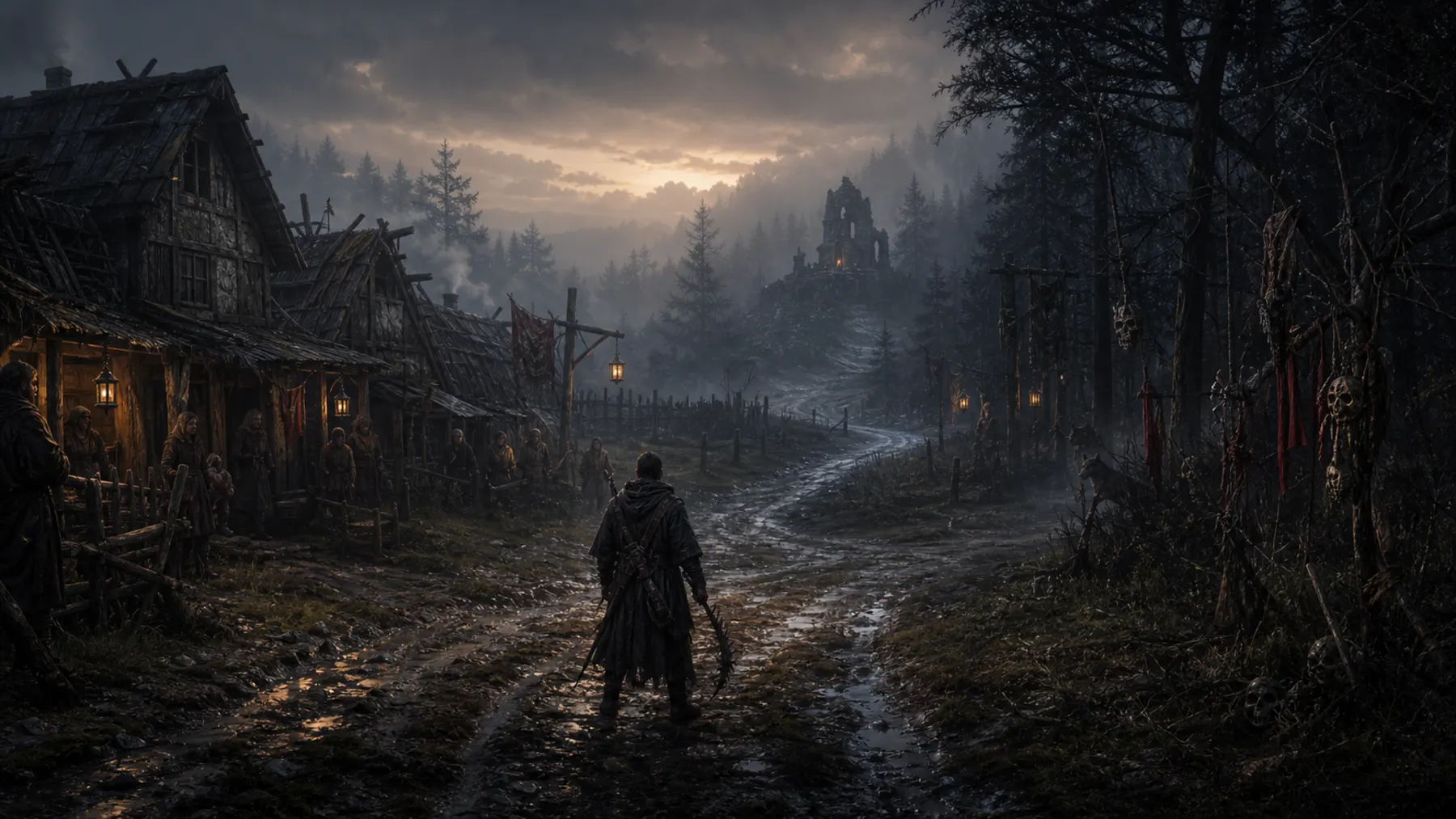
The Witcher feels earthy. Its villages and cities are less polished than exhausted. Forests are not only beautiful; they are places where people build stories because they cannot bear the truth. War, disease, poverty, prejudice, politics, and ignorance are not background noise. They are the soil the stories grow from.
That earthiness makes the world believable. When a villager fears a monster, we are not only dealing with genre fear. Perhaps he has lost his cattle, buried a child, or joined a lie because the village needs someone to blame. When a ruler gives an order, he is not automatically a simple villain. Survival, pride, power, fear of revolt, or an old humiliation may stand behind the command.
In such a world, heroism means walking among people who are not completely right. That is one difference between The Witcher and some forms of classic high fantasy. The scale may seem smaller, but the moral pressure is closer. You do not always feel the world through armies and crowns. Sometimes you feel it in the face of someone who knows he is lying, yet has a reason that cannot be dismissed in one sentence.
The Monster Is Not Always the Monster
The bitter beauty of The Witcher is that monsters are rarely the only frightening beings around. Some monsters are dangerous and must be stopped. Others are victims of curses. Others are the result of old violence. Others are simply beings humans do not understand, and what people do not understand they often turn into legend, rumor, and excuse. In this world, teeth are not enough evidence. We have to ask where the teeth came from.
That changes the monster story into a harder question: when do we have the right to name something a monster and remove it? If someone is cursed, are they still guilty? If a village lies from fear, does fear excuse the lie? If a creature is dangerous but the danger began in human cruelty, what part of the problem can a sword actually solve?
In Dragons in Fantasy, fantasy creatures were treated as mirrors of power, fear, and desire. The monsters of The Witcher are often mirrors of wounds. Some are bodies in which a community refuses to recognize its own past. When such a creature appears, the question is not only how to defeat it. The question is who made it possible.
Humans More Dangerous Than Beasts
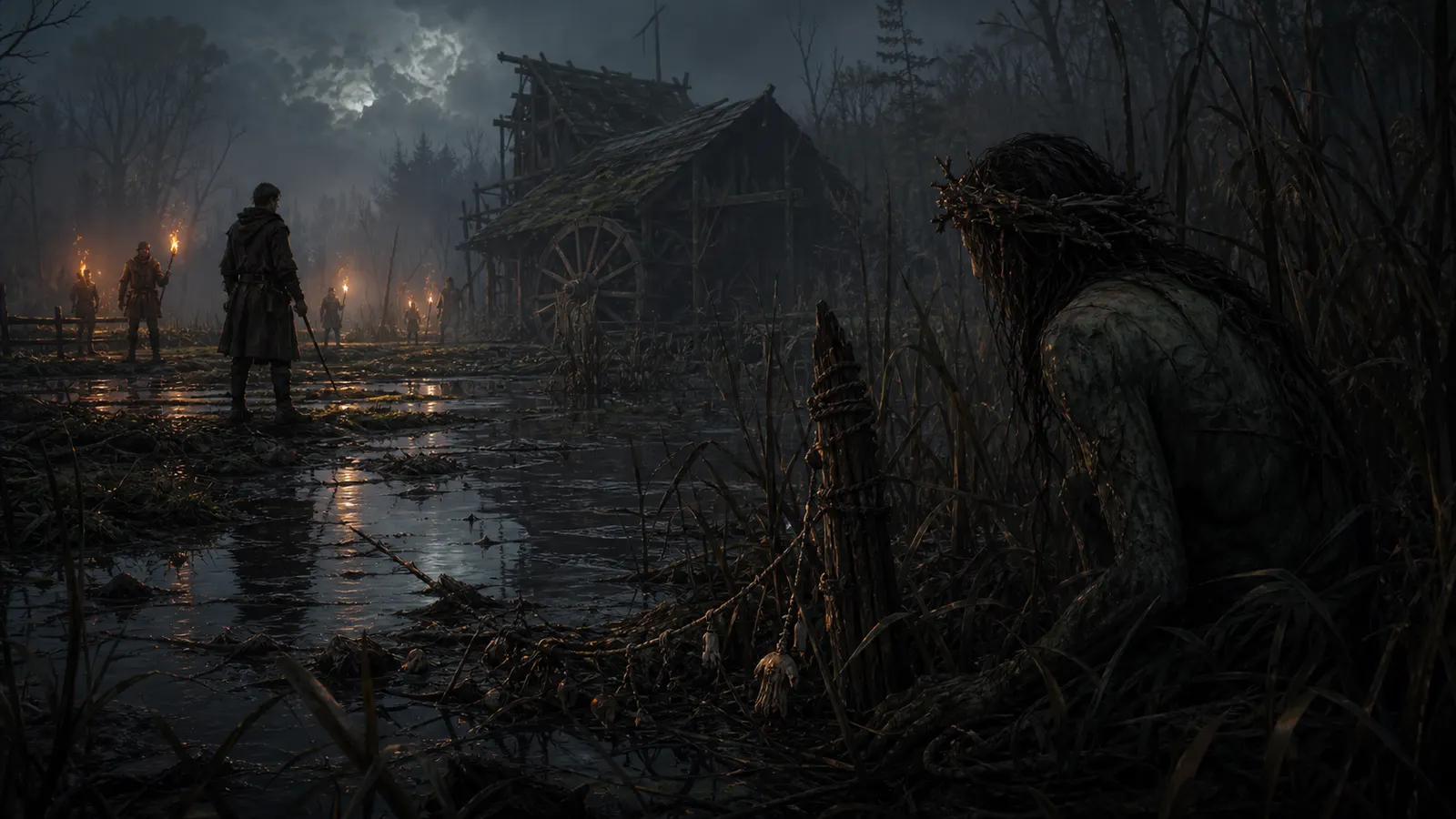
The Witcher keeps reminding us that horror is not always in the forest. Sometimes it is in a court, a barracks, an alley, a chapel, a market, or an ordinary house. People in this world can be kind, frightened, loyal, selfish, brave, cowardly, and cruel, often at the same time. That mixture is what pulls the world out of simple dualism.
One of the harshest ideas in The Witcher is that ordinary people can do terrible things not because they are pure evil, but because they are scared, hungry, humiliated, or trained from childhood to hate someone else. That makes the story more human and more uncomfortable. If evil lives only inside a dark lord or a giant beast, it is easy to identify. If it hides in a small decision, a silence shared by the crowd, a convenient judgment, or a bargain made for survival, we cannot pass it so easily.
Sometimes humans need the monster. A monster can be an excuse, a tool of fear, a cover for a crime, or a way to unite people around hatred. That is when The Witcher rises above monster hunting and becomes a study of a wounded society.
Choices Without Clean Hands
Much of The Witcher's force comes from decisions that do not reward the audience with moral neatness. In many games and stories, the right choice arrives with a visible glow. In The Witcher, the right choice is often understood too late, remains incomplete, or is not clean at all. Decisions have to be made with partial information, lying witnesses, tangled emotions, and consequences no one fully controls.
This is why The Witcher matters for Fantasya. Fantasy here is not an escape from the complexity of reality. It is a way to look at that complexity with a sharper image. Real life rarely gives us white and black doors. We often choose among lesser harms, unfinished responsibilities, fear, loyalty, and outcomes we cannot see. The Witcher turns that experience into monsters, contracts, curses, and politics.
If a magic system is about the rules and costs of power, choice in The Witcher is about the rules and costs of ethics. Every decision takes something: peace, neutrality, trust, a life, or the image a character has of himself. Those costs make the world serious.
Neutrality Is Not Always Shelter
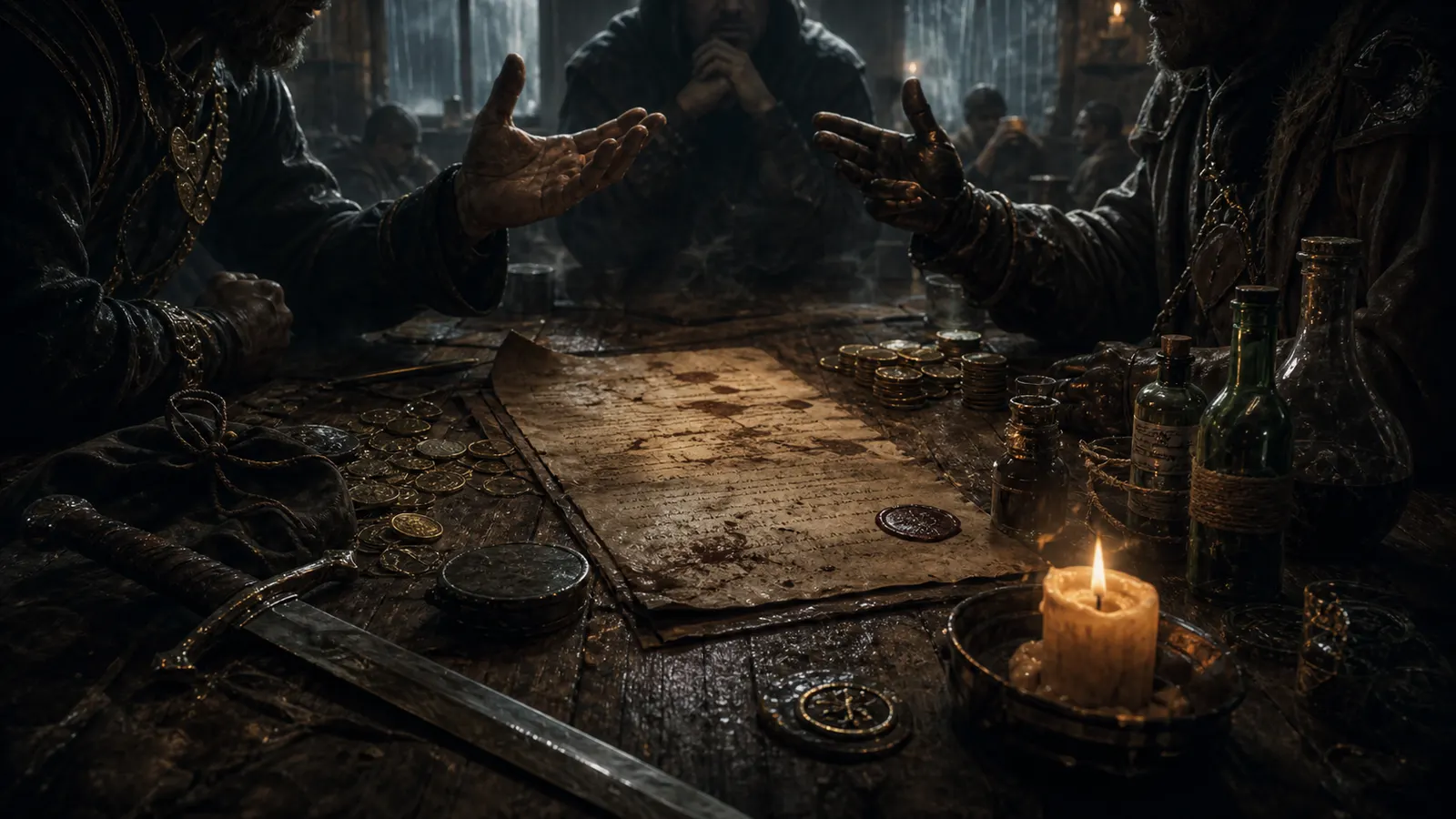
In The Witcher, the wish to remain neutral is easy to understand. When every side is compromised, when rulers and factions want to use you, when every intervention may ruin someone, neutrality can look like the only way to stay intact. But the world gradually shows that neutrality is not always outside the game. Sometimes it is only another form of choosing.
That does not make neutrality foolish. Sometimes intervention truly makes disaster worse. Sometimes there is not enough knowledge. Sometimes a person who imagines himself a hero only feeds the fire. The Witcher understands that. But if you always stand aside, you may allow cruelty to finish its work. Action is dangerous. Inaction does not guarantee innocence.
That is why heroism in The Witcher is less about shining than enduring. Enduring uncertainty. Enduring consequence. Enduring the possibility that even the best available action leaves a wound. This kind of heroism looks less grand, but it stands closer to human life.
Politics, Prejudice, and the Making of Monsters
The Witcher is a world where difference can quickly become accusation. Race, magic, class, land, blood, and profession can push a person outside the circle of humanity. Here, the idea of the monster expands beyond the bodies of creatures. A society can create monsters not only through spells, but through language, law, fear, and habit.
When a group is made so foreign that its voice is no longer heard, violence becomes easier. When a name makes someone seem less than human, almost anything done to them becomes more defensible. The Witcher works with that pressure. Its world contains dangerous creatures, but one of its most dangerous forces is the human ability to turn the other into an enemy-shaped image.
This is why the setting is not merely dark. It is political and human. Fear of the monster connects to fear of the neighbor. Curse connects to law. A monster contract connects to money. Suddenly fantasy can speak about society without becoming a dry social lecture.
Why Violence Is Not Simple Here
The Witcher is violent, but its violence works best when it is not used merely for shock. Drawing a sword is often not the end of the problem. It is the sign that other routes have failed, or the beginning of new consequences. Killing a monster may save a village, but it may also bury a truth. Saving one person may anger ten others. Revealing the truth may bring justice or ignite a smaller war.
That approach makes violence serious. If every strike only gives the pleasure of victory, the world becomes light. When each strike belongs to a web of fear, money, revenge, and survival, combat gains weight. At its best, The Witcher does not let the audience enjoy winning without asking what remains after the win.
That is where the world meets the spirit of Fantasya. Fantasy is not only a machine for excitement. It can show us that power, even when necessary, is not always clean. That recognition makes a fantasy world adult.
Why This World Stays With Us
To love The Witcher, we do not have to think every character is pure or every decision is justified. Part of the attachment comes from the impurity. This world does not let us build a washed version of humanity. It contains kindness beside greed, loyalty beside betrayal, love beside control, rescue beside cost.
For many readers and players, The Witcher is more than dark fantasy. It is a place where one can face tiredness without dressing it up. The tiredness of not always being able to act well and cleanly. The knowledge that sometimes you do the necessary thing and then live with the mark it leaves. When written well, that feeling is much deeper than simple cynicism.
Simple cynicism says everything is rotten. The Witcher is better than that. It says the world is damaged, but choice still matters. People are stained, but mercy has not become meaningless. Monsters are dangerous, but we still have to ask what wound made them. That difference is the life of the world.
Conclusion
The Witcher matters to Fantasya because it shows that fantasy is not only a territory of light and darkness. Fantasy can be where ethics, fear, politics, curse, poverty, and survival knot together. This world teaches that the monster is not always what hides in the forest. Sometimes it is what people grow inside themselves through fear, power, or habit.
The Witcher is strongest when it forces us to judge more slowly. Instead of asking who is good and who is evil, we ask who has been wounded, who benefits, who lies, who is afraid, and which choice will later become another wound.
The world is beloved because it is not easy. It does not lead us along a clean road. It leaves us in the mud, under rain, between village and forest, with coins on the table and a voice saying: decide. Maybe that is why, after the story or the game ends, the smell of smoke, wet earth, and unfinished choices remains.
For a practical route through these worlds, see The Best Fantasy Games for Entering Another World.
Sources and Further Reading
- The Witcher 3: Wild Hunt Official Site for official context on the game, world, quests, and choice.
- Bandai Namco: The Witcher 3 Wild Hunt for official publisher copy describing the open world and morally ambiguous choices.
- Read The Witcher for the book series and its complex moral landscape.
- Orbit Gold Editions: The Witcher for publisher information about Andrzej Sapkowski's books.
- Frontiers in Communication: The Witcher and moral ambiguity for academic discussion of choice, narrative, and ethical engagement.
- CD PROJEKT: The Witcher crossover note for an official note on Geralt as a professional monster slayer and his broader game-culture presence.