Works
Elden Ring: Why Death, Return, and Choice Still Matter
A player-centered reading of failure and recovery, difficulty and attention, fragmented storytelling, solitude and community, and the burden of choosing an ending without moral certainty.
A first death in Elden Ring can feel almost embarrassing. A soldier reads a hurried attack, a beast closes a distance that looked safe, or a ledge turns confidence into a fall. The screen darkens, the runes remain somewhere behind, and the player returns with less certainty than before. Nothing guarantees that the next attempt will be heroic. It may be slower, more cautious, and built from one small observation.
That cycle is the emotional grammar of the game. Elden Ring asks for skill, yet it also asks the player to notice: the pause before a strike, the safer edge of a room, the road ignored on the first journey, the message left by a stranger. Progress comes through hands, memory, curiosity, help, retreat, and the willingness to revise a plan. The player is rarely powerful in a simple way. Power grows beside doubt.
The Lands Between gives that experience a magnificent setting, but its cosmology belongs to a different question. The Golden Order, the Rune of Death, and the theological geography of the Lands Between explain what kind of realm has broken. Here the wound is felt from the other side: through the person holding the controller, dying inside it, misreading it, learning its language, and eventually deciding what should follow its collapse.
Dark fantasy matters here because darkness is experienced as pressure rather than decoration. Elden Ring gives the player fear, frustration, awe, companionship, and responsibility, then refuses to separate them cleanly. The result is severe, but it is never merely cruel.
Arriving Without Certainty
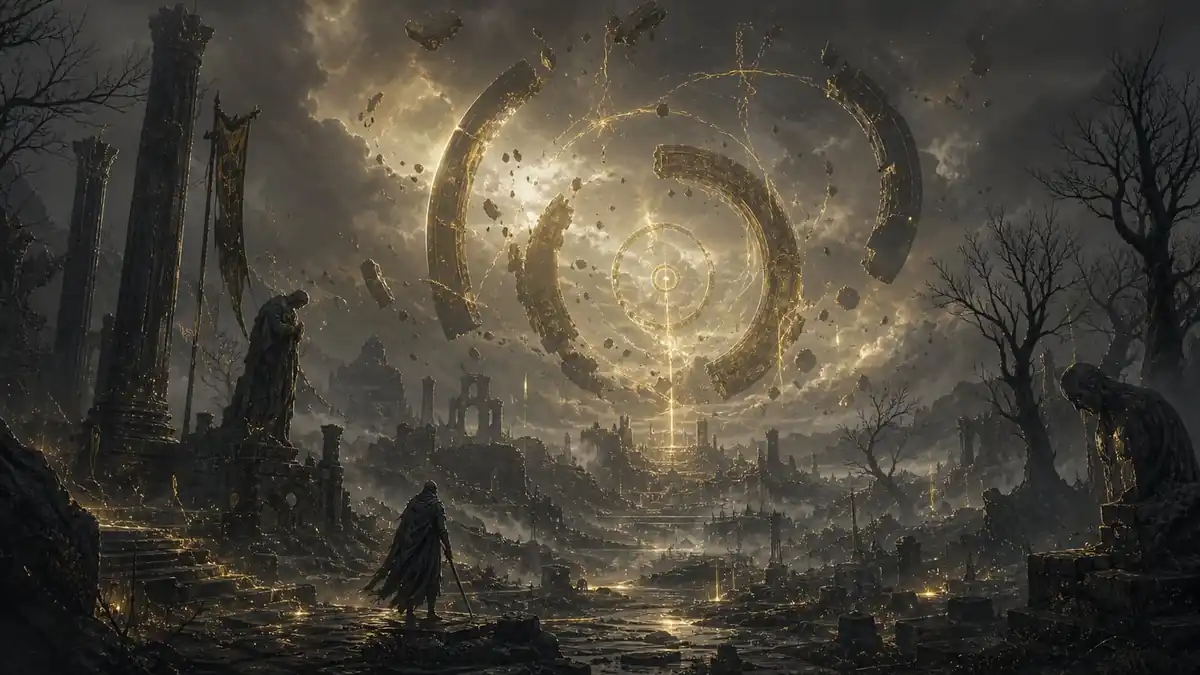
The player arrives late, with a title to pursue and almost no trustworthy map of meaning. Guidance points toward possibility, not comprehension. A distant castle may contain progress, yet a cave behind the starting road can reshape the next several hours. An NPC offers a sentence whose importance becomes clear much later. Even the direction that looks correct may be the direction the player is not ready to survive.
This uncertainty changes the posture of play. Instead of executing a complete plan, the player forms temporary hypotheses. Perhaps this enemy can be interrupted. Perhaps the path curves behind the ruin. Perhaps the locked door belongs to a place not yet found. Knowledge remains provisional, so curiosity becomes a practical virtue rather than a decorative mood.
Late arrival also weakens the fantasy of total mastery. The player does not enter as the person who understands the age. They enter as someone reading traces left by people, institutions, and disasters they did not witness. The first honest relationship with the game is therefore humility.
Death as a Rhythm the Player Learns
Death removes runes, breaks momentum, and returns the player to a Site of Grace. That sounds like punishment, but repetition gradually changes its meaning. The dangerous road becomes a sequence of remembered turns. An attack that once looked instantaneous develops a beginning, a middle, and an opening. The body starts recognizing what panic had hidden.
The chance to recover lost runes gives death a second movement. Returning to the place of failure can restore what was lost, but it can also produce another loss. Greed enters the decision. So does fear. The player must ask whether recovery is worth the risk, whether to spend resources first, or whether attachment to the previous attempt is now controlling the next one.
This gameplay cycle should not be confused with a literal explanation of death in the lore. Its force is experiential. The game turns continuation into an action the player repeatedly chooses. Return is available, but composure is not automatic; it has to be rebuilt.
Failure Teaches Attention
Failure becomes useful only when it changes perception. Repeating the same input with the same anger teaches almost nothing. A productive attempt is often quieter. The player notices stamina, distance, the enemy's recovery, the shape of the arena, or the fact that a shield, spirit, crafted item, different weapon, or simple retreat could alter the problem.
Difficulty therefore creates an ethics of attention. It asks the player to distinguish persistence from stubbornness. Continuing can mean trying again, but it can also mean leaving, exploring elsewhere, gaining experience, changing a build, asking for help, or accepting that the desired style is not serving this encounter. Flexibility is part of competence.
The victory that follows is rarely pure domination. It contains the memory of failed timings and bad assumptions. The player wins because those failures were converted into knowledge. Satisfaction comes from that conversion, not from suffering by itself.
A Story the Player Must Assemble
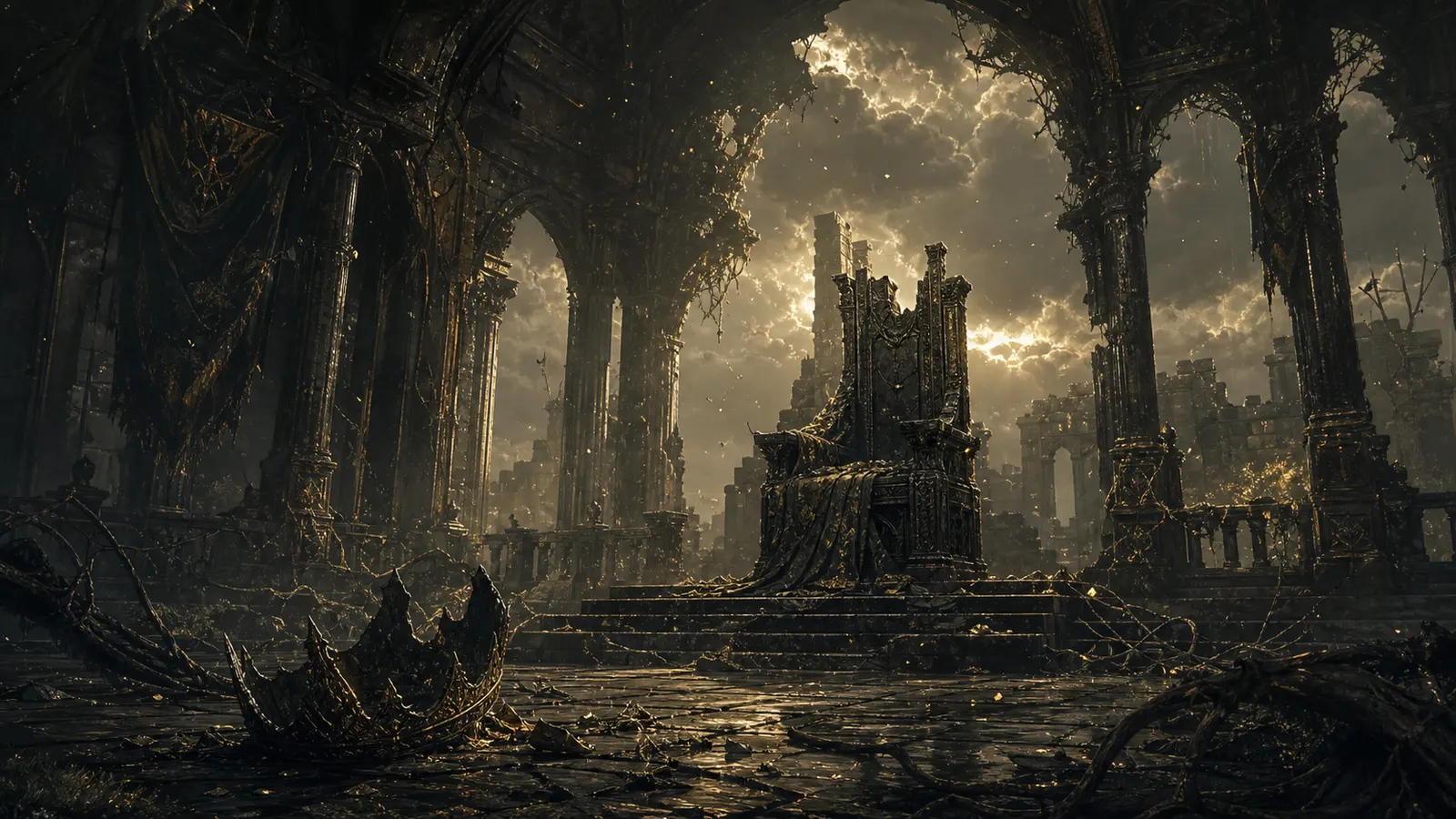
Elden Ring distributes narrative authority across item descriptions, architecture, names, enemy placement, brief conversations, costumes, gestures, and absences. No single channel is sufficient. A sword can contradict the legend surrounding its owner. A corpse beside a doorway can give a location an unwritten past. An NPC may speak truth, self-deception, or a mixture that cannot be sorted immediately.
The player becomes an interpreter rather than a container for exposition. Meaning is assembled, revised, and sometimes abandoned. Two attentive players can finish with different understandings because they found different people, read different objects, or gave different weight to the same fragment. Uncertainty survives completion.
This is why the story can remain active after the final encounter. The mind keeps joining pieces when play has stopped. The process resembles archaeological interpretation: material traces do not yield a perfectly linear past, yet their incompleteness invites careful, creative reconstruction.
Solitude That Is Never Entirely Solitary
Long stretches of Elden Ring feel lonely. Wind moves across an empty field, footsteps echo in a tunnel, and a difficult enemy seems to know nothing about the person trying to pass. Yet signs of other players keep piercing that solitude: messages on stone, bloodstains replaying a stranger's last seconds, pale figures crossing the same room, and summons arriving to share danger.
These traces create a peculiar community. Most strangers never speak directly. They warn, joke, mislead, celebrate, demonstrate, or die in view of one another. A useful message can save a life; a foolish one can make a bleak place briefly funny. Community appears as fragments, matching the form of the narrative itself.
Outside the game, discussion continues through friends, videos, wikis, challenge runs, and arguments about the “right” way to play. That culture can become generous or gatekeeping. Elden Ring's own range of tools suggests a broader truth: learning with others does not make an experience less authentic.
Freedom to Leave and Return
The open world changes the meaning of difficulty because refusal becomes possible. A blocked route is not always a command to repeat it immediately. The player can turn toward a river, descend into a cave, follow a light on the horizon, help a stranger, gather materials, or simply ride until the atmosphere changes. Detour is part of progression.
That freedom protects agency from collapsing into obedience. The game applies pressure without dictating one response. A player may study a boss alone, summon spirits, cooperate with another person, rebuild attributes, exploit an elemental weakness, or postpone the fight. Each solution tells a slightly different story about how the obstacle was understood.
The result explains why Elden Ring belongs among fantasy games that genuinely feel like entering another world. Its freedom is not mere acreage. It is the permission to change the question when the current answer fails.
The Body Learns Before the Mind Explains
Some knowledge in Elden Ring becomes physical before it becomes verbal. The thumb stops rolling too early. The hand waits through the delayed strike. The player hears a sound and moves before naming its source. A route through dangerous ground becomes almost musical: step, pause, turn, attack, breathe.
This bodily learning gives difficulty an intimacy that abstract analysis can miss. A person may understand every rule and still panic when pressure arrives. Repetition narrows the distance between knowing and doing. It trains patience under motion, not patience as a slogan.
The lesson can feel surprisingly familiar. Daily life also contains tasks understood in theory but lost under stress: a difficult conversation, a crowded road, a deadline, a mistake made twice. Elden Ring cannot solve those things, yet its rhythm makes one modest truth palpable: attention can be rebuilt after panic.
Help Does Not Cancel Achievement
Debates about difficulty often imagine achievement as a sealed room containing one player and one approved method. Elden Ring repeatedly opens that room. Spirit Ashes, cooperative signs, flexible builds, crafted tools, status effects, shields, ranged attacks, and knowledge shared by others all belong to the design. Using them is still a decision about risk, timing, and desire.
Help changes an encounter, but so does every weapon or level gained. The meaningful question is not whether the player suffered in the purest possible form. It is whether the chosen approach produced attention, involvement, discovery, or joy. Self-imposed challenges can be powerful; they become poisonous when turned into laws for strangers.
Agency includes the right to seek support. A summoned ally can turn a scene of private frustration into a brief act of solidarity. The victory is shared, not invalidated.
Choice Without Moral Safety
Elden Ring often asks for decisions before it provides enough knowledge to make them cleanly. An NPC disappears after receiving help. A quest changes because a place was visited too early or too late. Loyalty to one figure may close a path toward another. The interface rarely pauses to label kindness, betrayal, wisdom, or error.
This uncertainty gives choice weight. The player cannot always behave like a manager optimizing a transparent system. They act with partial evidence, then live with consequences that may remain ambiguous. Reloading a guide can recover control, but the first encounter with uncertainty leaves its own memory.
Such decisions complicate the image of the chosen hero. As different kinds of fantasy heroes remind us, agency does not guarantee innocence. The ability to change a world can arise beside entitlement, ambition, care, curiosity, or hunger for recognition.
Endings and the Burden of Agency
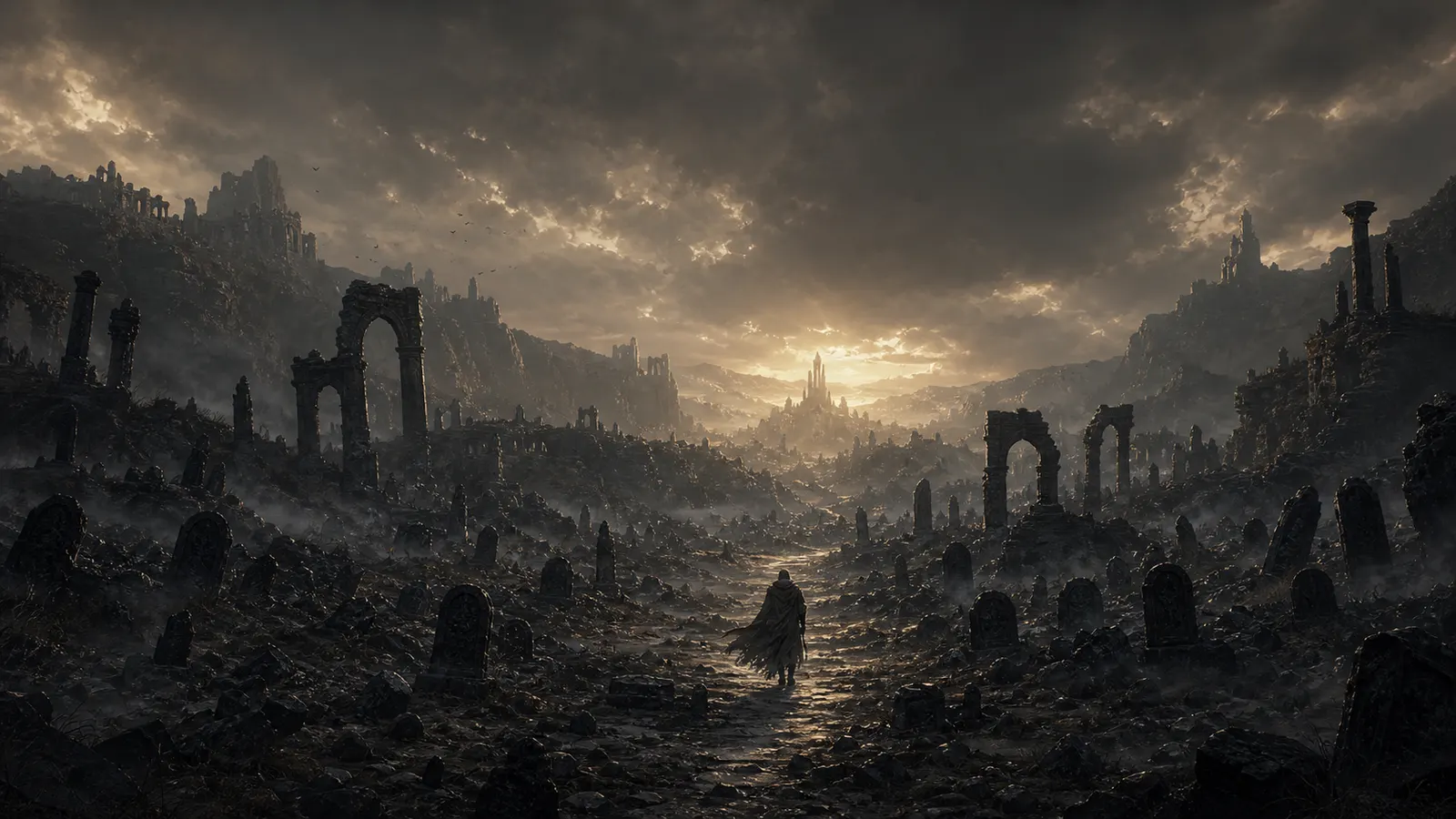
The final choice does not arrive as a reward for achieving perfect understanding. By then the player has heard competing visions, missed parts of several lives, killed figures whose histories remain incomplete, and benefited from powers that may deserve suspicion. An ending must be chosen from within that damaged knowledge.
This is where agency becomes heavier than freedom. The player can preserve, alter, reject, or burn forms of order, but no gesture restores an untouched beginning. Every future inherits something. Even refusal becomes a force with consequences for people who never consented to the player's journey.
The game therefore unsettles heroic nostalgia: the hope that one exceptional figure can return a broken society to an imagined pure age. Becoming powerful does not place the player outside the systems in decline. It makes the player responsible for what those systems become next.
What the Player Carries Back
The memory that remains is rarely a list of victories. It may be the enemy finally read correctly, the stranger who appeared beside a gate, the message that caused laughter in a tomb, the quiet ride after a brutal fight, or the decision whose meaning never became certain. Elden Ring survives in memory as a pattern of attention.
Its deepest promise is not that failure secretly makes everyone stronger. Failure can exhaust, humiliate, or teach nothing. Meaning begins when the player is allowed to answer it: by observing, changing, leaving, returning, accepting help, or choosing a different desire. Agency lives in that answer.
When the controller is set down, the world does not become a lesson neatly transferred into life. Something smaller remains: the felt knowledge that panic can slow, that certainty is not required for the next step, that help and achievement can coexist, and that choosing a future matters precisely because no future arrives pure. Death returns the player to the road. Choice decides why they walk it again.
Sources and Further Reading
- Bandai Namco Europe: Elden Ring for the official overview of the Lands Between and the action RPG structure.
- PlayStation's interview with Hidetaka Miyazaki for Miyazaki's direct account of player freedom, fragmented narrative, difficulty, learning through failure, and exploratory pacing.
- Xbox Wire: Miyazaki and Martin Present Elden Ring for Miyazaki's comments on overcoming challenges, RPG agency, and the open-world design.
- Game Studies: The “Git Gud” Fallacy for a scholarly analysis of difficulty, accessibility, and gatekeeping around the Elden Ring experience.
- Game Studies: Elden Ring — Subverting Heroic Nostalgia for a study of emergent narrative, player agency, and the game's critique of nostalgic heroism.
- Eludamos: Materiality, Nonlinearity, and Interpretive Openness for a framework connecting environmental storytelling, nonlinear exploration, and meaning assembled from fragments.