Guides
What Is Dark Fantasy, and Why Does Darkness Call to Us?
A clear and emotionally rich guide to dark fantasy: wounded worlds, costly magic, gray morality, and hope that only matters because it has crossed the dark.
Dark fantasy is easy to misunderstand. The name immediately calls up night, ruins, black towers, cursed forests, rain, monsters, blood, broken saints and kingdoms that seem to have forgotten the morning. None of those images are useless. Many belong naturally to the atmosphere of the genre. But if we define dark fantasy only as fantasy made darker, harsher or more violent, we miss the thing that gives the form its force.
Darkness in dark fantasy is not merely a color palette. It is a pressure placed on the world. It asks what happens to magic when power is not innocent, what happens to heroism when the hero is already damaged, what happens to hope when the road toward it passes through guilt, decay and fear. In ordinary heroic fantasy, the dark may be an enemy at the edge of the map. In dark fantasy, the dark has often entered the map itself.
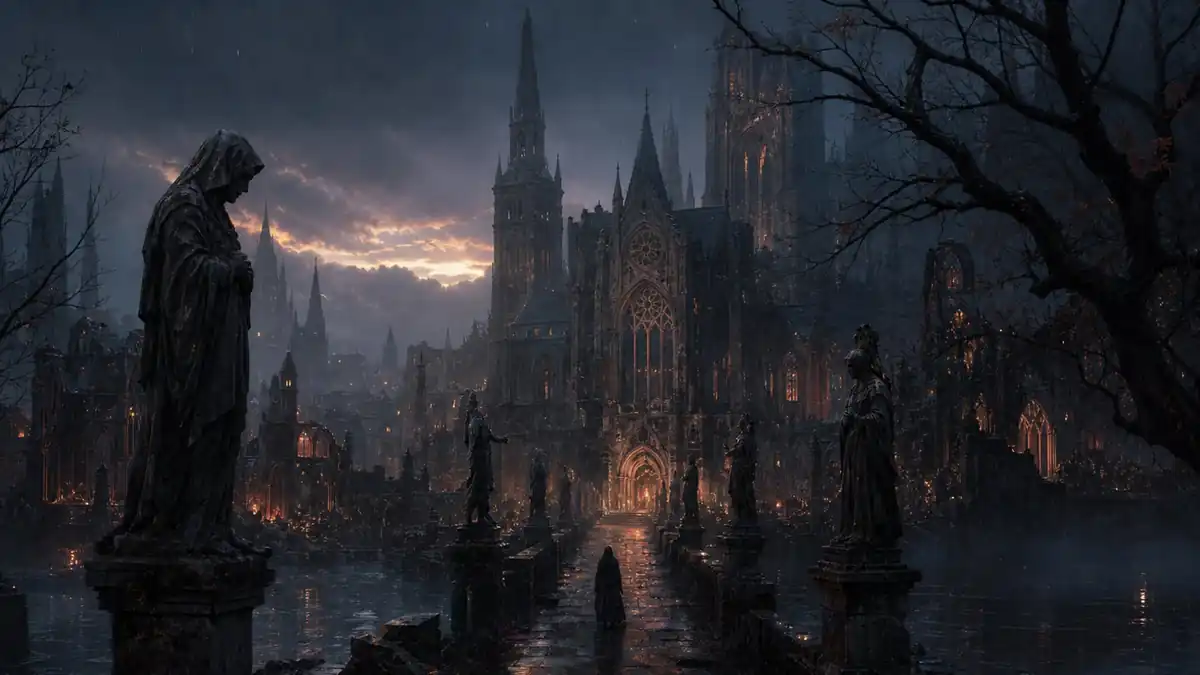
In What Is Fantasy?, fantasy was described as more than the presence of impossible things. It is a symbolic language for fear, hope, power, death and meaning. Dark fantasy is one of the harsher dialects of that language. And after What Is High Fantasy?, where the secondary world stands in grandeur and mythic scale, dark fantasy asks what happens when that world is wounded, corrupted or morally unsure.
A Short Definition of Dark Fantasy
Dark fantasy is a form of fantasy that combines magic, invented worlds, supernatural beings, mythic structures or impossible forces with a darker emotional and moral atmosphere. It often includes danger, decay, dread, curses, violence, spiritual pressure, gray morality and worlds where innocence has already been damaged.
Yet the key point is that dark fantasy is still fantasy. The darkness does not replace worldbuilding, wonder or myth; it infects them. Magic may be beautiful, but it may also demand a price. A kingdom may be majestic, but its foundations may be rotten. A hero may save someone, but the saving may leave a stain. A monster may threaten the village, but the village may have helped create the monster.
A useful definition is this: dark fantasy is fantasy that refuses to keep the shadow outside the sacred circle. It lets darkness enter the world, the magic, the hero and the idea of hope itself. Not because darkness is better than light, but because light becomes more serious when it is not protected from the cost of existing.
Dark Fantasy, Horror and Grimdark
Dark fantasy often stands near horror, but the two are not identical. Horror usually aims first at fear, dread, revulsion or the encounter with the terrifying. The world may be realistic, and the frightening element may invade it from outside. Dark fantasy can be frightening, but fear is not always its final purpose. It is also concerned with myth, magic, invented histories, curses, powers, kingdoms and moral consequence.
Grimdark is another neighboring term. Grimdark usually suggests a world that is extremely bleak, violent, cynical or morally degraded. Hope may be weak, mocked or nearly absent. Dark fantasy can overlap with grimdark, but it does not have to share that level of despair. A dark fantasy world can be cruel and wounded while still leaving room for loyalty, sacrifice, mercy, fragile beauty or a difficult form of hope.
In simple terms, horror asks: what terrifies us? Grimdark asks: what remains if the world is almost fully corrupted? Dark fantasy asks: when magic and darkness live in the same world, how does the human being choose, endure, pay and remain alive inside the shadow?
The Wounded World
A dark fantasy world is often wounded before the story begins. The wound may be political, magical, spiritual, historical or emotional. A kingdom has betrayed its people. A god has gone silent. A holy order has become a machine of fear. An ancient spell has poisoned the land. A war ended long ago, but its consequences are still walking through the streets.
This wound is not just atmosphere. It changes the meaning of action. Saving one person in a bright world may be clearly good. Saving one person in a wounded world may require betrayal, forbidden magic, an alliance with a monster or the breaking of a law that once protected everyone. Dark fantasy makes goodness harder to recognize, not because goodness has no meaning, but because meaning must survive pressure.
The past is rarely dead in dark fantasy. It returns as curse, dynasty, ritual, debt, ruined city, forbidden name, inherited guilt or a fear that everyone has learned to call tradition. The world feels haunted because history has not finished speaking.
Magic With a Price
One of the strongest marks of dark fantasy is costly magic. Magic is not only wonder. It may require blood, memory, years of life, a name, a sacrifice, a bargain, a moral compromise or the slow loss of the self. This does not mean the story needs graphic violence. It means power has consequence.
Costly magic prevents power from becoming a simple tool. If a spell can save a city but break the person who casts it, magic becomes ethical. If a curse can defeat an enemy but spread to the innocent, victory becomes dangerous. If a character can raise the dead but loses the ability to love the living, the miracle becomes a wound.
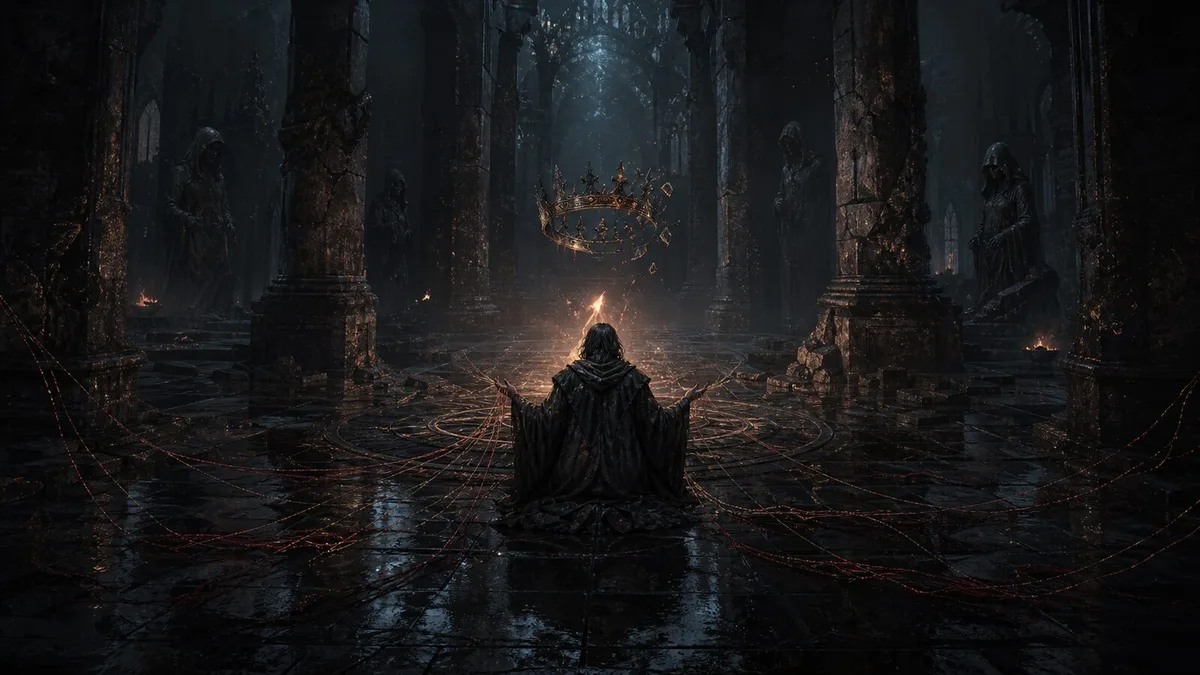
At the Fantasya level, costly magic is the dream of changing reality with the reminder that no change is clean. This is close to ordinary life. Every act opens one road and closes another. Dark fantasy gives that truth a visible form.
Gray Heroes Are Not Empty Heroes
Dark fantasy is often associated with gray heroes, but gray morality is frequently misunderstood. A gray hero is not simply a character who does whatever they want while the story makes them look stylish. A strong gray hero still has moral weight. The character may be guilty, afraid, angry, damaged or compromised, but the story must take the cost of those choices seriously.
The best gray heroes are understandable without becoming comfortable. We may see why they lie, kill, bargain or withhold mercy, but understanding is not the same as absolution. Mature dark fantasy does not enjoy corruption as decoration. It studies what corruption does to a person and what remains after the damage.
In this kind of story, heroism is less about purity and more about whether a person still has a living relation to conscience. Can they still feel shame? Can they still protect something? Are they afraid of becoming the very force they oppose? Sometimes that fear is the last honest flame in them.
Why Does Darkness Call to Us?
The easy answer is that darkness is exciting. Danger sharpens attention. Forbidden things attract the imagination. But that answer is too small. Dark fantasy endures because some parts of human experience are not visible in clean daylight.
In real life, evil rarely arrives wearing a theatrical mask. Power often hides inside systems, habits, family loyalties, fear, hunger, silence or the desire to survive. Pain may not have a clear body. Guilt may have no courtroom. Grief may not look like an enemy. Dark fantasy gives body to such forces. Corruption becomes a kingdom. Fear becomes a forest. Guilt becomes a curse. Depression becomes a city under a sky that cannot clear.
That is why darkness calls. It does not call only because we want to be frightened. It calls because it gives shape to pressures that ordinary language often cannot hold. In a dark fantasy story, something that was only a fog in the chest can become a road, a tower, a monster, a ritual, a wound in the land.
Hope Inside Dark Fantasy
Dark fantasy does not need easy hope. Easy hope would feel false inside a wounded world. But the best dark fantasy often keeps some form of hope alive precisely because it is not easy. A candle in sunlight may disappear. A candle in a crypt becomes serious.
Hope in dark fantasy may be small. It may be one child carried out of a cursed city. One promise kept after every institution has failed. One mercy offered by someone who has almost forgotten mercy. One traveler still holding a lantern on a road where no one has promised dawn.
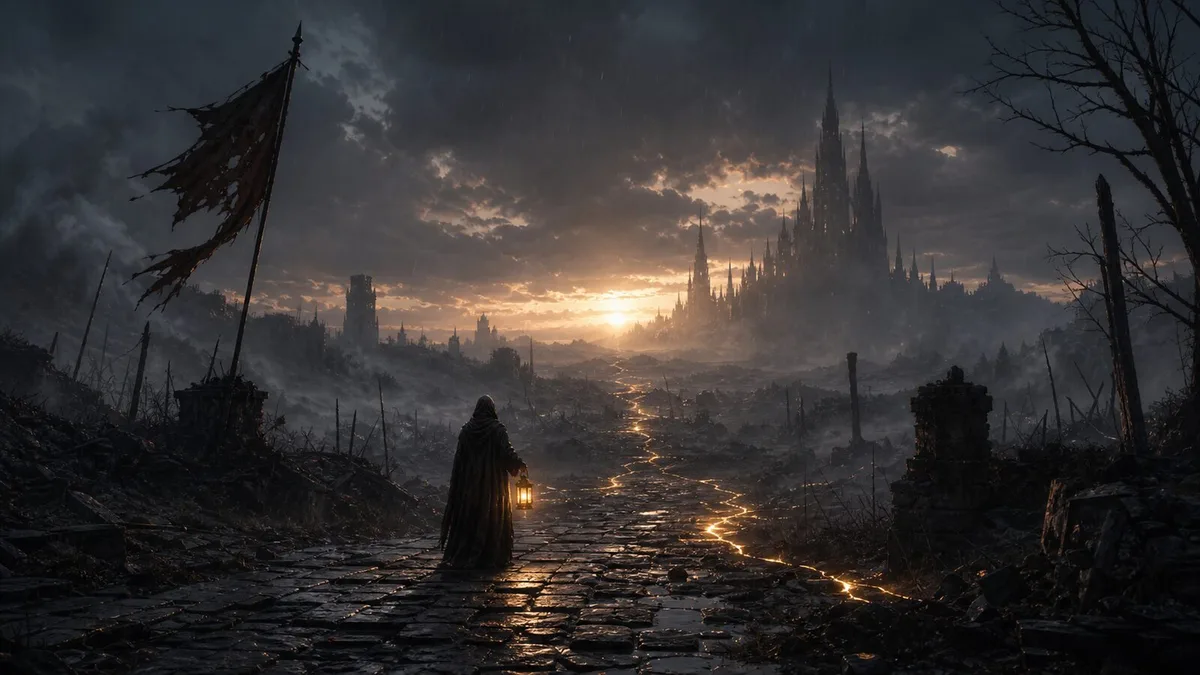
This is where dark fantasy separates itself from a mere pose of darkness. If everything is corruption, the story becomes flat. Darkness has meaning when something resists it, even weakly. A small hope, honestly earned, can be stronger than a bright triumph that costs nothing.
Common Elements of Dark Fantasy
Dark fantasy often includes cursed bloodlines, ruined cities, dangerous rituals, fallen gods, haunted forests, morally compromised orders, forbidden books, wounded lands, spirits, demons, corrupted kings, exhausted heroes and endings that are bitter or half-bitter. But these elements are not enough by themselves.
Rain does not create dark fantasy. Black armor does not create dark fantasy. A cruel scene does not create dark fantasy. The darkness must affect the moral structure of the world. It must change how power works, how hope feels, how characters choose and what it means to survive.
Moral ambiguity is also important, but ambiguity is not the same as meaninglessness. If everything is equally corrupt, choice loses weight. Strong dark fantasy keeps the difference between betrayal and loyalty, cowardice and courage, surrender and resistance alive. It only makes that difference harder to see.
Common Mistakes
The first mistake is believing that more violence automatically makes stronger dark fantasy. Violence without consequence becomes noise. Darkness must be tied to character, world and meaning.
The second mistake is confusing dark fantasy with total hopelessness. Absolute despair is often easier to write than difficult hope. A world where nothing is worth saving may feel intense for a moment, but it quickly becomes emotionally empty. A wounded world where something still deserves protection is harder and more powerful.
The third mistake is glamorizing corruption. Dark fantasy can contain seductive villains, damaged heroes and beautiful ruins, but it must not erase the cost of what they do. Mature darkness sees consequence.
Dark Fantasy in Books, Games and Worlds
In games, dark fantasy can be especially powerful because the audience moves through the wound. A player crosses ruined streets, reads broken architecture, fights cursed beings and slowly gathers the history of a fallen place. Works such as Dark Souls, Bloodborne and Elden Ring show how silence, space, enemies and fragments of lore can create the feeling of a world already broken before the player arrives.
In literature, dark fantasy can be quieter. It does not always need a giant battle. A family curse, a city that has lost faith, a magic that eats memory, or a saint whose miracle was never innocent can be enough. What matters is that the darkness has emotional and ethical depth.
This connects directly to Fantasy Is Not Escape from Reality; It Is the Repair of Reality. Fantasy can give shape to wounds. Dark fantasy does this from the harder side. It does not hide the wound, but it turns the wound into an image that can be faced.
Conclusion
Dark fantasy is not fantasy with the lights turned down. It is fantasy in which the world is wounded, magic has cost, morality is difficult and hope must travel through shadow before it can be trusted.
We return to dark fantasy because life is not always clean, fair or easily repaired. Sometimes an imaginary darkness helps us look at real pressures without being destroyed by them. Good dark fantasy does not abandon us in the dark. It asks what still refuses to go out there.
For the wider map of fantasy genres, see Types of Fantasy Genres.
Further Reading
- Encyclopaedia Britannica: Fantasy for a broad definition of fantasy as a narrative genre.
- Encyclopaedia Britannica: Horror Story for the aims and tradition of horror storytelling.
- Wikipedia: Dark Fantasy for an overview of the term dark fantasy.
- The Encyclopedia of Science Fiction: Fantasy for a broader genre context.
- Wikipedia: Grimdark for an initial contrast with grimdark.