Guides
Types of Fantasy Genres: From High Fantasy to Dark, Low, Urban, Portal, and Cozy Fantasy
A field guide to the major fantasy subgenres: immense secondary worlds, wounded dark worlds, hidden magic in ordinary life, cities with old gods, portals, mythic patterns, grim politics, and softer forms of wonder.
Fantasy has one name, but that name hides many roads. Sometimes we enter a world with its own languages, dynasties, gods, wars, and forgotten maps. Sometimes magic breathes beneath the surface of a modern city, behind a station wall or under the rain on a neon street. Sometimes darkness presses on the heart of the world and the hero must choose between wounds. Sometimes the most powerful spell is a warm room, a repaired table, a friend who stays, and the slow making of a home.
The types of fantasy genres are more than market labels. They are ways of shaping experience. High fantasy gives us the feeling of standing inside history. Dark fantasy asks us to look at corruption, pain, and compromised hope. Low fantasy breaks the border of the ordinary world. Urban fantasy brings magic into streets, apartments, offices, alleys, and subway stations. Portal fantasy turns crossing over into a rite. Cozy fantasy proves that tenderness can be a serious kind of magic.
In What Is Fantasy?, we described fantasy as a way of thinking about humanity, imagination, reality, fear, death, and meaning. This article applies that idea to genre. A genre is not a cage; it is weather. Once we understand that weather, we can see why some stories call us to battle, some to grief, some to escape, some to return, and some to build a small shelter in a world that has not yet become safe.
What Is a Fantasy Genre?
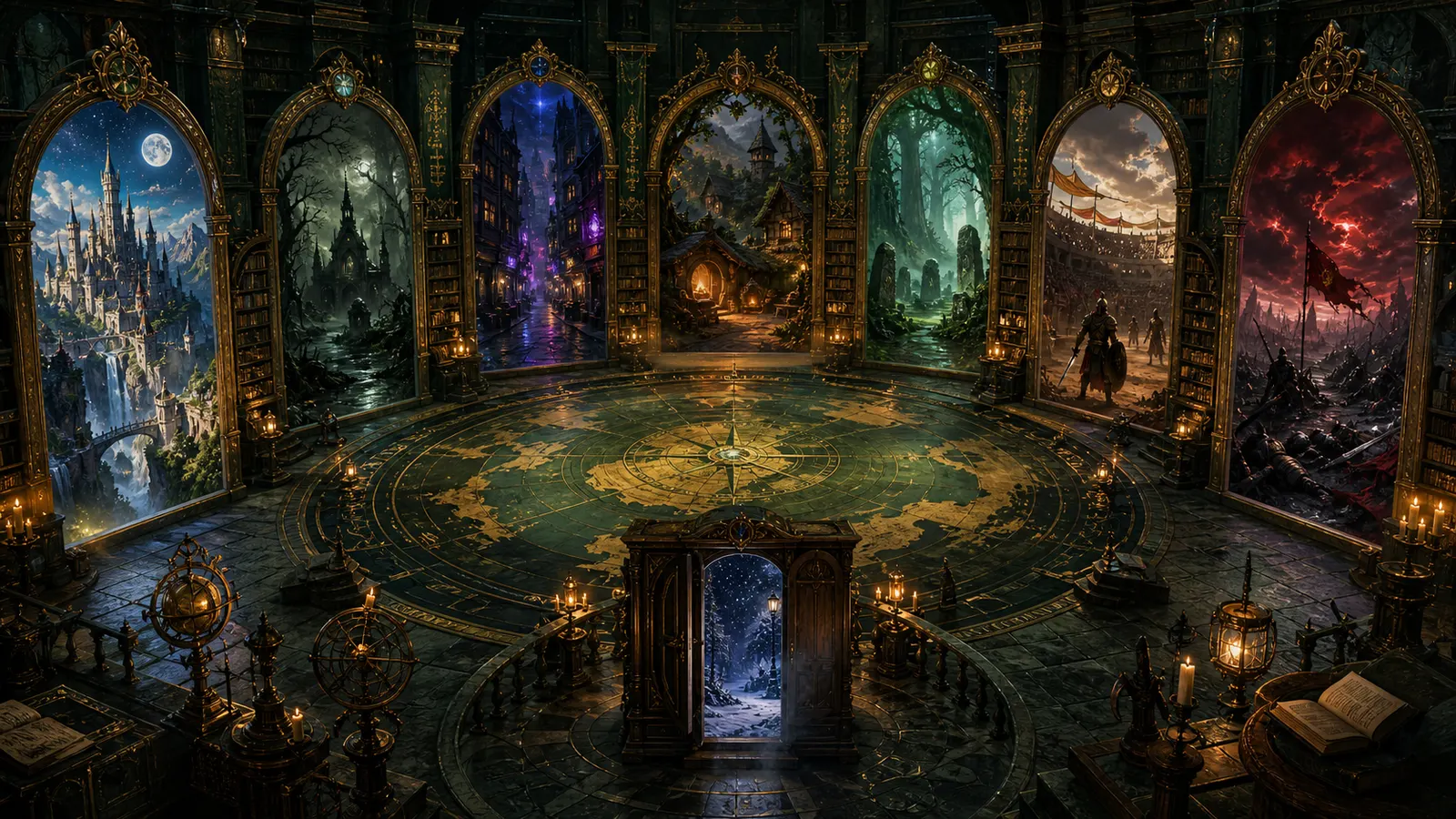
A fantasy genre is a bundle of expectations, images, narrative habits, emotional pressures, and philosophical questions. When we say high fantasy, we usually expect a secondary world, large scale, and a sense that private action is tied to historical consequence. When we say dark fantasy, we expect darkness to do more than tint the scenery; it should press on ethics, bodies, power, and hope. When we say urban fantasy, the city becomes a meeting place between ordinary life and the unseen.
The point is not to trap a story inside one label. Many strong works survive by crossing borders. The Lord of the Rings is foundational high fantasy, yet it is full of grief, exhaustion, loss, and moral danger. The Witcher draws from dark fantasy, folklore, politics, detective structure, and monster fiction. Harry Potter begins close to low fantasy and portal fantasy, then grows into school fantasy, hidden-world fantasy, and modern myth. Classification helps us see the forces at work inside a story; it should not lock the door from the outside.
High Fantasy: When the World Is Larger Than the Self
High fantasy usually begins with a world that is not simply our own with decoration added. It has its own geography, languages, rulers, myths, wars, and memory. In this mode, a protagonist is rarely facing a private inconvenience. The character moves inside history. A ring, crown, prophecy, invasion, lost heir, broken oath, or returning darkness can change the fate of lands. Our article What Is High Fantasy? explores this through secondary worlds and the pressure of grandeur.
Tolkien remains the central modern example. Middle-earth is known for maps, names, peoples, and deep backstory, but its force does not come from detail alone. It feels old. It seems to have lived before us and to continue after us. The Tolkien Estate material on The Lord of the Rings matters here because the work turns worldbuilding into a stage for power, corruption, friendship, smallness, and resistance.
High fantasy becomes alive when outer grandeur meets human pressure. Castles and armies are not enough. If spectacle remains detached from fear, tenderness, temptation, and cost, the result is a painted banner. But when the world is vast and the hero's hands remain small, epic feeling begins to breathe. Frodo matters because he does not defeat history through military glory. He keeps going while carrying something that corrodes the soul.
Dark Fantasy: Darkness as a Test
Dark fantasy turns darkness into moral atmosphere. It moves close to pain, corruption, fear, the body, death, and choices that refuse to become clean. In What Is Dark Fantasy?, we argued that darkness matters when it reveals something rather than merely decorating the page. A shadow should expose the world and the person standing inside it.
The Witcher is useful because its darkness often begins with monsters and returns to human beings. Geralt enters a village or a city, reads signs, prepares for a creature, and then discovers that the problem is larger than killing a beast. Victim and threat may be tangled together. A contract can lead toward prejudice, poverty, old violence, political cruelty, or a wound that no sword can close. That is where dark fantasy becomes powerful: it forces the reader to look at what comfortable light often hides.
Dark fantasy is not the same as despair. If the world is only meaningless and black, the text soon becomes flat. The genre is strongest when hope remains small, costly, and wounded. A good choice may not save the kingdom, but it can prove that a human being has not entirely surrendered to the dark.
Low Fantasy: The Ordinary World Cracks Open
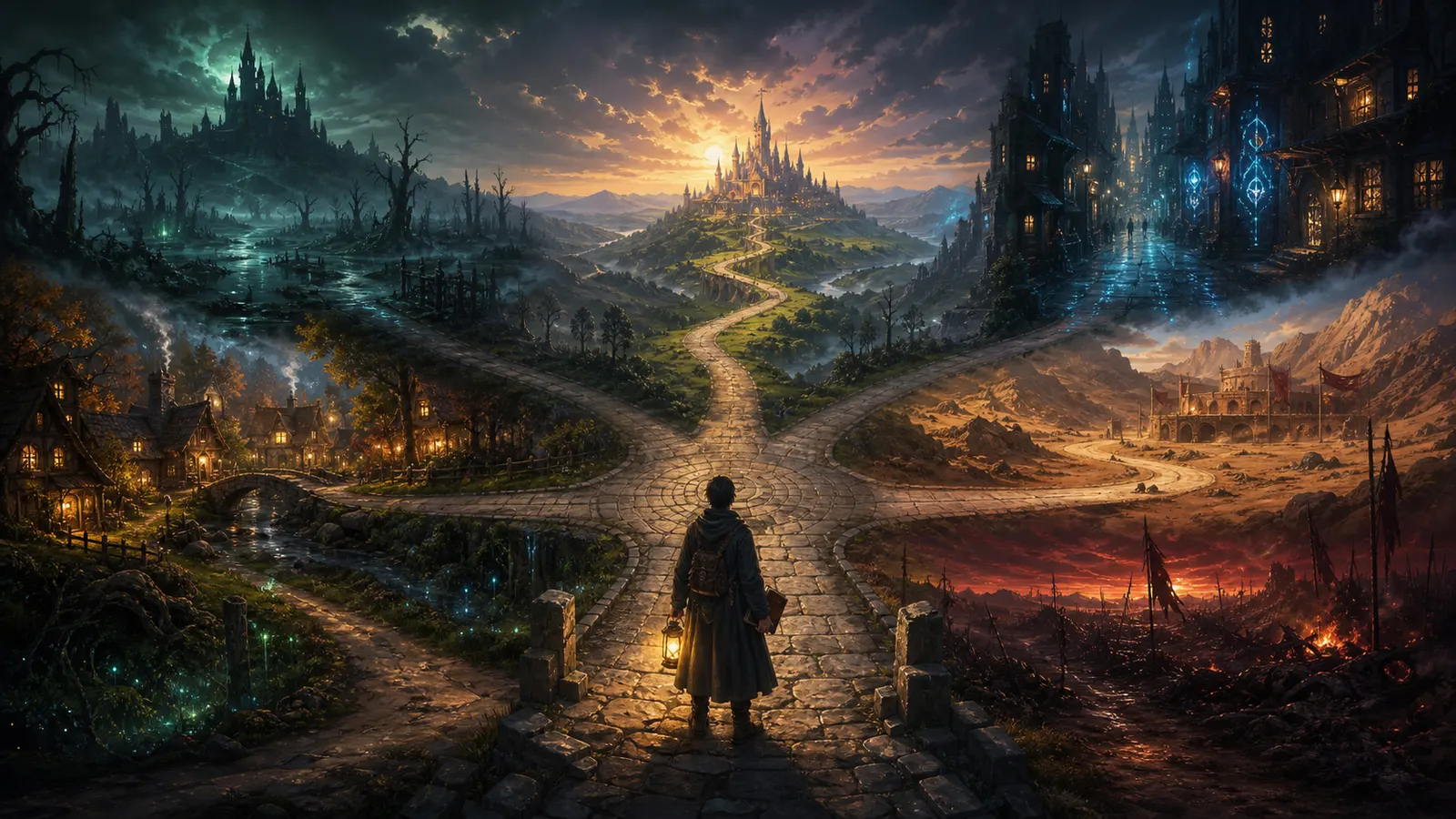
Low fantasy often begins near the world we recognize. The impossible enters ordinary life without turning all reality into a fully separate realm. The point of contact may be a house, school, street, city, family, object, or hidden institution. Because of this, low fantasy often carries the thrill of discovery. The reader moves with the suspicion that another layer has been waiting under the surface.
This category overlaps heavily with urban fantasy and portal fantasy. Harry Potter begins in domestic misery, suburban dullness, school routines, train platforms, and official-looking buildings. Then a magical society opens from inside that ordinary frame. Part of the fascination of the Wizarding World is the thought that a second order might be hidden beside the first, separated not by distance but by perception, secrecy, and passage.
Low fantasy matters to Fantasya because it asks whether reality is as closed as habit makes it seem. Perhaps the world is not empty of wonder; perhaps we have become trained to walk past the cracks. This genre can join childhood astonishment with adult unease. The ordinary world remains near, but it no longer feels simple.
Urban Fantasy: Magic in the Skin of the City
Urban fantasy makes the city feel alive. Streets, apartments, police files, bureaucracy, advertisements, subways, rooftop gardens, night markets, and lonely windows collide with spirits, spells, forgotten gods, private orders, and old bargains. In this mode, magic leaves the distant forest and the medieval tower. It breathes under electric light and behind locked office doors.
The strength of urban fantasy lies in contrast. The modern city presents itself as rational, recorded, managed, and mapped. Fantasy replies that beneath this order older things are still moving: ancestral fears, worn-out deities, family curses, secret economies, languages no one admits to knowing. Magic in urban fantasy often feels smuggled. It must remain hidden because the official world cannot bear the full truth of it.
This genre suits contemporary feeling. People live close together in cities and still feel separated from one another. Urban fantasy turns that separation into a doorway. A silent neighbor, a night-shift guard, a derelict building, or a cafe open after midnight may belong to a hidden order. The city becomes less empty, more dangerous, and more intimate at the same time.
Portal Fantasy: The Rite of Crossing
Portal fantasy is built around the moment of entry. A door, wardrobe, mirror, rabbit hole, train, book, storm, or strip of mist carries a character from the known world into another order of reality. The Chronicles of Narnia gives one of the most famous images through the wardrobe. Alice's Adventures in Wonderland belongs to a different tradition, but it also turns descent into a strange and transforming passage.
The portal matters because crossing changes perception. The character leaves familiar law behind and must learn how to see again. For the reader, the function is similar. We learn names, dangers, customs, and rules alongside the newcomer. That makes portal fantasy especially welcoming for people beginning their journey through the genre. Wonder arrives step by step.
A strong portal is never only transport. It should carry emotional meaning. The wardrobe in Narnia is not a convenient hallway; it stands at the border of childhood, war, refuge, faith, fear, and kingship. Every memorable portal asks a quiet question: when you leave your world, what do you abandon, and what do you carry through?
Sword and Sorcery: Close Danger and the Tired Body
Sword and sorcery usually works on a tighter scale than high fantasy. Instead of a war for the fate of all existence, we meet swift adventures, immediate peril, rough cities, old temples, thieves, dangerous magicians, forbidden cults, and heroes who survive through body, skill, nerve, and appetite. The Conan tradition has a major place in the history of this mode, even when modern works reshape it.
The appeal is motion. Sword and sorcery often reveals the world through travel, a contract, a stolen relic, an arena, a curse, or a fight in a room where no one can be trusted. Its philosophy emerges from action. The protagonist may not be heir to a crown, but they have a wound, a debt, a hunger, and a decision to make before the torch burns out.
When the genre shrinks into muscle and violence alone, it becomes thin. At its best, it shows how the human body meets magic, greed, terror, desire, and survival. The epic feeling here does not come from a distant throne. It rises from dust, sweat, blood, and the road that must still be crossed on injured feet.
Mythic Fantasy: When the Past Is Still Alive
Mythic fantasy moves close to older patterns: gods, rituals, curses, underworlds, vows, sacrifices, sacred names, forbidden gifts, and return. It does not have to retell a known myth directly. Sometimes it borrows mythic logic: a forest can remember, a name can alter fate, a gift can carry a hidden price, and death can become a threshold rather than an ending.
Tolkien's thinking about fairy-stories is relevant because it treats fantasy as a form that can create secondary belief, recovery, escape, and consolation. Ursula K. Le Guin's From Elfland to Poughkeepsie is also crucial because it insists that language shapes the felt reality of fantasy. Mythic fantasy fails when it becomes a list of ancient-sounding names. It succeeds when the world feels as if it has sung, mourned, bargained, and remembered long before the first page.
For Fantasya, this mode is close to the heart of the project. Myth is not merely old material. It is compressed human questioning. Why do we sacrifice? Why do names matter? Why does death demand meaning? Why does pain often become more bearable when shaped into story?
Grimdark: When Power Has Worn the World Down
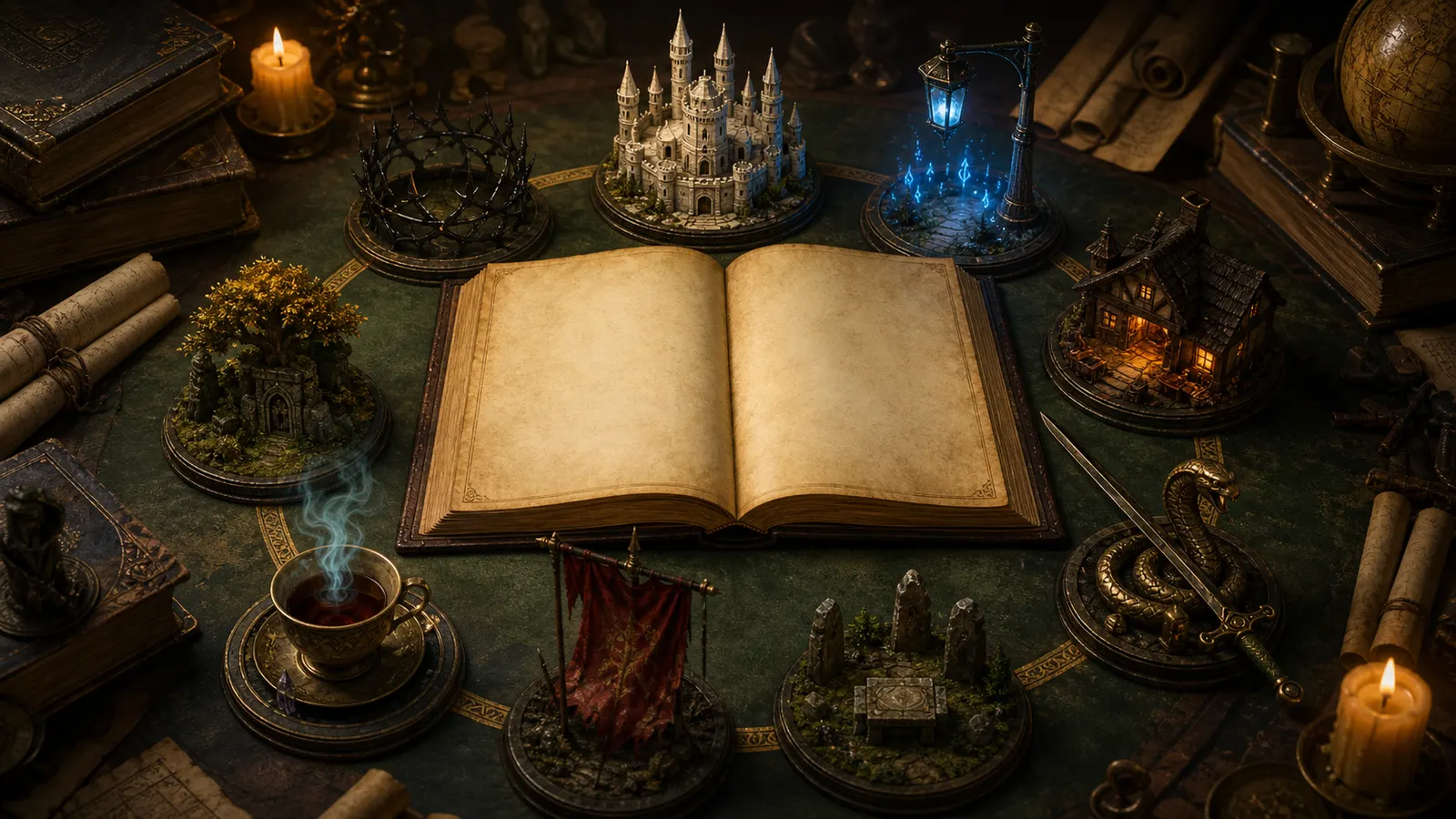
Grimdark is related to dark fantasy, but its tone is often harsher and more political. Institutions are decayed. Traditional heroism gives way to gray operators. War is not clean. Power stains nearly everyone who touches it. The difference matters: dark fantasy can hold a clear spiritual horizon inside darkness, while grimdark often asks how ethics can survive when the structure of the world itself is sick.
This mode appeals to readers who do not want moral simplification. Yet it has a danger. If bitterness becomes automatic, everything turns the same color. When no choice carries a different weight, darkness loses force. Strong grimdark preserves distinctions among bad, worse, necessary, cowardly, brave, and merciful, even when nothing is pure.
Cozy Fantasy: Comfort as Magic
Cozy fantasy has become more visible because many readers are exhausted by worlds made only of blood, fate, and shouting. This mode centers smaller life: friendship, food, tea, shops, inns, gardens, repair, craft, community, and the slow rebuilding of trust. Still, comfort should not be confused with shallowness.
After war, the greatest magic may be setting a table again. After exile, building one safe room can be harder than killing a monster. Cozy fantasy becomes strong when it understands that gentleness has a cost. Trust must be built. Wounds need time. A home survives through work, care, forgiveness, and repeated small choices.
This matters emotionally because fantasy does not always have to roar across a battlefield. Sometimes it speaks in a lower voice and says that the world may yet become more habitable. That too is wonder. That too can be a victory.
Hybrid Genres: Most Modern Fantasy Is Mixed
Many modern works cannot be explained with one label. A book may be high fantasy and borrow ethical pressure from dark fantasy. A game may be urban fantasy with portal structure. A story may begin as cozy fantasy and gradually open toward mythic fantasy. These mixtures are not failures of classification. They are signs that the genre is alive.
Farah Mendlesohn's Rhetorics of Fantasy is useful because it looks beyond market labels and asks how the fantastic enters a narrative. Is another world separate? Does the impossible intrude into our world? Does the character cross through a portal? Does the world expect the impossible as normal? Tzvetan Todorov's work on the fantastic, though from a different tradition, remains helpful for thinking about hesitation at the border between natural and supernatural explanation.
Where Should a Reader Start?
If a reader wants immense history, languages, maps, and moral struggle, high fantasy is a strong beginning. If they want ethical pressure, human monsters, and difficult choices, dark fantasy and The Witcher are closer roads. If they want magic beside modern life, low fantasy and urban fantasy may open faster. If they enjoy learning a world through arrival, portal fantasy is a welcoming gate. If they need restoration after violence, cozy fantasy offers a gentler fire.
For writers, the central question is similar: what emotional climate should the reader enter? Grandeur, fear, discovery, home, corruption, survival, wonder, grief, rest? That answer shapes the genre before creatures and spells are chosen. From there, it becomes easier to think about magic systems, fantasy hero types, and believable fantasy worlds.
Conclusion
The types of fantasy genres are not escape routes away from reality. They are maps of human need. High fantasy awakens the longing for history and meaning. Dark fantasy brings us near the wound. Low and urban fantasy suggest that ordinary life may be less sealed than we assume. Portal fantasy turns crossing into a spiritual event. Sword and sorcery places the body in immediate danger. Mythic fantasy leads us toward ancient memory. Grimdark interrogates power without mercy. Cozy fantasy reminds us that peace after suffering is also a victory.
Choosing a genre is finally choosing the weather of the soul. Every reader and writer should know what climate they are entering, because each kind of fantasy asks its own question of the human being: under shadow, under stars, in the city, at the hearth, in the forest, on the road, or at the threshold of a door.
Sources and Research Notes
- Britannica: Fantasy for a broad overview of fantasy as a narrative genre.
- Tolkien Estate: Verlyn Flieger on On Fairy-Stories for secondary worlds and belief.
- Tolkien Estate: The Lord of the Rings for official context on Middle-earth.
- Ursula K. Le Guin: From Elfland to Poughkeepsie for fantasy language and style.
- Farah Mendlesohn: Rhetorics of Fantasy for portal, immersive, intrusion, and liminal modes.
- Tzvetan Todorov: The Fantastic for hesitation between natural and supernatural explanation.
- The Witcher 3 official site for dark fantasy and moral grayness.
- Wizarding World for hidden-world and school fantasy examples.
- Narnia official books for portal fantasy.
- Discworld official series for comic fantasy, satire, and hybrid worldbuilding.