Essays
What Does Fantasy Do with Death?
Fantasy cannot make death harmless. It can give us somewhere to stand while we look at it.
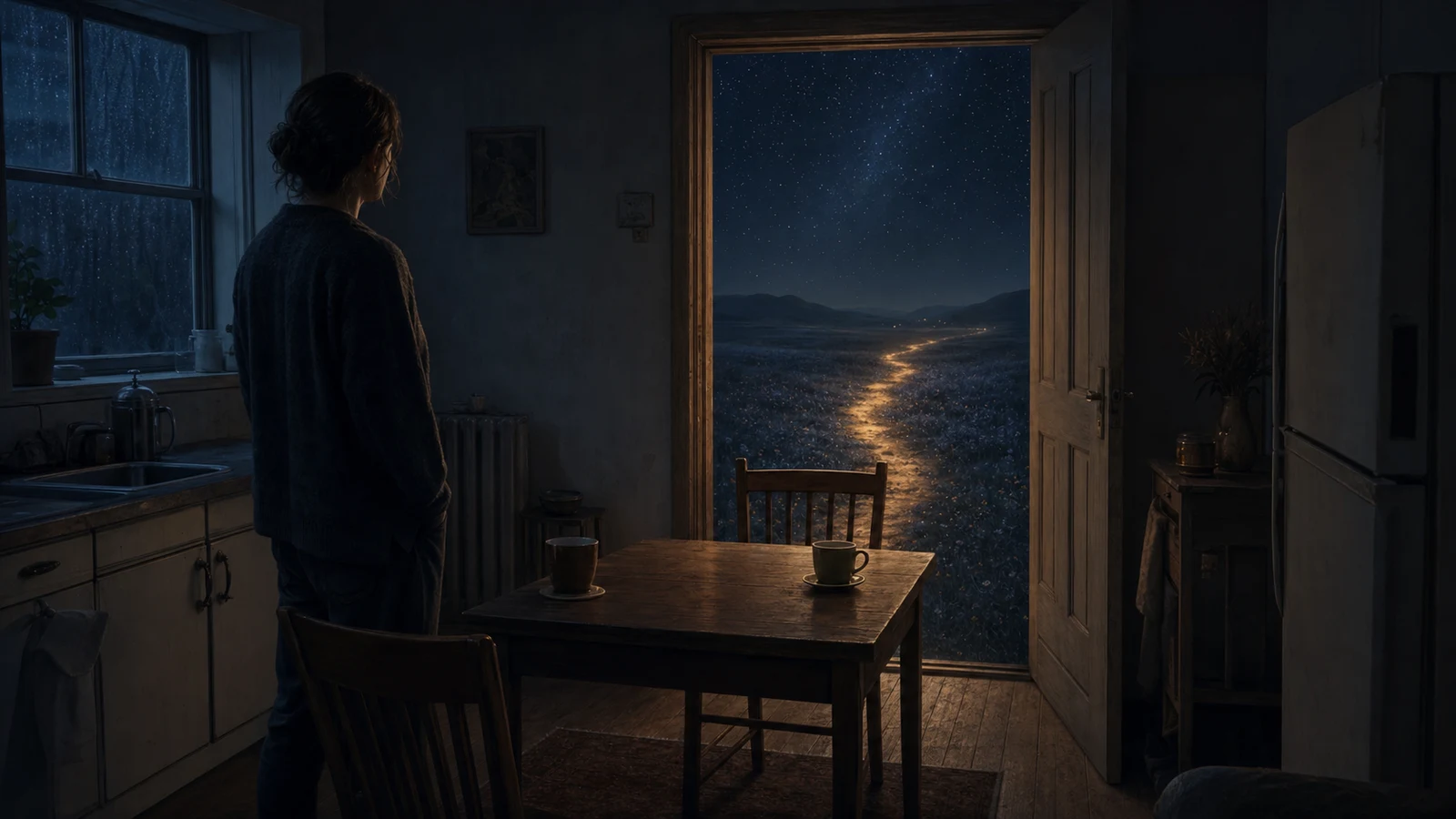
The day after someone dies, the kettle still clicks off. A delivery van blocks the street. There is milk in the refrigerator with a date later than the funeral. The world has committed an error so large that it should have stopped every clock, yet the washing machine finishes its cycle and plays its little tune.
That mismatch is one reason death is difficult to hold in the mind. A person can be woven through years of meals, arguments, errands, private jokes, and plans for next Thursday. Then the person is gone while Thursday remains. Language can state the fact in a sentence. The body takes longer to understand it.
Fantasy does something strange and useful at this edge. It gives absence a geography. The dead may wait across a river, behind a wall, in a grey country, or at the end of a road no living traveler should walk. Death may arrive as a king, a law, a wound in the order of the world, or a tired worker carrying a scythe. None of this tells us what really happens after life. It gives the living an image large enough to approach.
The Ordinary Work of Going On
Epic stories are full of last stands, fallen crowns, and names sung over funeral fires. Real absence often announces itself more quietly. It is the second cup taken from the cupboard before the hand remembers. It is a phone contact that cannot yet be deleted. It is knowing who would have laughed at a remark and having nowhere to send it.
Fantasy can contain both scales at once. A kingdom may mourn a dead queen while her child keeps finding one of her hairpins in a drawer. A warrior may cross the underworld for a beloved and still be defeated by the fact that the old life cannot simply resume. The impossible journey grows from a small wish: one more answer, one more apology, one more evening before the door closes.
Magic enlarges that wish without making it simple. A returned person may be changed by the country beyond us. If no spell can reach them, part of the relationship may still remain with the living.
When Absence Has a Place
Ordinary language gives absence very little shape. We say someone is no longer here. The sentence points toward an emptiness and stops. Fantasy refuses to stop so quickly. It builds a shore on the far side of that sentence. It hangs a gate in the dark and lets us hear movement behind it.
Underworlds have rules, and ghost roads demand a toll. Once death has a place, characters can bargain, trespass, wait, or turn back. Grief becomes action without becoming a problem action can solve. The hero reaches the boundary and discovers that courage is not permission. Love may carry someone to the gate. It has no authority over what the gate is for.
The border also protects a truth that resurrection stories sometimes forget: the dead are not possessions withheld from us. Longing is real, but it does not create ownership. A good journey to the underworld reveals the force of love and its limit in the same landscape.
Gilgamesh Leaves the City
The Epic of Gilgamesh does not begin as a gentle meditation on mortality. Gilgamesh is a mighty and destructive king. Enkidu becomes the companion who can meet his strength, share danger with him, and make the world feel less solitary. When Enkidu dies, heroic fame no longer protects the survivor. Gilgamesh sees his own ending in the still body of his friend.
He leaves Uruk to search for the life that does not end. The journey brings him to Utnapishtim, an exceptional survivor who received immortality from the gods. Gilgamesh cannot turn that exception into a human rule. He fails the trials before him and returns without the prize he wanted.
Calling this a tidy acceptance of death would make the story smaller. He has not solved grief. Enkidu is still dead. What changes is the direction of his sight. At the beginning, the walls of Uruk display a king's greatness. At the end, those walls can be seen as work that will outlast one body and shelter lives besides his own.
Achievement does not replace a friend. Gilgamesh is forced back into a mortal city after the road to immortality closes, where bread is baked, bricks are laid, and every name is carried for a while by other people.
Orpheus Turns Around
In Ovid's telling, Orpheus enters the underworld because Eurydice's life has been cut short. His music moves the shades and softens the rulers of the dead. For a moment, art accomplishes what grief secretly asks of every song, photograph, and remembered voice: it makes the lost person present enough to follow.
The permission comes with a condition. Orpheus must walk ahead and not look back until both have left the realm below. Near the end, afraid that he may lose her again and desperate to see her, he turns. Eurydice falls away a second time.
It is tempting to convert the scene into a lesson about trust. That reading is too clean. Ovid gives us fear entangled with love. Orpheus cannot confirm that Eurydice is behind him without destroying the condition that might restore her. He is asked to endure uncertainty at the moment when loss has made uncertainty unbearable.
The story does not mock the attempt. Song wins a path that did not exist before. Then a very human glance closes it.
Coming Back Is Not Coming Home
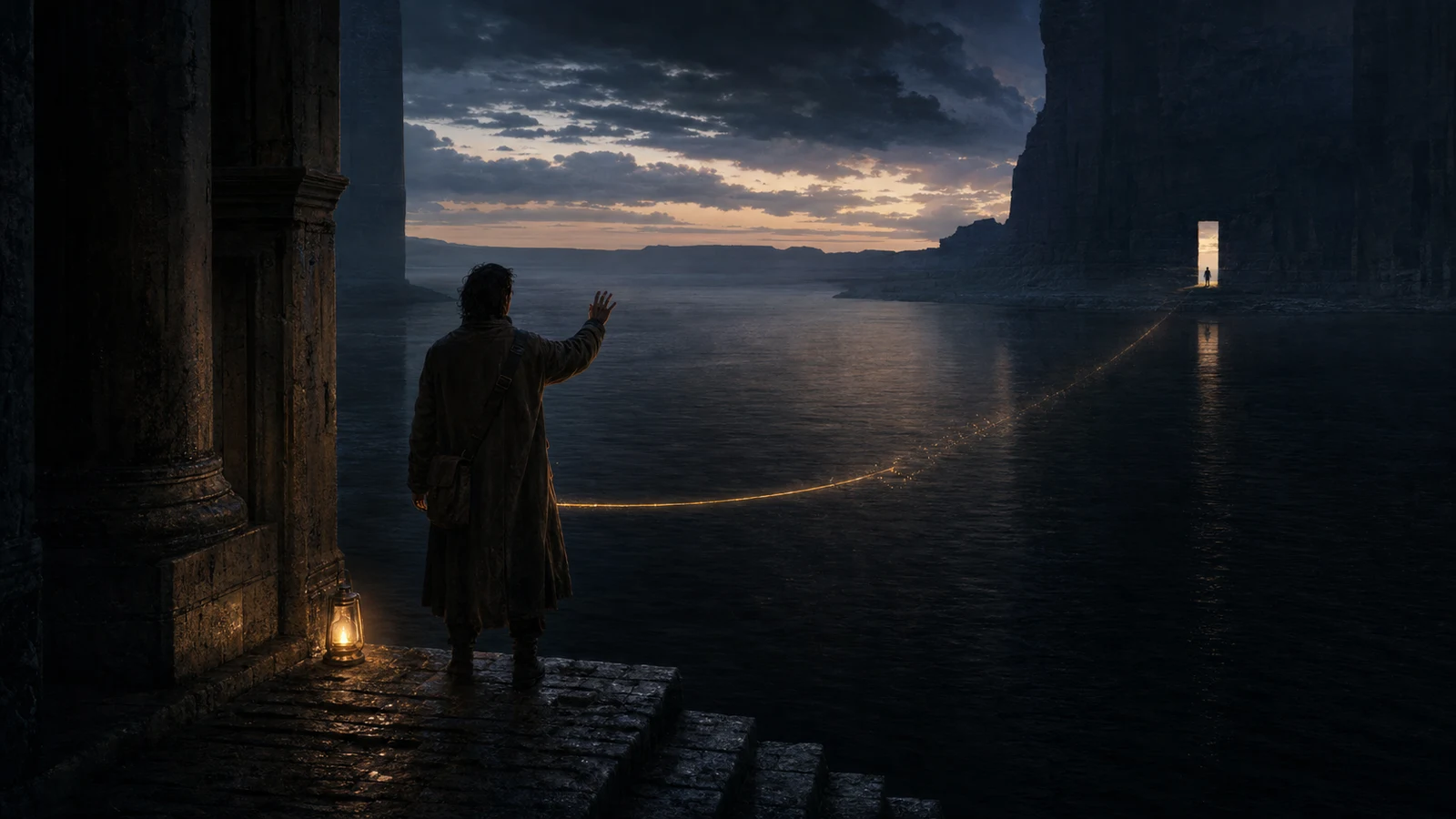
When death is reversible in a fantasy world, the harder question begins after the miracle. Does the returned person remember dying? Has time moved differently for those who waited? Can a household take back its old shape, or has the empty chair already changed everyone around it?
Many stories make return partial. A ghost can speak but not remain. A traveler comes home with knowledge that makes the old home unfamiliar. These costs are not laws of the genre; they refuse an easy reset.
The Lands Between takes a darker route. There, death has been removed and governed inside a broken sacred order. The result is not a painless world but one unable to finish its wounds. That metaphysical damage belongs to the fuller world-study of The Lands Between and its broken divinity. For the present question, one contrast matters: preventing death and restoring life are not the same act.
A return means little if it restores breathing while leaving recognition shattered. A miracle may place two people in the same room and leave more distance between them than the grave did.
Immortality Without Seasons
Tolkien was careful about a distinction casual summaries erase. Elvish longevity is bound to the life of Arda; what lies beyond its end is not revealed. Human mortality, viewed through Elvish tradition, is called the Gift of Ilúvatar: Men are not confined to the circles of the world in the same way.
That is an idea inside Tolkien's mythology, not a verdict that death is pleasant or a statement that every reader must accept. Its force comes from reversal. The short-lived envy those who remain; those who remain watch forests change, languages fade, and mortal friends vanish. An endless sequence of years can carry its own grief.
Sauron's promise is counterfeit. He stretches possession into corruption, as the Ring stretches Gollum's life and the Nine become Ringwraiths. The trap is the belief that existence can be secured through domination: grip the world hard enough and nothing loved will leave.
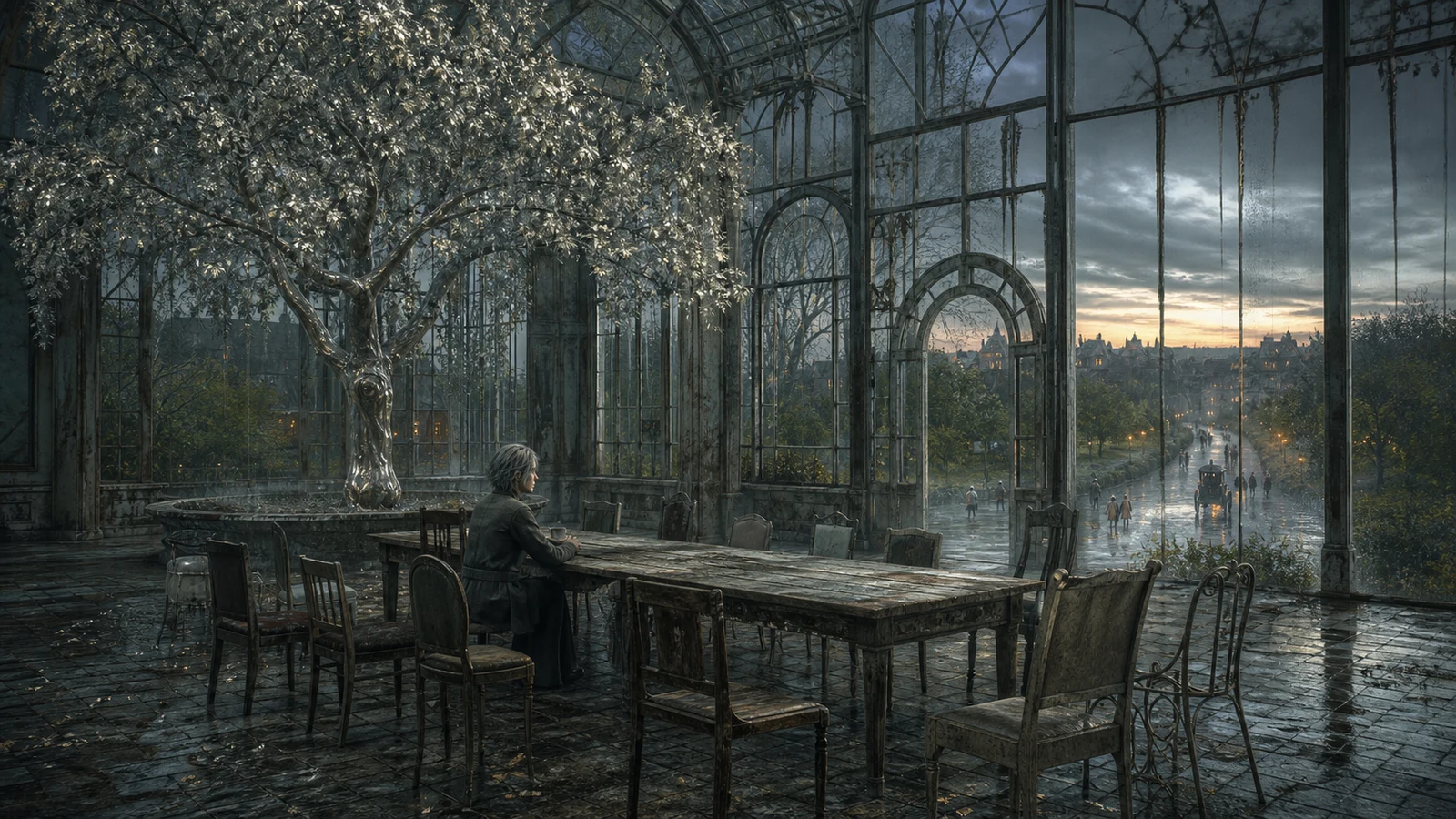
A room kept unchanged for centuries becomes less like a home than a sealed display. The flowers never quite die, nobody moves the chair, and no new season disturbs the dust.
Not Every Immortal Dream Is the Same
It would be easy to turn these examples into a rule: fantasy condemns immortality and praises human limits. The genre is wider than that. Contemporary xiuzhen, or immortality-cultivation fantasy, builds worlds in which long life may be pursued through discipline, transformation, rivalry, and spiritual or bodily practice.
Even there, immortality is not one stable prize. The scholarly study in the reading list follows cultivation as it becomes entangled with technology, hierarchy, markets, and political power. The dream can open into liberation or harden into empire.
This matters because no single tradition owns the human response to death. Resurrection, reincarnation, ancestral presence, bodily longevity, and survival in memory answer different questions. Treating them as decorative versions of the same Western afterlife would flatten both religion and literature.
One world calls mortality a gift. Another makes cultivation a life's highest labor. Their disagreement keeps the question alive instead of handing the reader a slogan.
Earthsea and the Wall Around the Dead
Earthsea first presents its dry land of the dead as a place under unmoving stars, divided from life by a wall of stone. In The Farthest Shore, the mage Cob's refusal to die tears balance apart. He wants to remain himself endlessly, and his private hunger drains meaning and magic from the living world.
Years later, The Other Wind returns to that wall and changes what the earlier books seemed to establish. The dead are not peacefully housed there. The enclosure itself is bound to an old human attempt to secure individual immortality. When the wall falls, release does not mean that everyone comes back to resume a former life. The dead pass out of their sterile confinement.
That revision helps Earthsea's world of true names and balance feel lived rather than mechanically designed. Le Guin let the world discover that one of its deepest arrangements was a mistake. The story asks who built this afterlife, whose desire it serves, and whether keeping the dead forever is another refusal to let them go.
Ged's greatness is measured partly by what he can surrender. Across the books he relinquishes power and certainty as youth passes; the later story asks Earthsea to give up the wall itself. In these moments, balance is kept through release rather than possession.
The Dead Ask to Be Heard
In His Dark Materials, Lyra and Will enter a land where the dead endure as thin ghosts under the watch of harpies. The descent draws on old journeys below the earth, yet it changes the purpose of escape. The ghosts do not return to their kitchens and beds. A way is opened for them to leave confinement, dissolve into the living universe, and become part of matter again.
Before that release, the harpies demand truthful accounts of life. A remembered morning or a meal shared with someone can earn passage where heroic boasting cannot. The dead retain dignity because their ordinary lives are worth hearing.
The wider design of Dust, consciousness, and growing up in His Dark Materials gives this scene its particular weight. Matter is not treated as the enemy of spirit. Returning to the material world is not erasure in the simple sense; it is release from a prison built around permanent separation.
Pullman's afterlife is not proof against anyone's faith, just as Tolkien's is not proof for one. Both are fictional cosmologies whose questions matter without being verified answers.
When Death Clocks In
Terry Pratchett gives Death a horse, a house, a granddaughter, a fondness for cats, and work that has to be done. The capital letters of his speech make him imposing. His curiosity about people makes him unexpectedly tender.
In Reaper Man, Death is dismissed. The premise sounds like a victory until the Discworld begins filling with ghosts, poltergeists, and life that cannot move through its proper ending. Death's absence resembles the collapse of an essential public service. Someone must arrive on time, carry out the task, and treat a singular life as singular even when the universe counts by millions.
Humor changes the distance from which mortality can be seen. The joke does not prove death kind; it lets the reader remain in the room. Pratchett's Death asks questions that solemn allegory might smother, then pauses for a curry or worries about a farm.
Making Death a character also separates the event from cruelty. He can be present at an ending without being its malicious cause, giving the dying person company that cannot cancel what is happening.
What Stories Can Hold
Fiction is not grief therapy, and a moving novel does not give anyone a correct way to mourn. The popular five-stage model becomes misleading when treated as a timetable. Grief does not reliably proceed through denial, anger, bargaining, depression, and acceptance in order. A person may feel relief and sorrow before breakfast, laugh at noon, then be undone by a supermarket song months later.
Research on continuing bonds offers another language. A relationship may change into remembered advice, a recipe still cooked on birthdays, or the decision to care for something the dead person loved. Such bonds can comfort or trouble; they are shaped by culture and circumstance, and are not an assignment the bereaved must complete.
Fantasy makes continuing bonds visible. A ghost stands at the gate. An old name answers in a dream. Stardust joins the air. These images can give form to experiences that are otherwise hard to say. Brian Attebery argues that fantasy can help readers name and face fear. The modest word is can. No story works the same way for everyone, and no invented underworld should be used to diagnose a living stranger.
What fantasy offers is company at the threshold. It lets us approach the closed door, imagine what we would say, and sometimes accept that love has reached farther than power. Then it sends us back to the room where the kettle has gone cold.
The room is still changed. One cup may remain unused. Yet a life does not become nothing because it has ended. It persists unevenly in habits, consequences, and people who carry part of its story. The fragile hope described in We Are Flickers of Light Afraid of Storms does not cancel fear; it survives beside it. There is no victory scene here. Someone washes the unused cup, puts it back on the shelf, and knows whose hand once held it.
Further Reading
- The Metropolitan Museum of Art: Gilgamesh follows Enkidu's death and Gilgamesh's failed search for immortality.
- Ovid, Metamorphoses, Book 10 presents the Roman poet's influential version of Orpheus and Eurydice.
- The Tolkien Estate: Letter to Rhona Beare distinguishes Elvish longevity, human mortality, and counterfeit immortality.
- Margaret Mahy on the Earthsea stories discusses Cob's sterile immortality and Earthsea's dead.
- Graham Holderness on Pullman's Land of the Dead reads The Amber Spyglass alongside older descents into the underworld.
- The official Reaper Man page gives the novel's premise and the chaos that follows when Death leaves his post.
- Zhange Ni on xiuzhen fantasy examines cultivation, Daoist alchemy, technology, and political economy.
- Avis, Stroebe, and Schut on the five stages of grief explains why presenting the stage model as a universal path can mislead and harm bereaved people.
- Continuing Bonds in Bereavement gathers clinical, cultural, and critical work on relationships with the dead that change rather than simply disappear.
- Brian Attebery, “Fantasy and Fear” considers how fantasy gives fear of death and the unknown forms that can be named and faced.