Essays
A Promise Heavier Than Life
A promise matters when loyalty becomes difficult. But when keeping it turns us into accomplices to cruelty, does honor lie in the oath—or in breaking it?
Spoiler warning: This essay reveals parts of The Silmarillion, The Lord of the Rings, A Clash of Kings, A Storm of Swords, and Sir Gawain and the Green Knight.
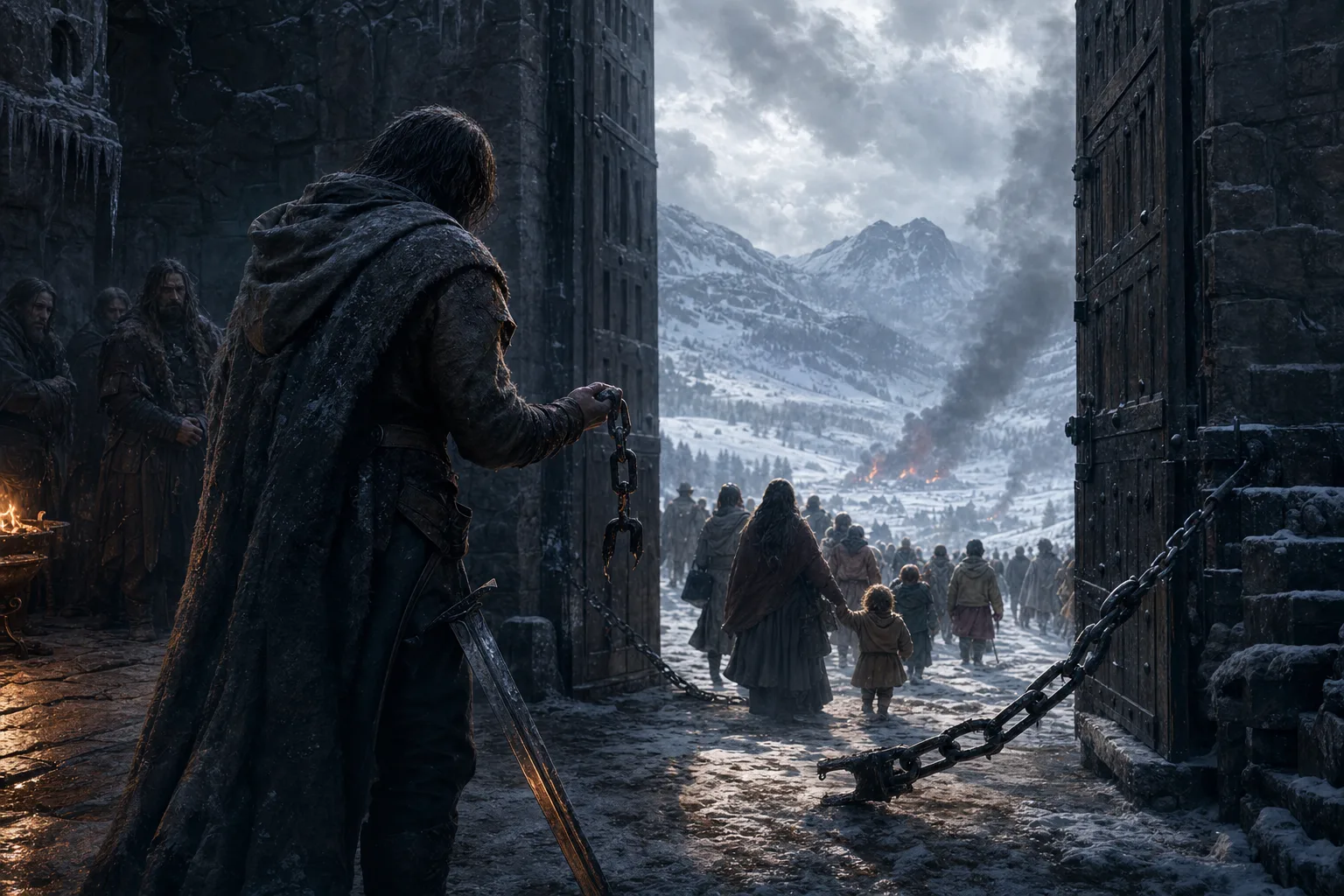
The guard stands with one hand on the gate chain. Years ago, in a bright hall ringing with cups, he swore never to open it without his ruler's command. Now families fleeing a fire cry out beyond the wall. The command is unchanged, its seal unbroken. Only the world has changed.
This essay is about the moment when loyalty and morality part ways. A promise lets another person build part of their future upon our word, so difficulty alone cannot release us. Yet no oath may silence conscience. Sometimes preserving the words betrays the person they were meant to protect.
Breaking such an oath may be right, but it is never clean. Trust is wounded, someone pays, and the oath-breaker's name may remain disgraced. Fantasy turns this wound into chains, curses, and burning cities, making an old question visible: how long must we obey a promise made by the person we once were?
A Promise Occupies Part of Someone Else's Future
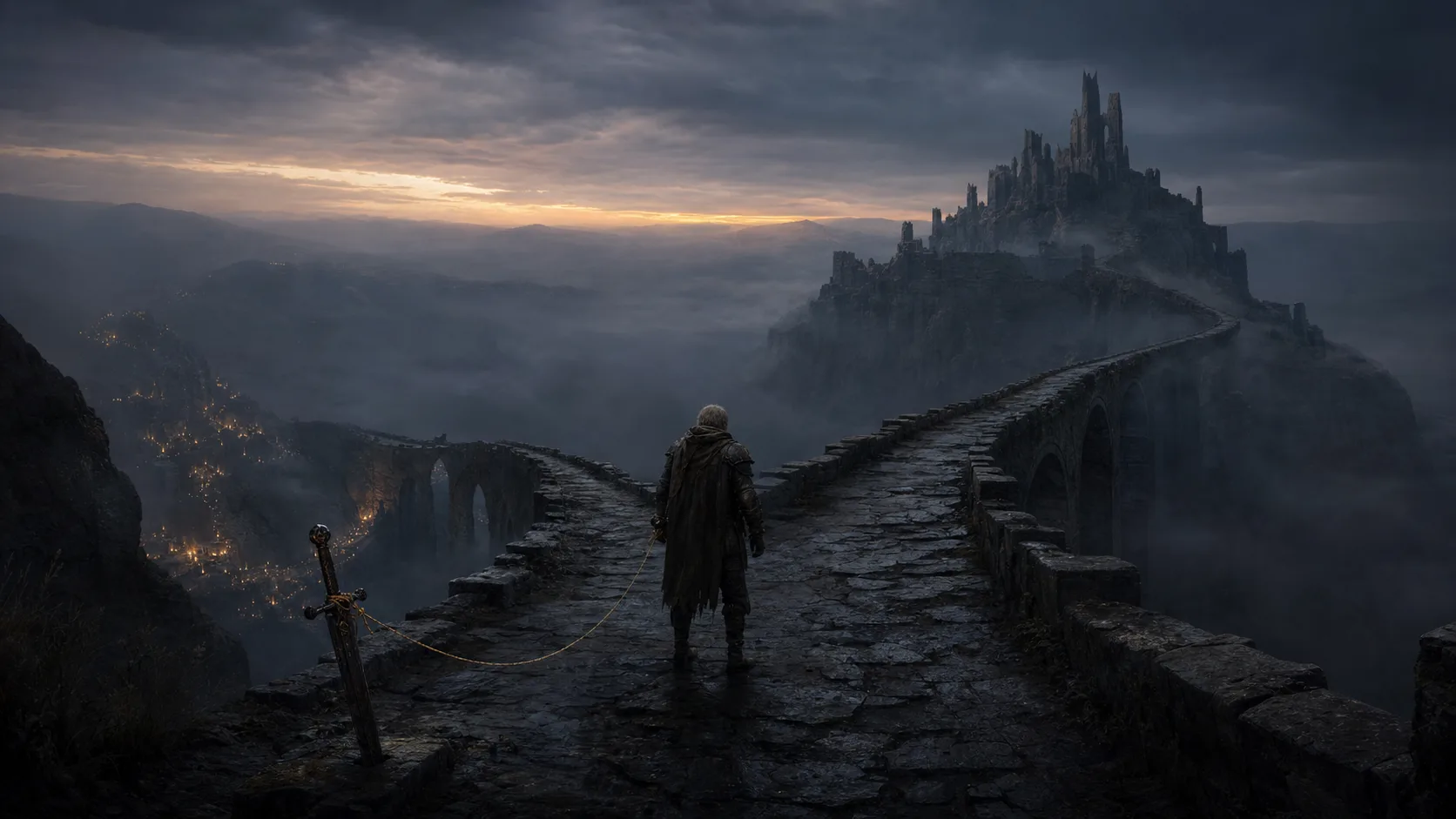
When we say, “I will come,” we do more than report an intention. Someone may skip buying a ticket, change a shift, keep a child awake, or face a hospital night believing they will not be alone. A promise occupies another person's future. They arrange real choices around something that has not happened because we said it would.
Reliance separates a promise from a hope. “I hope I can help” leaves a way out; “I will be there” accepts responsibility for part of the world's uncertainty. The Stanford Encyclopedia of Philosophy entry on promises surveys several theories, many centred on trust, expectation, and the special authority given to the promisee.
A world without promises might seem freer, but it would be smaller. No one could build a home together, entrust a companion with the night watch, or put their weight upon tomorrow. Words would die before morning.
The Command Issued by Yesterday's Self
In every promise, the present self decides for the future one. A twenty-year-old vows lifelong devotion. A soldier swears in spring to defend a fortress that may belong to a tyrant by winter. At a deathbed, someone promises never to sell the family home, not knowing that one day selling it may be the only way to survive.
What right does an earlier self have to govern someone who had not yet endured our grief or gained our knowledge? The debate over personal identity and ethics shows that continuity through time is no simple matter: memory, body, and character do not always move together.
Still, “I am no longer that person” erases nothing. Yesterday's self did not forge our name. They gave others claims, created hope, and perhaps led them to surrender other possibilities. Change matters, but it does not leave the past ownerless.
The Freedom That Chooses Its Own Limits
Promising is one of freedom's strangest acts: we use freedom now to narrow it later. Chesterton praised this as the freedom to bind oneself. In the second essay of On the Genealogy of Morals, Nietzsche connects promising to memory, responsibility, and a will that can stretch a thread from today's “I will” to tomorrow's deed.
The image is magnificent: a person able to answer for who they will become. But in one hour of pride, anger, or fervour, they may spend decades of life. They forge a chain freely, then discover that their remaining freedom consists in carrying it.
Research on the rationality of irrevocable commitment asks how anyone can promise without exception in a world whose future is unknown. Unless tempered by humility, binding the future becomes a claim to know it.
Some Promises Are Sick from Birth
Not every oath has equal moral worth. A promise obtained by deceit, spoken under threat, or intended to harm the innocent does not become sacred through formality. A grand ceremony cannot purify its contents.
Writing on permissible promisemaking under uncertainty, Alida Liberman offers four conditions: the end must be permissible; the promise must not deceive; it must be sincere; and the promisor must realistically judge their ability. Many great fantasy oaths fail here before blood is spilled.
This offers no easy escape. We cannot call every painful promise wrong from the beginning. Discovering evil differs from tiring of a known cost. A conscience that speaks only when its verdict suits our comfort is appetite wearing a finer name.
Fantasy Makes the Hidden Weight of Words Visible
In ordinary life, a broken promise makes no sound. A glass remains on the table, a message goes unanswered, and someone realises they should stop waiting. Fantasy gives this invisible damage a body: a blood oath, an irrevocable name, a sealed door, a curse awake generations later.
It is the darker face of the desire explored in Why Do Humans Still Dream of Magic?: the longing for words to have weight. A magical oath is that wish's shadow. If the world took every word seriously, one angry moment might ruin a life.
In Magic Systems in Fantasy, rules and costs make magic convincing. A promise is moral magic without light. Its cost remains in memory, in the possibility of cooperation, and in our image of ourselves.
The Oath of Fëanor: One Moment of Freedom, Centuries of Bondage
In The Silmarillion, Fëanor and his sons swear a terrible oath to recover the Silmarils. An answer to theft and grief becomes a command that treats every possessor as an enemy. Years pass and gentler possibilities appear; the old words wake and reopen the road to violence.
Christopher Tolkien's account of The Silmarillion places the oath among the central threads of Beleriand's ruin. The Mythlore study “The Freedom to Bind Oneself” explores how it narrows the sons' freedom and deepens their fall.
They are not puppets of an enchantment. The tragedy hurts because choice remains, however crowded by shame and fear. The oath does not lift the sword. It is lifted by someone who cannot bear breaking the vow, yet learns to bear fresh blood.
Fëanor did not know the future, yet swore as if no new knowledge could correct him. Loyalty came close to pride. In the deep time of Middle-earth's history, one sentence outlived its speaker and shadowed his children.
The Dead Who Are Still Waiting
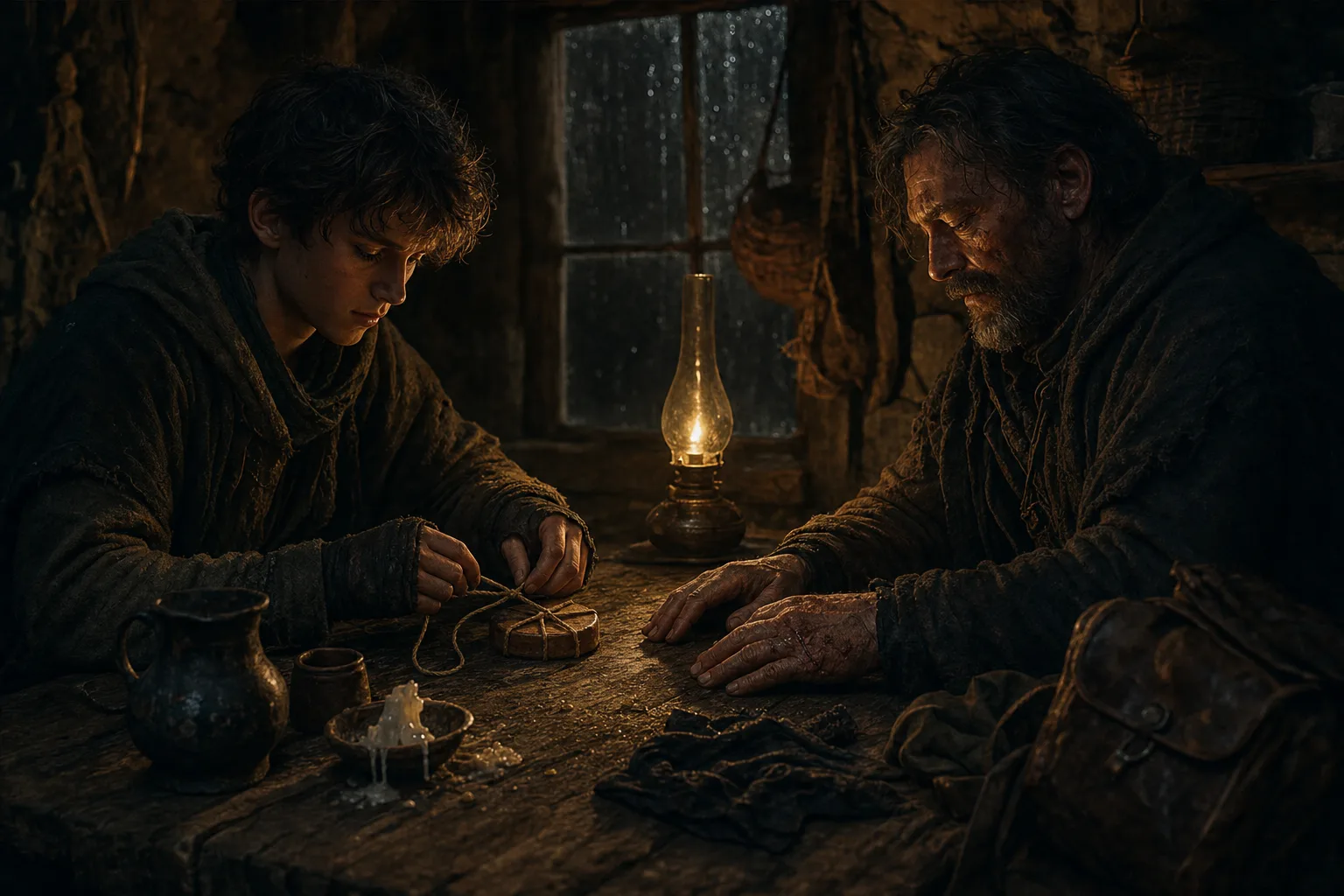
The Lord of the Rings shows another face of oath-breaking. The Men of the Mountains swore allegiance to Isildur, then refused his summons to fight Sauron and withdrew into the mountains. Their betrayal displaced them from history, leaving a debt unpaid for generations. Tolkien enlarges something real: societies can remember a great betrayal after its authors are dead.
Yet even here, justice should not become endless torment. A debt must be capable of ending. If no restitution or transformation can release the oath-breaker, justice becomes vengeance. In Why Does The Lord of the Rings Still Feel Like a Real World?, history and mercy stand beside power; release separates fidelity from slavery.
Jaime Lannister: The Betrayal That Saved a City
While captive in A Clash of Kings, Jaime Lannister describes a web of conflicting vows: a knight must defend the innocent, obey the king, and keep his secrets. Later, in A Storm of Swords, he reveals the reason for his most infamous betrayal. Aerys II had prepared to burn the city with wildfire; obedience to one oath would have betrayed the reason the others existed.
Jaime kills the king and saves the city. People see only a dead monarch and his sworn guard holding a bloody sword. “Kingslayer” remains. The official page for A Storm of Swords situates the novel amid war and moral choice; Jaime's confession fractures any simple idea of treachery.
The act does not make Jaime innocent or cleanse his other choices. It matters because someone may do right in one hour, then spend a lifetime bearing the wrong name for it. Game of Thrones and the Price of Power shows how power creates debt; loyalty, too, leaves debts no choice wholly settles.
Gawain: Honour That Passes Through Fear
In Sir Gawain and the Green Knight, Gawain promises to return in a year and a day to receive a matching blow. It may kill him, yet he keeps the appointment. In a second bargain, he must exchange each day's winnings with his host. He conceals a girdle said to preserve his life.
Gawain does not flee. He walks towards the feared axe, keeping one hidden refuge within the bargain. The Green Knight treats the fault as human and forgivable; Gawain judges himself more harshly. Readers can return to the public text of Sir Gawain and the Green Knight at the University of Michigan Library.
Gawain's worth does not depend on perfection. His courage grows through fear. A hero may be someone who sees his failure, names it, and refuses to let shame drive him into a greater lie.
An Oath That Must Grow with the Person Who Bears It
In The Stormlight Archive, a spren bond grants a Knight Radiant access to the Surges; Ideals—and, for Lightweavers after the First Ideal, Truths—deepen that bond. Brandon Sanderson's account of their Orders shows each order grounded in distinct oaths and values. Later Ideals are not longer commands; they demand a harder understanding of responsibility.
Such an oath differs from Fëanor's. Rather than freezing the world in one angry moment, it deepens with understanding. A character advances by abandoning a self-satisfied idea of protection, justice, or truth. The words remain; their meaning lives.
Perhaps a healthy vow preserves its central value while reality corrects how we serve it. Care must not become ownership. Defending a country must not mean killing its people.
The Moral Danger of Turning Every Oath-Breaker into a Hero
Another trap opens. If some vows must be broken, every betrayer can imagine himself Jaime Lannister. Someone tired of responsibility invents a higher good, abandons another person to the cost, and calls it “being true to myself.”
Studies of immoral and conflicting promises and promises opposed to other obligations give no easy answer. Yet even when fulfilment is wrong, commitment leaves a moral remainder. Explanation, apology, reparation, and care do not disappear.
Whoever breaks a vow from conscience faces the wreckage. Whoever seeks only relief wants to break the chain without hearing it fall.
Promises We Make to the Dead
The hardest promises may have no living witness. At a sickbed, someone vows to care for the family. A mother promises never to change her child's room. A soldier promises a friend to live for them both. One remains; the other cannot grant release.
These promises can keep the living alive. On a morning when rising feels meaningless, an old sentence takes a person's hand. Years later it may become a wall: dishes remain untouched, curtains stay closed, and loyalty to the dead keeps every living person outside.
In What Does Fantasy Do with Death?, death was not a relationship's simple end. Fidelity may mean letting a promise change: opening the room without banishing the loved person from our inner world.
Before Breaking a Promise, Pause Three Times
First ask what the promise was meant to protect. If a guard swore to keep people safe and his ruler now sacrifices them, obeying the wording destroys its meaning. Mere inconvenience is no excuse.
Then ask who bears the cost. A choice that frees us by placing all suffering on someone weaker is rarely heroic. Morality must also be seen from behind the gate.
Finally, tell the truth without making yourself a legend. Can you face the person who trusted you and name the act? If it seems right only in a story where you are the hero, something remains hidden.
A Broken Chain Does Not Erase the Debt
Sometimes the gate must open. The command is unjust, people will die, and permission cannot be sought. The guard breaks the chain. The act may be honourable, but it is no festival of innocence.
Those who stood beside him may feel betrayed. He must care for families freed too late. He may lose title, home, or friends. Right action is not always rewarded or forgiven. Responsibility can mean accepting that cost without demanding applause.
Some Promises Are Still Worth Standing For
Uncertainty does not make fidelity meaningless. Someone who decides each morning whether they still like a promise has not promised at all. A vow reveals its worth when sleep is scarce, the road long, and no one applauds.
A promise to care for the powerless, keep a life-saving secret, return for an abandoned friend, or resist a cruel command can still outweigh life. Its grandeur comes not from courting death, but from spending comfort so something human survives.
No short rule marks the final boundary. Some heroes are saved by keeping vows. Others become heroic when they break the chain, open the gate, and accept that history may misunderstand them.
The guard is still the person who made that promise. His past remains and his words retain weight. He has learned only that honour is not always an unstained name. Sometimes it is refusing to preserve that name while others burn.
Sources and Further Reading
- Stanford Encyclopedia of Philosophy: Promises for theories of obligation, trust, reliance, agreement, and the promisee's authority.
- Stanford Encyclopedia of Philosophy: Personal Identity and Ethics for the relation between a present person and their past actions and commitments.
- Stanford Encyclopedia of Philosophy: Moral Dilemmas for conflicts between keeping a promise and preventing harm.
- Alida Liberman, “Permissible Promisemaking under Uncertainty” for the moral conditions of making a promise whose future is unclear.
- Seana Shiffrin, “Immoral, Conflicting, and Redundant Promises” for the complexity of commitments that collide with other duties.
- David Owens, “Promises and Conflicting Obligations” for the moral remainder that persists even when a promise ought not to be fulfilled.
- Alida Liberman, “On the Rationality of Vowing” for the danger of binding oneself without exception in an unknown future.
- Nietzsche, On the Genealogy of Morals at Project Gutenberg for the memory of the will, responsibility, and humanity's capacity to promise.
- Chesterton, “A Defence of Rash Vows” at Project Gutenberg for a literary defence of our freedom to limit our future freedom.
- Christopher Tolkien on The Silmarillion at the Tolkien Estate for the place of Fëanor's oath in the history of Beleriand.
- Matthew McKenna, “The Freedom to Bind Oneself” and the Oath of Fëanor for an academic reading of freedom and compulsion within the oath.
- Sir Gawain and the Green Knight at the University of Michigan Library for the public text of the poem and Gawain's two agreements.
- Durham University research on oaths of fidelity in the Middle Ages for the historical reality of simultaneous and conflicting commitments.
- The official Penguin Random House page for A Clash of Kings for Jaime and Catelyn's exchange about conflicting vows.
- The official Penguin Random House page for A Storm of Swords for the novel in which Jaime Lannister's confession appears.
- Brandon Sanderson on the Ten Orders of Knights Radiant for the role of different oaths and Ideals in The Stormlight Archive.