Worlds
Middle-earth: Why Some Worlds Feel Older Than Their Stories
A study of Tolkien’s world through deep time, languages, ruins, roads, departure, and the strange feeling that a story is only one brief age in a much older earth.
Middle-earth does not feel like a stage built for one adventure. It feels like a world that was already tired, beloved, wounded, mapped, sung about, and half-forgotten before Frodo ever left the Shire. That is the secret of its power. The story matters, but the world seems older than the story. Every road appears to have carried other feet. Every name seems to remember another language. Every ruin suggests an age that did not wait for the reader to arrive.
The question is how age becomes visible: why Middle-earth seems to continue beyond the Fellowship, the War of the Ring, and any single hero. The answer begins with deep time and takes material form in language, geography, ruins, inherited customs, and ordinary homes. The Ring’s moral pressure, Frodo’s endurance, pity, friendship, and the cost of victory unfold in The Lord of the Rings: Power, Pity, and the Cost of Victory. Beneath those choices lie systems of memory that make one quest feel like a late chapter in a much longer history.
A world that arrives already ancient
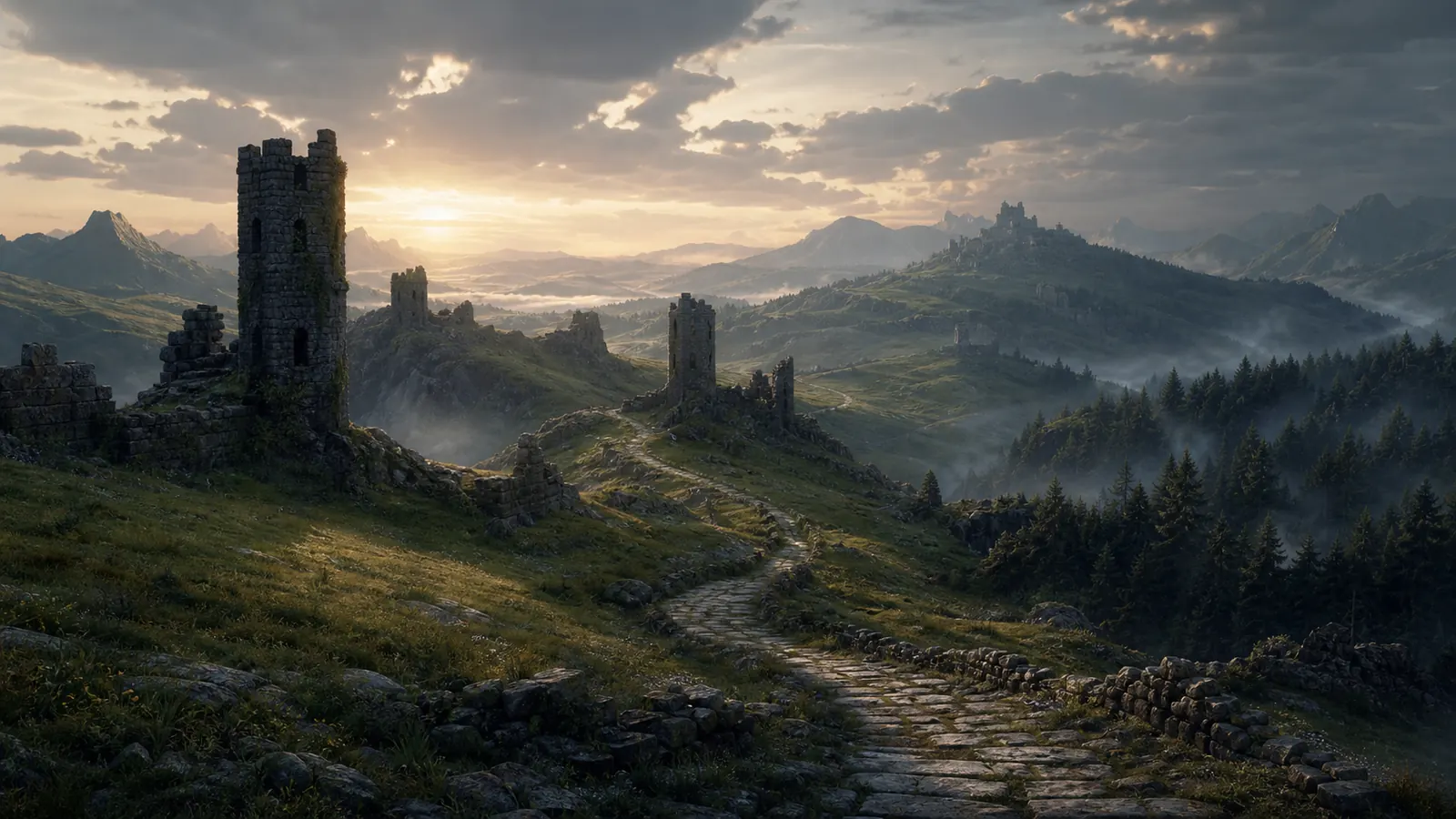
Many fantasy settings begin by telling the reader that they have a past. Middle-earth behaves as if the past is still breathing. The difference is important. A timeline can give information; deep time gives pressure. In Tolkien’s world, the First Age, the fall of Beleriand, the glory and drowning of Numenor, the long decline of the Elves, and the older wars against Morgoth are not decorative footnotes. They press on the Third Age like weather on stone.
Christopher Tolkien’s presentation of The Silmarillion for the Tolkien Estate is one of the clearest ways to see this structure. He explains that The Lord of the Rings belongs to the ending of the Third Age, while The Silmarillion reaches back into the Elder Days and the First Age. That matters because the main story is placed near the end of a vast historical arc, not at its bright beginning. The reader enters a world where many great things have already been lost.
That lateness gives Middle-earth its emotional color. We are not watching a young world discovering itself. We are walking through an old one, where courage often means preserving a small flame after the greater fires have gone out. The feeling is heroic, but it is also elegiac. The road goes forward, yet nearly every step is haunted by something behind it.
Deep time is not the same as backstory
Backstory explains what happened before the plot. Deep time changes how the present feels. A fantasy world can have ten thousand years of invented history and still feel thin if that history does not touch speech, politics, roads, fears, songs, and ruins. Middle-earth feels old because its past has consequences everywhere.
Elrond is not merely a wise host in Rivendell; he is a living bridge to ages that Frodo can barely imagine. Aragorn is not simply a hidden king; his identity carries the burden of Numenor, exile, broken kingdoms, and a lineage that has become both hope and wound. The shards of Narsil are not just a weapon waiting to be reforged. They are memory made metal.
This is why Middle-earth became a model for high fantasy, but also why imitating only its surface often fails. Maps, invented names, and ancient wars are easy to copy. The harder task is making the present behave as if the past has weight. Tolkien’s world rarely drops history in front of the reader as a lecture. It lets history stand in a broken tower, a song, a genealogy, a road that has outlived its builders.
Languages as buried kingdoms
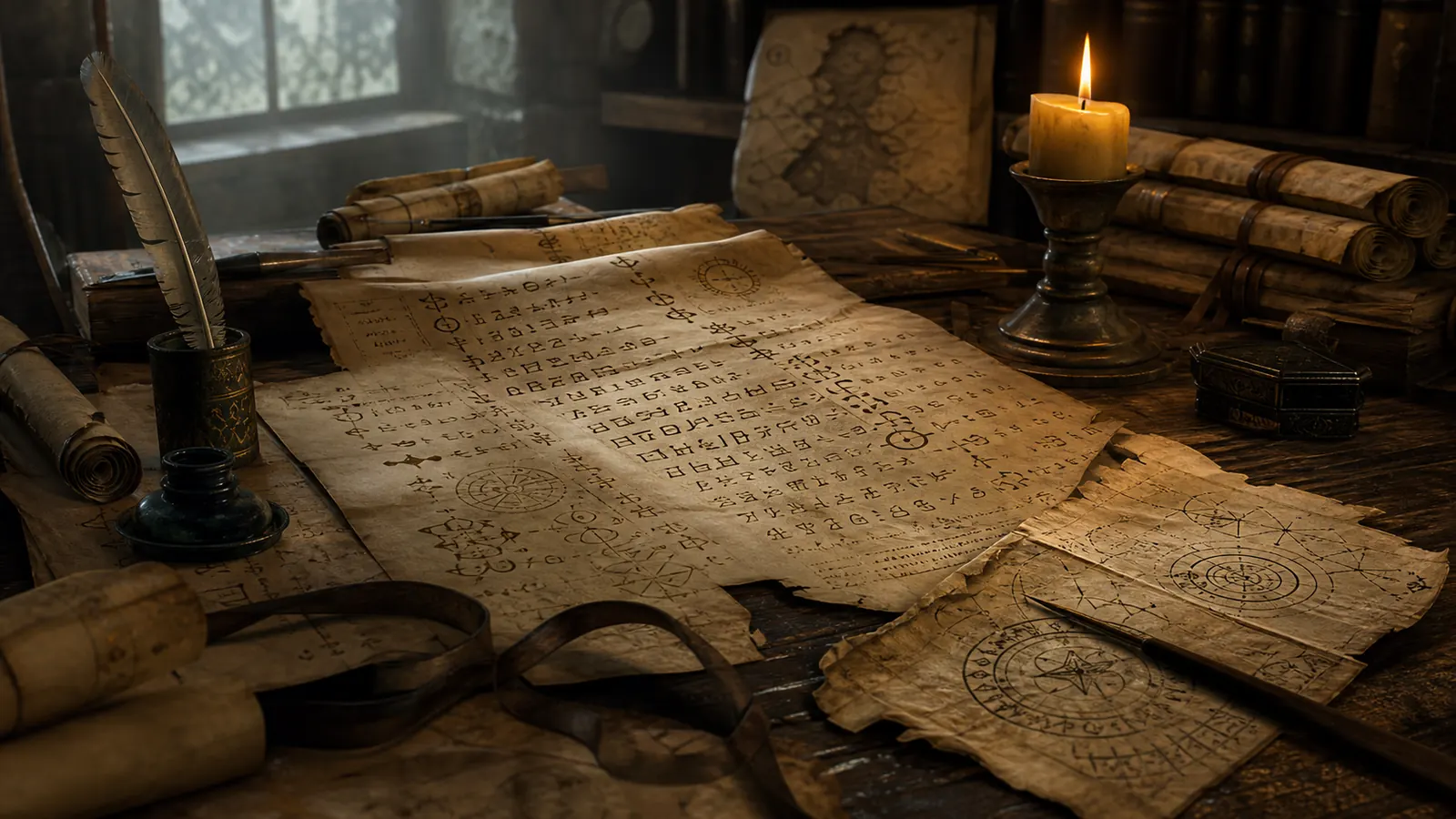
Tolkien was a philologist, and that matters deeply. Carl Hostetter’s study for the Tolkien Estate shows how the invented languages grew through histories of sound, grammar, peoples, and mythology. In Middle-earth, language is not a coat of paint. Language is ancestry, migration, grief, status, distance, and memory.
Names in Middle-earth carry the feeling of cultures that existed before the current scene. Quenya, Sindarin, Rohirric, the Black Speech, Khuzdul, Westron, and the many names attached to places and peoples create a world where speech itself has depth. A river is not merely a river once it has several names across ages and tongues. A person is not merely a person when their name carries a lost kingdom, a vow, a lineage, or an exile.
This is one reason Tolkien’s world avoids the empty smoothness that weakens some fantasy. It has linguistic grain. The reader may not know every grammar or root, but the texture is felt. A place-name like Minas Tirith or Osgiliath sounds as if it belongs to a history of stone, watchfulness, and decline. The name does part of the worldbuilding before any exposition begins.
Geography that remembers
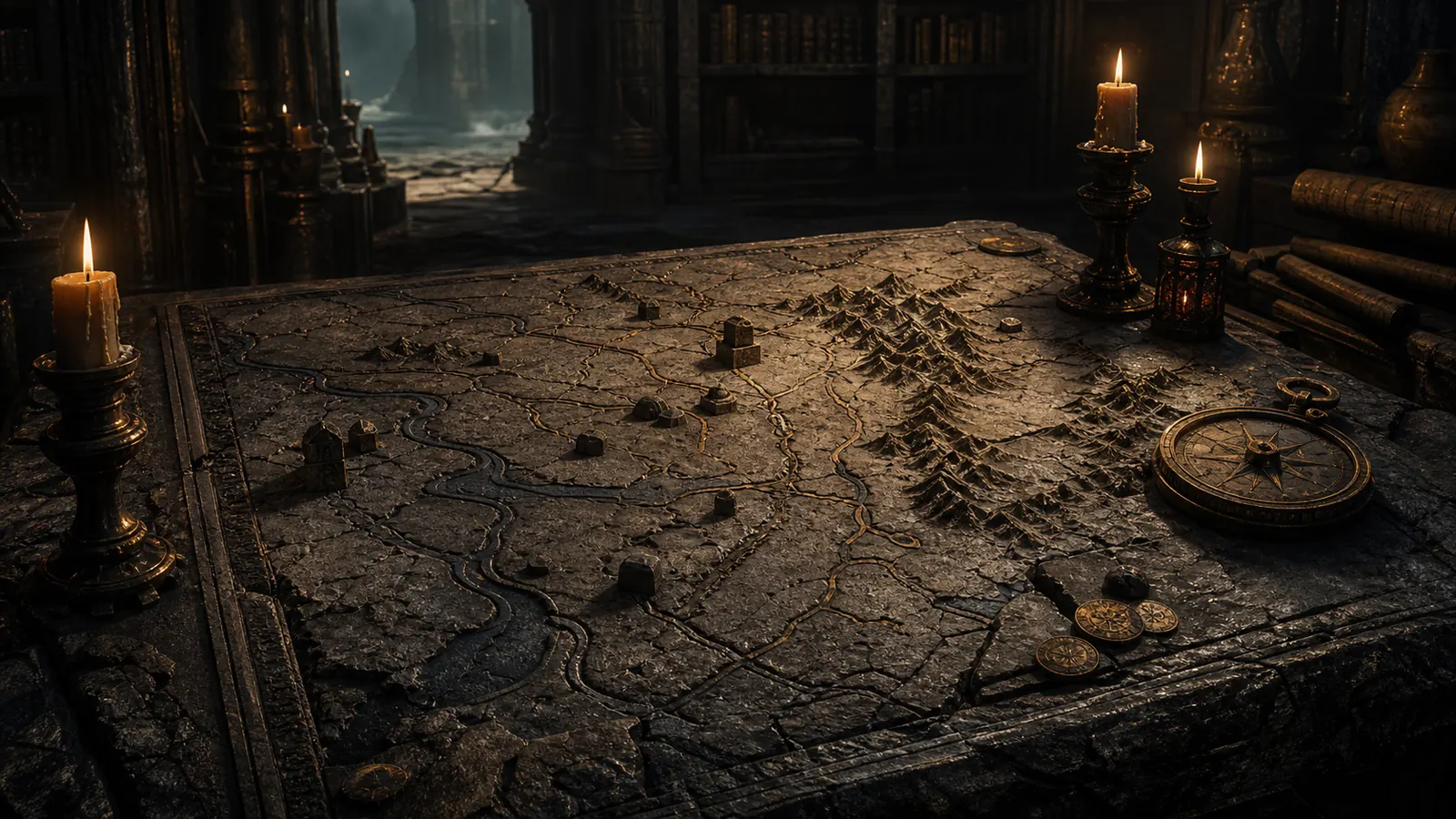
Middle-earth’s map works as a field of memory, not as a simple navigation tool. The Shire, Bree, Rivendell, Moria, Lothlorien, Rohan, Gondor, Mordor, the Grey Havens, and the lands beyond the usual road each carry a different emotional climate. Movement across the map is also movement through degrees of age, danger, power, and loss.
The Shire feels small, green, domestic, and almost protected from the full weather of history. Rivendell feels like refuge, but not innocence. Moria feels like greatness fallen into darkness. Gondor feels noble and strained, a realm holding the line while its own glory thins. Mordor is not simply an evil location; it is geography turned into domination, a land where power has wounded the earth itself.
In What Makes a Fantasy World Believable?, we argued that geography must change behavior. Middle-earth does this constantly. Mountains delay, rivers divide, forests remember, roads reveal older empires, and distance makes the quest feel costly. The map is not a poster behind the action. It shapes the action.
Ruins make history visible
Ruin is one of Middle-earth’s strongest languages. A ruin says that the world once held more than it holds now. It also says that power does not remain pure just because it was once magnificent. Moria, Weathertop, Osgiliath, the Argonath, and many remembered places from the older legends give the reader a recurring feeling: the present is built on remains.
This is why Middle-earth’s beauty is rarely simple. It is full of landscapes that are beautiful because they are passing away. Lothlorien is luminous, but its light is not permanent. The Elven realms carry grace and sorrow at once. Gondor has grandeur, but its grandeur is defensive, weary, and late. Even victory does not restore the whole world to what it was.
That restraint matters. A weaker epic might treat the defeat of evil as a total reset. Middle-earth refuses that comfort. The War of the Ring can be won, but the age still changes. Some ships still leave. Some wounds do not close. The world is saved, yet it is not made young again.
The Shire gives scale to the epic
Middle-earth would be less powerful without the Shire. Epic scale needs human measure, and Tolkien often gives that measure through smallness: food, gardens, songs, pipes, birthdays, lanes, inns, letters, and the ordinary stubbornness of people who do not think of themselves as heroes.
The Shire is not trivial because it is small. It is the reason scale matters. If the world has no home worth defending, grandeur becomes hollow. The road to Mordor is frightening partly because it begins in a place where a kettle, a pantry, a front door, and a familiar path still mean something. The fate of a world becomes intimate because a small home can be lost.
The relation between distant magnificence and fragile ordinary life gives the world its human scale. Fantasy reaches its full force when grandeur protects things that can fit inside one household. It asks whether those things can survive the pressure of history. A garden can be as important as a throne when the question is what kind of life evil wants to erase.
History presses on the present
Threat in Middle-earth arrives with ancestry. Sauron was shaped in an older darkness, kingdoms still live with the consequences of Númenor, and the wars of one age redraw the roads, borders, alliances, and fears of the next. Danger therefore feels sedimented rather than newly invented for the current cast. The Third Age inherits damaged institutions and unfinished conflicts along with songs and heirlooms.
That inheritance appears in practical details. A watchtower stands where an earlier kingdom guarded a road. A ruined city forces the living to build elsewhere. Gondor’s vigilance, the Rangers’ hidden labor, and the caution attached to certain paths make history part of daily behavior. Even people who cannot recite an ancient chronicle arrange their lives around its consequences.
This is a durable worldbuilding lesson: the past should alter what people repair, avoid, celebrate, and fear. History becomes convincing when it changes a farmer’s route to market, the stone reused in a house, the name a family refuses to speak, or the guard kept at an apparently empty border. Middle-earth lets ancient events survive as habits and infrastructure, so the present never feels sealed off from what came before.
The sorrow of departure
One of the deepest feelings in Middle-earth is departure. The Elves do not simply stand for beauty or immortality. They carry the grief of lingering too long in a changing world. Their presence gives the story a music of farewell. They remember more than others can bear, and memory itself becomes both treasure and burden.
The Grey Havens matter because they make victory feel complex. The ship leaving the world does not cancel hope, but it prevents the ending from becoming cheap. Something is saved, and something still passes away. The age of the great Elven presences recedes. The world belongs more fully to Men, with all the courage, mortality, and uncertainty that implies.
Tolkien’s idea of consolation, discussed through Verlyn Flieger’s Tolkien Estate essay on On Fairy-Stories, is useful here. Consolation in this tradition does not erase sorrow. The sudden upward turn has force because sorrow and disaster remain believable. Middle-earth consoles the reader, but it does not lie to the reader.
How deep time becomes visible
Deep time works when several forms of evidence agree. A place-name carries an older language; the road beside it follows a vanished border; a song remembers the people who built the bridge; a household custom survives after the kingdom that created it has disappeared. None of these details needs to explain the whole past. Together they let the reader infer it.
Middle-earth repeatedly turns lore into pressure. Bloodlines shape claims, ruins shape routes, old oaths shape alliances, and remembered disasters shape caution. The world does not pause for a historical lecture whenever these forces appear. A character reaches for a broken sword, recognizes a melody, hesitates before a gate, or notices that a tower was built for a war whose name has faded. History is carried by action and matter.
The method depends on restraint. A fragment can suggest an age if its consequence is precise. Ten pages of chronology may feel lighter than one abandoned stair worn by generations of feet. What Makes a Fantasy World Believable? follows this same principle: information gains weight when it changes behavior, distance, risk, and ordinary life.
What worldbuilders can learn
Begin with consequences rather than a timeline. Decide which migrations changed the vocabulary, which fallen power left roads or laws behind, which disaster altered where people sleep, and which old victory created a present grievance. Then let those answers appear in kitchens, boundary stones, lullabies, taxes, burial customs, and the condition of a bridge. A world feels old when history has entered maintenance.
Allow cultures to remember unevenly. Elves, Hobbits, Gondorians, Rohirrim, Dwarves, and Orcs do not carry the same past or value the same remains. Contradictory memory creates depth because it prevents history from becoming an author’s single neutral summary. One people’s sacred inheritance may be another people’s warning, absence, or half-understood name.
The final lesson is emotional. Deep time should change how the present is felt. After walking through Middle-earth, an old road, a nearly forgotten language, a family story, or a tree at evening can seem heavier. That recovery of attention connects the world to Why Our Own World Is Fantasy: distance helps us return to ordinary reality with a stronger sense of inheritance, fragility, and wonder.
Conclusion
Middle-earth feels older than its story because Tolkien built it as a world with memory rather than a plot with scenery. Its languages suggest peoples. Its ruins suggest ages. Its roads suggest travel before and after the hero. Its evil returns through history. Its beauty is inseparable from loss. Its hope matters because it stands late in the day, when much has already been broken.
That is why Middle-earth remains one of the great fantasy worlds. It does not merely ask what happens next. It asks what remains, what fades, what is remembered, and whether small hands can still carry meaning through the shadow of ancient things.
Sources and Further Reading
- The Tolkien Estate: The Lord of the Rings for official background on the work and its place in Tolkien’s writing.
- Christopher Tolkien on The Silmarillion for the Elder Days, the First Age, Beleriand, Numenor, and the deep past behind The Lord of the Rings.
- Christopher Tolkien on Unfinished Tales for the value and difficulty of Tolkien’s wider Middle-earth writings.
- Carl Hostetter on Tolkien’s Invented Languages for language families, change, and philology as foundations of the world.
- Tolkien Estate: Maps for the relation between geography, travel, and Tolkien’s visual process.
- Verlyn Flieger on On Fairy-Stories for secondary world, recovery, escape, consolation, and eucatastrophe.
- Deborah Sabo in Mythlore for a scholarly reading of landscape, memory, and the experience of Tolkien’s world.
- J.R.R. Tolkien Collection at Marquette for the manuscript archive and the material history of composition.