Worlds
Narnia: The Doorway, Moral Wonder, and the World That Teaches Return
A reading of C. S. Lewis’s world as portal fantasy: winter and spring, childhood and kingship, talking beasts, moral imagination, grief, temptation, and the strange lesson that some worlds are entered so we can come back changed.
Narnia begins with a door, and that is already a philosophy. A door says that the world we know may be incomplete. It says that ordinary furniture, a spare room, a house during war, a child’s curiosity, and the quiet act of stepping forward can become an opening into judgment, danger, beauty, and return. C. S. Lewis did not build Narnia as a map of conquest. He built it as a threshold.
Narnia is a world with a very specific emotional law. Middle-earth feels old before the story begins. Earthsea teaches balance through names, sea, and restraint. Narnia teaches through passage: enter, be tested, see wonder become moral, and return to the ordinary world carrying a changed imagination.
The official C. S. Lewis site frames Lewis as a scholar, critic, novelist, and author of the Chronicles. HarperCollins presents The Lion, the Witch and the Wardrobe as a doorway into one of the most beloved fantasy sequences. Fame is not the reason the world still works. Narnia endures because it gives childhood the weight of metaphysics.
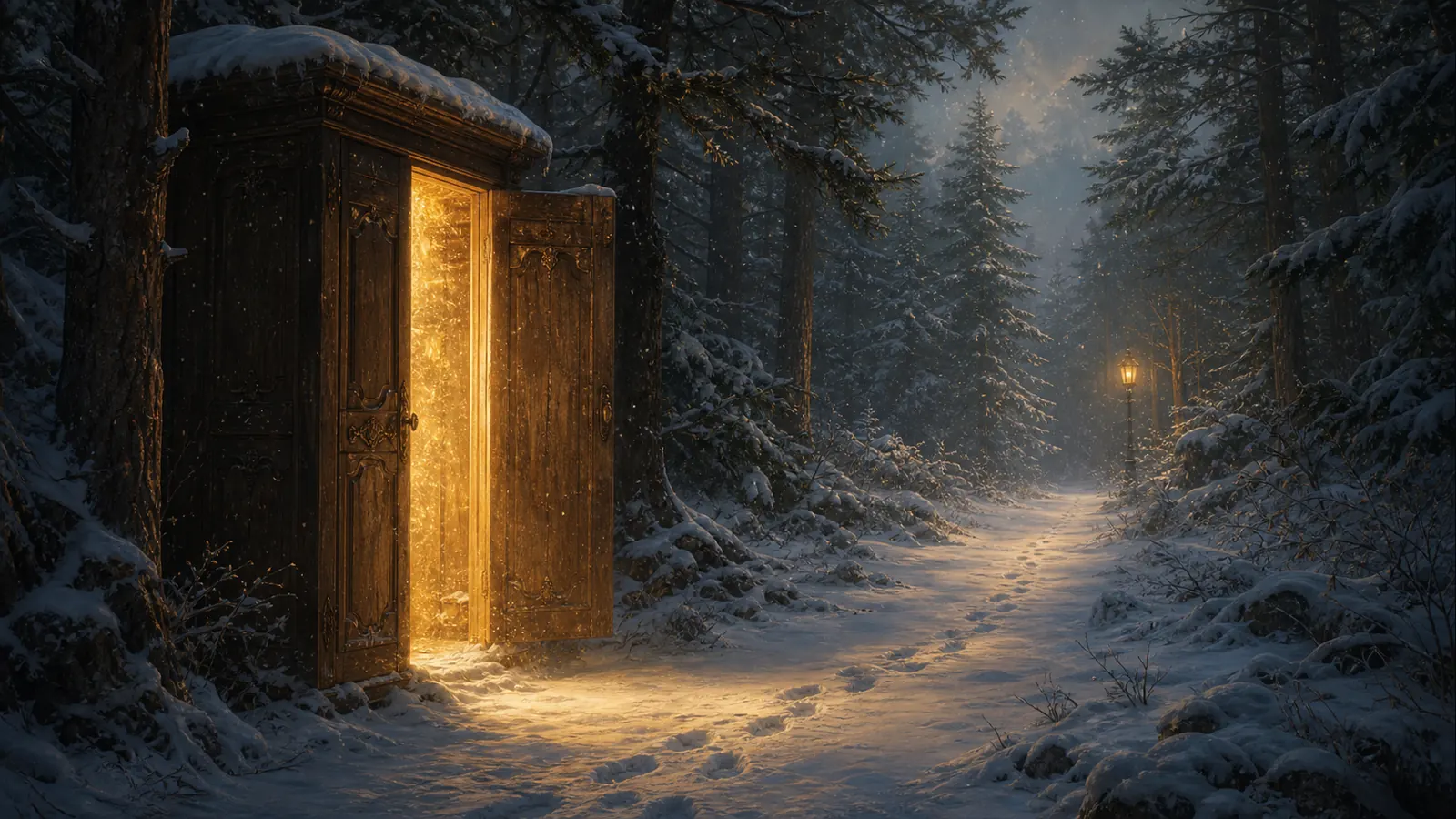
The Doorway Makes the Ordinary Tremble
Portal fantasy has a special power because it begins inside reality. The child does not start in a palace. The entrance may be a wardrobe, a picture, a platform, a rabbit hole, a ruined house, a road, or a book. The ordinary object becomes unstable. The world we thought we understood suddenly develops depth.
That instability is central to Narnia. The wardrobe matters because it is familiar. It does not announce itself as a sacred gate. It waits inside a house. The result is intimate wonder. Narnia does not need to destroy the real world to make room for fantasy. It bends the real world until a hidden passage appears.
In Why the Mind Needs Fantasy, fantasy became powerful when it temporarily took the place of the ordinary and gave the mind another home. Narnia does that, but it adds a demand: the other home will ask who you are.
Winter as Moral Weather
Narnia’s winter is unforgettable because it is more than weather. Snow becomes a political and spiritual condition. A world locked in winter has beauty, but it cannot ripen. It can glitter, but it cannot grow. The cold turns time into captivity.
That is why the famous movement from winter toward spring carries such force. The thaw is not a seasonal decoration. It is the world beginning to remember life. Flowers become arguments. Meltwater becomes prophecy. Warmth becomes a public event.
This places Narnia near High Fantasy, even though its entry point is a children’s portal. It has a secondary world, kingship, ancient law, conflict between powers, creatures with agency, and mythic stakes. Yet its clearest image is simple enough for a child to feel: the snow is ending.
Childhood as a Serious Vantage Point
Narnia treats childhood with unusual seriousness. Children are not comic intruders into adult history. They are able to see what adults often explain away. Their vulnerability is real, but so is their capacity for loyalty, courage, shame, betrayal, and wonder.
This matters because fantasy often becomes weakest when childhood is used as decoration. Lewis gives children moral consequence. They can fail. They can be tempted. They can be crowned. They can return and still remain children in the ordinary world. That tension gives Narnia its bittersweet strength.
The world does not flatter childhood as innocence. It tests childhood as perception. A child may not know everything, but a child can still recognize that something is wrong when a beautiful winter never ends.
Talking Beasts and a World That Answers Back
Talking animals in Narnia could have become cute ornament. Instead, they change the structure of reality. If animals speak, the world is no longer mute matter. Trees, beasts, rivers, and smaller lives can enter the moral conversation.
This matters because rules become real only when they shape behavior. In What Makes a Fantasy World Believable?, a world becomes convincing when its rules produce behavior. Narnia’s speaking creatures do exactly that. They make politics broader than human politics. They make betrayal and loyalty possible across species.
The effect is not realism in the narrow sense. It is moral enlargement. The child learns that the world has more faces than the human one.
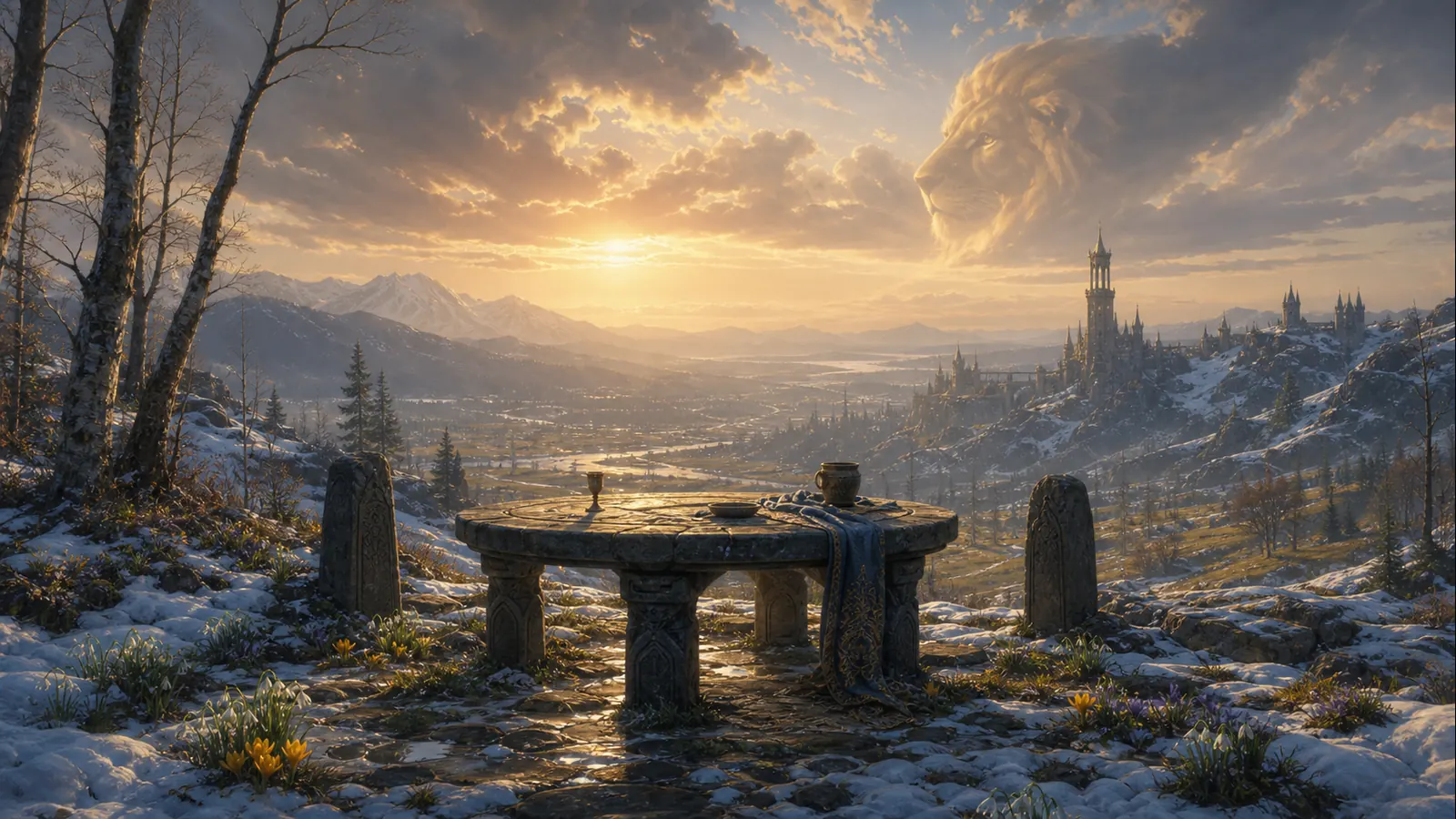
The Stone Table and the Weight of Mercy
Narnia’s most powerful symbols work because they feel older than explanation. The stone table is one of them. Stone suggests law, memory, sacrifice, public witness, and an order deeper than personal preference. Around it, the world stops being a playground and becomes a place where mercy costs something.
This is where Narnia becomes emotionally dangerous in the right way. It does not use wonder to avoid grief. It lets wonder pass through grief. Betrayal is not waved away. Fear is not made harmless. Restoration comes with weight.
That movement protects Narnia from simple sweetness. The world can be radiant, but radiance has passed through shadow. In this sense, Narnia and The Lands Between are distant opposites: one moves from winter toward mercy, the other from broken divinity toward uncertain inheritance. Both understand that sacred worlds are never casual.
Kingship as Responsibility
Narnia uses crowns, thrones, and prophecy, but its idea of kingship is less about glamour than responsibility. Children become kings and queens because the world needs them to grow larger than themselves. Rule is not a prize for entering the wardrobe. It is a burden of care.
This distinction matters. Weak fantasy treats royalty as costume. Narnia treats it as formation. To govern is to learn courage, judgment, forgiveness, and attention to the vulnerable. The crown is meaningful only if it teaches service.
That is why returning to the ordinary world feels so strange. The children have carried royal responsibility, then become children again. Narnia leaves them with an inner memory of stature. Fantasy gives them a symbolic life larger than their social place.
Temptation in a World of Sweets
Narnia understands temptation through concrete things: food, warmth, flattery, fear, comfort, pride. The famous sweetness of temptation works because it is ordinary. Evil does not always arrive as ugliness. Sometimes it arrives as something delicious offered at the moment of loneliness.
This gives the world psychological realism. A child does not betray because of abstract wickedness. A child can betray because they are cold, hungry, resentful, flattered, afraid, or desperate to matter. Narnia’s moral universe is clear, but it is not shallow.
That is one reason the world survives adult rereading. The symbols are bright enough for children, yet the emotional machinery remains recognizable later in life.
Return as the Final Lesson
The portal is incomplete without return. If the children stayed in Narnia forever, the story would become escape alone. Return gives the world its deepest structure. Narnia is entered so the ordinary can be seen differently afterward.
This connects directly to The Feeling of Freedom in Fantasy. Fantasy can open a ceiling in the mind. But Narnia adds that the open ceiling should change how we stand in rooms with low ceilings. The wardrobe matters because it leads back.
Return can feel cruel. The child leaves a world of kingship and wonder for school, family, war, chores, and ordinary time. Yet that pain is the proof that the journey mattered. If nothing is lost in return, nothing was truly entered.
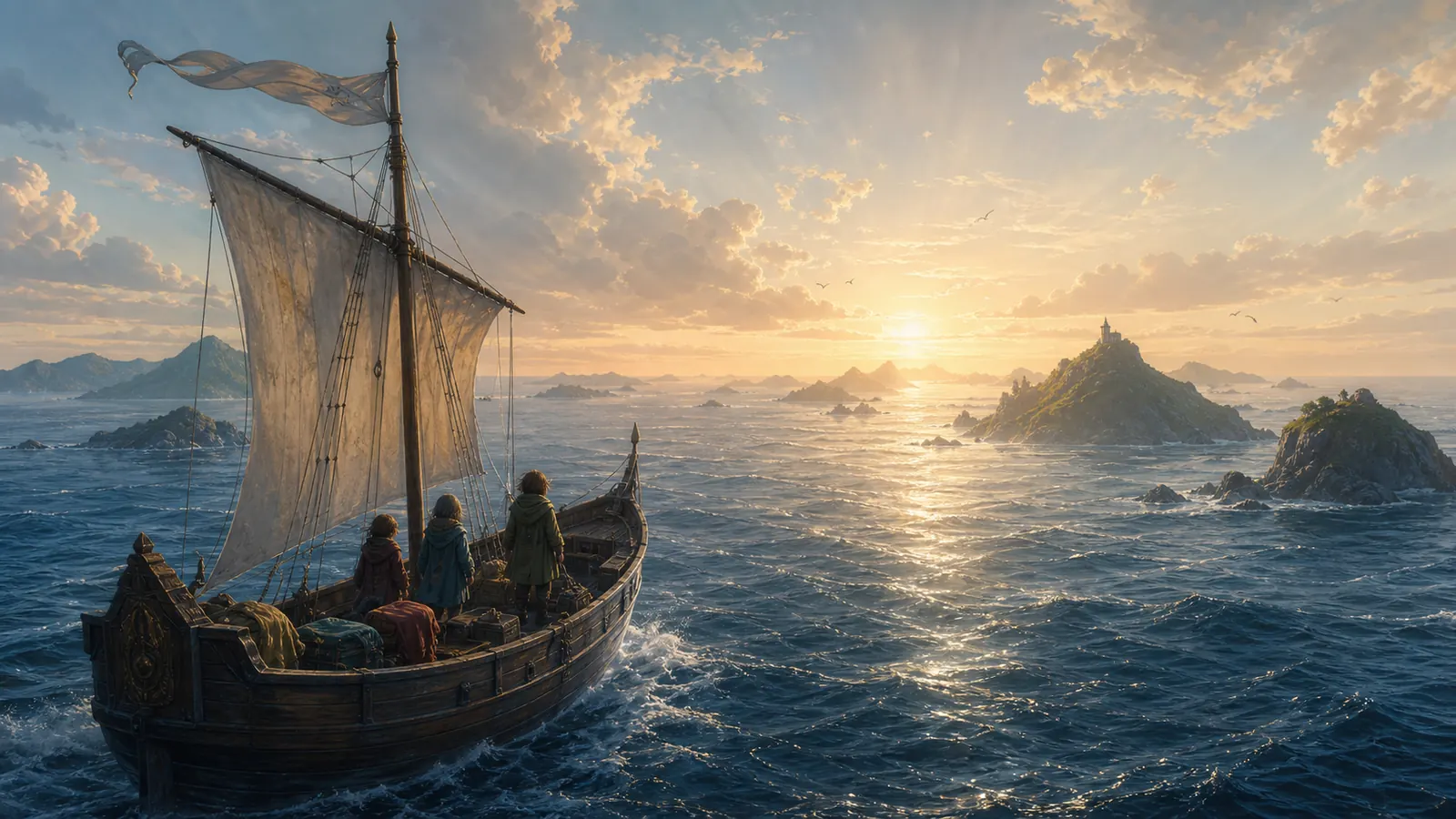
The Problem of Allegory
Discussions of Narnia often become trapped in the word allegory. The religious dimension is real and important, but the world loses force if it is treated as a code to be solved. A living fantasy world can carry theological meaning without becoming a flat equation.
Narnia works because its images breathe before they explain. Snow, a door, a table, a lion, a crown, a ship, and a far country move the imagination as images. Interpretation can deepen them, but it should not drain them.
Meaning should deepen wonder, not kill it by explanation. Narnia asks to be read with both mind and childhood still awake.
Why Narnia Still Matters
Narnia remains powerful because it teaches moral perception through wonder. It says that the world behind the door is marvelous, but not morally weightless. Beauty asks for courage. Magic exposes character. Childhood can become a serious way of seeing. Return can be as important as arrival.
For a modern reader surrounded by explanations, Narnia preserves the possibility that truth may arrive as story before it arrives as argument. That does not make it irrational. It makes it imaginative. Some truths need a door before they can be received.
Narnia is built to awaken recognition. We enter for snow and talking beasts; we leave with questions about temptation, courage, mercy, responsibility, and the ordinary rooms to which we must return.
Conclusion
Narnia is a doorway world. Its power lies in the passage between ordinary and enchanted life, winter and thaw, childhood and sovereignty, temptation and repentance, wonder and moral seriousness. It does not ask the reader to abandon reality. It asks the reader to discover that reality may be deeper than habit has allowed.
The wardrobe opens into snow, but also into judgment. The spring comes, but it has been purchased by sacrifice. The children become royal, then return to childhood with invisible memory. That is Narnia’s lasting magic: it lets us enter another world so the real one can regain depth.
Sources and Further Reading
- C. S. Lewis official site: About C. S. Lewis for biographical context and Lewis’s literary range.
- C. S. Lewis official site: Books for the official book catalogue and Chronicles context.
- C. S. Lewis official site: Resources for publisher resources and background materials.
- HarperCollins: The Lion, the Witch and the Wardrobe for publisher framing of the first published Narnia book.
- HarperCollins: The Chronicles of Narnia for the complete series edition and publisher description.
- HarperCollins 75th anniversary press release for publication legacy and anniversary context.
- NarniaWeb: Reading Order for a useful overview of publication and chronological reading orders.
- C. S. Lewis Institute: The Importance of Imagination for C. S. Lewis for context on Lewis, imagination, and moral perception.
- C. S. Lewis Foundation: C. S. Lewis for biographical and intellectual background.
- Britannica: The Chronicles of Narnia and Britannica: C. S. Lewis for general reference context.